


 Italiano
 Français
 Deutsch
 Español
 Português
 Svenska
 Suomi
Suomi
Mycorrhizae
The fungal-root alliance that connects trees
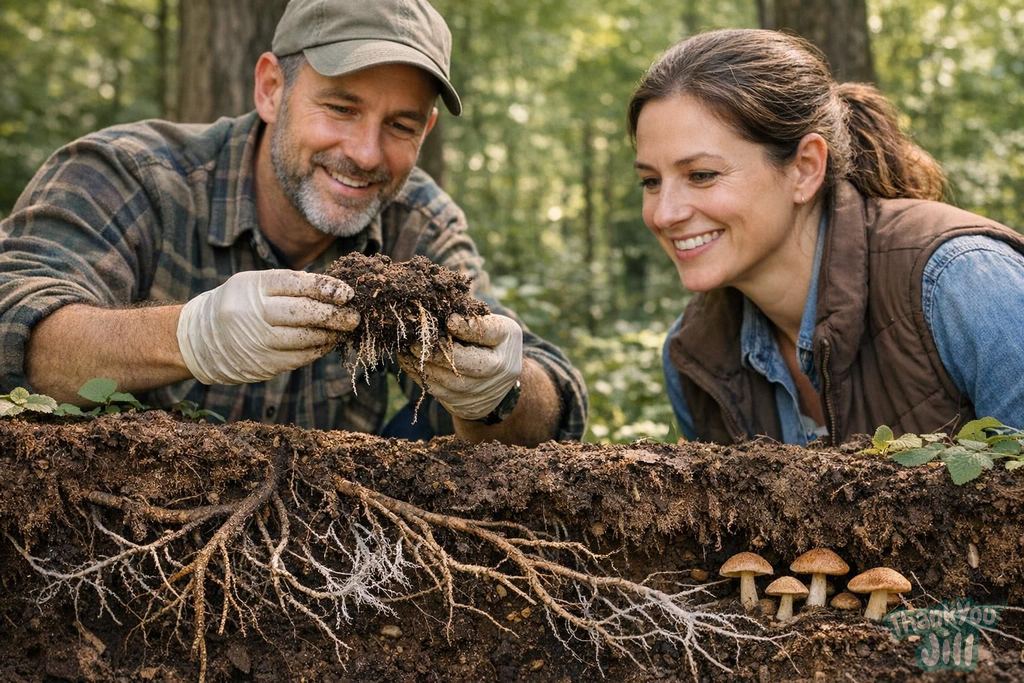
Mycorrhizae are probably the most important and most widespread biological symbiosis on Earth. It's estimated that 90% of terrestrial plant species form mycorrhizae with at least one fungal species. Mycorrhizal symbiosis evolved approximately 450 million years ago, coinciding with plants' colonization of land: it's been hypothesized that without mycorrhizal fungi, plants would never have succeeded in colonizing the nutrient-poor primitive soil. Today, fungal biomass in agricultural and forest soils exceeds the combined biomass of all terrestrial animals.
The main types of mycorrhizae
Mycorrhizae are divided into two major categories based on the structure of the association: Arbuscular Mycorrhizae (AM or AMF: Arbuscular Mycorrhizal Fungi): the most widespread type, present in approximately 80% of terrestrial plants (cereals, legumes, most flowering plants, many tropical forest species). AM fungi belong to the phylum Glomeromycota. Characteristic: fungal hyphae penetrate inside the plant's root cells, forming branched structures called arbuscules (from which the name derives) that are the primary site of nutrient exchange between fungus and plant. They do not form a visible sheath around the root. They do not reproduce sexually (they've evolved without sex for 450 million years). Ectomycorrhizae (ECM): present mainly in temperate and boreal forests, associated with conifers (pine, fir, larch) and some broadleaf trees (oak, beech, birch, hazel, poplar). ECM fungi belong mainly to the phyla Basidiomycota and Ascomycota: they include many edible fungi (porcini mushrooms, truffles, chanterelles, Caesar's mushrooms). Characteristic: fungal hyphae wrap around the outside of the root forming a sheath (external covering visible to the naked eye as a soft coating of the roots). They do not penetrate root cells: exchange occurs in the intercellular space (the Hartig net). They produce fruiting bodies (above-ground fungi) for sexual reproduction. Orchid Mycorrhizae (OM): specific to orchids. Orchids depend entirely on fungi for germination (orchid seeds have no nutritive reserves: they must be colonized by fungi to germinate) and often for their entire life. The relationship is often parasitic toward the fungus (the orchid takes without giving much in return).
How exchange works in mycorrhizal symbiosis
The fungus-plant exchange is the heart of mycorrhizal symbiosis. What the fungus provides to the plant: inorganic phosphorus (Pi): the primary nutrient supplied by fungi. Phosphorus has low mobility in soil (it binds to clay particles and doesn't easily diffuse toward roots). Fungal hyphae, due to their fineness, reach soil micropores inaccessible to roots and capture phosphorus that then enters the plant through specific transporter proteins (PT proteins) at the arbuscule-cell interface. Nitrogen: in some types of symbiosis (especially in boreal ECM), the fungus also supplies organic nitrogen (amino acids) that plants cannot access directly. Water: hydrophilic hyphae enormously increase the plant's water absorption capacity, especially during periods of water stress. Micronutrients: zinc, copper, iron in bioavailable forms. Protection from pathogens: some mycorrhizae produce antimicrobial compounds that protect roots from soil pathogens. What the plant provides to the fungus: carbohydrates (sugars): mainly sucrose and glucose produced by photosynthesis. Mycorrhizal fungi are obligate heterotrophs (they cannot photosynthesize): they depend entirely on the plant for their energy. The plant transfers 10-30% of its net photosynthetic production to the fungus. It's a significant "cost," offset by benefits in terms of nutrient absorption. Lipids (in AM): recent discovery (2017, Jiang et al., Science): plants with AM transfer lipids (fatty acids) to fungi, not just sugars. AM fungi cannot synthesize fatty acids on their own: they depend on the plant. This discovery clarified why AM fungi don't grow without a host plant.
Mycorrhizae in agriculture: untapped potential
Conventional agricultural practices severely damage mycorrhizae: deep plowing destroys hyphal networks, fungicides kill mycorrhizal fungi, excess phosphorus and chemical nitrogen reduce the plant's dependence on fungi (the plant "fires" the fungus when it has sufficient nutrients from fertilizer). The result: in intensive arable land, the content of mycorrhizal fungi is reduced by 50-90% compared to forests or natural meadows. The consequences: greater dependence on chemical fertilizers (without fungi, plants absorb fewer nutrients from soil), reduced drought resistance (without hyphae, less water absorption), greater vulnerability to pathogens. How to restore mycorrhizae in agriculture: commercial mycorrhizal inoculants: formulations of AM fungal spores or ECM fungi applicable to seeds, seedling roots, or soil during sowing. Available from companies like Symbiom, Inocucor, Mycorrhizal Applications. Proven effectiveness in reducing phosphate fertilizer requirements by 30-50% in inoculated crops. No-till or minimum tillage agriculture: reducing plowing preserves hyphal networks already present in the soil. Rotations with legumes (soybeans, chickpeas, beans have high AM dependence) maintain the pool of mycorrhizal fungi in the soil. Soil cover (cover crops): maintaining vegetative cover year-round (even after harvest) with plants that form mycorrhizae preserves fungal networks during winter.

Every time you use a fungicide in your garden or every time you turn over the soil with a spade, you're potentially destroying a fungal network that your garden plants have spent years building. Mycorrhizae are not a luxury: they're the invisible infrastructure that allows plants to feed themselves. Treating soil as an inert substrate is the primary mistake of modern agriculture.
The truffle: the world's most precious mycorrhiza
The truffle (Tuber spp.) is an ectomycorrhizal fungus whose hypogeal fruiting body (which grows underground rather than above ground like normal fungi) is the most expensive food product in the world by weight. The prized white truffle (Tuber magnatum Pico), typical of the central-northern Italian Apennines (Alba, Acqualagna, San Miniato), can reach prices of €3,000–5,000 per kilogram. The prized black truffle (Tuber melanosporum), typical of Umbria and the French Périgord, is worth €500–1,500 per kilogram. The truffle's biological cycle and mycorrhiza: the truffle lives in symbiosis with certain tree species (hazel, sessile oak, downy oak, poplar, linden for white; downy oak, turkey oak, holm oak for black) through ectomycorrhizae. The underground fruiting body produces spores dispersed by animals that eat it (wild boar, foxes, badgers, and the truffle dog for humans). The aroma of the mature truffle is the dispersal mechanism. Cultivated truffle grounds: it's possible to "plant" truffles by inoculating the roots of host plants with truffle spores at the time of transplanting in specialized nurseries. "Truffle-bearing" seedlings are then planted in suitable soil. The first truffle production is typically obtained 5–15 years after transplanting (white truffle is practically impossible to cultivate; black has better results in cultivated truffle grounds). Italy is the world's leading truffle producer (both white and black) and maintains strict secrecy about collection sites.
How mycorrhizae influence food flavor
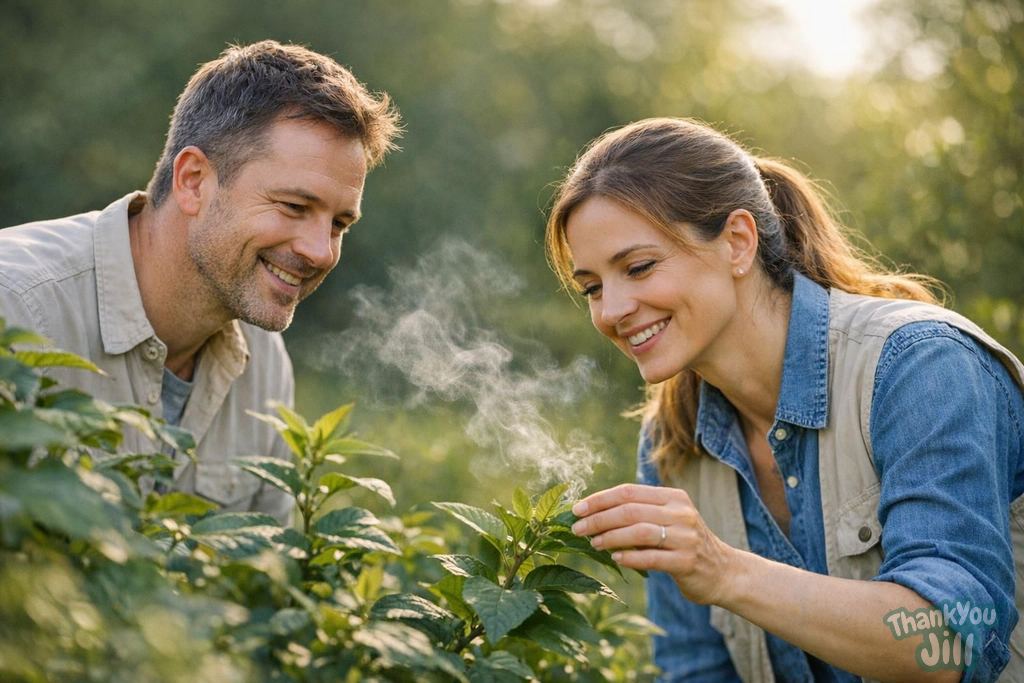
Mycorrhizae affect not only quantity but also quality and flavor of agricultural products. Mycorrhizal tomatoes: studies show that tomatoes grown with AM have higher levels of lycopene (antioxidant), soluble sugars (sweeter), vitamin C, compared to tomatoes grown without fungi with the same chemical fertilizer input. The reason: mycorrhizae improve the absorption of micronutrients (zinc, boron, copper) that are cofactors of antioxidant synthesis enzymes. Strawberries and AM: mycorrhizal strawberries show higher anthocyanin content (red antioxidant pigments) and vitamin C, and longer post-harvest shelf-life (mycorrhizae improve flesh consistency). Basil: basil plants with AM produce more essential oils (linalool, eugenol, estragole): more aromatic. Grapevine: mycorrhizal grapevines show alterations in wine aroma profiles (preliminary studies: different varieties of terpenes and polyphenols). This is opening an area of research on the "microbial terroir" of wine. Implications for organic farming: organic agriculture (which doesn't use soluble phosphate fertilizers) tends to maintain more robust mycorrhizal networks compared to conventional agriculture. This could help explain why many organic products have sensory profiles (taste, aroma) perceived as superior, beyond documented nutritional characteristics.
Mycorrhizal fungi and climate change: a critical relationship
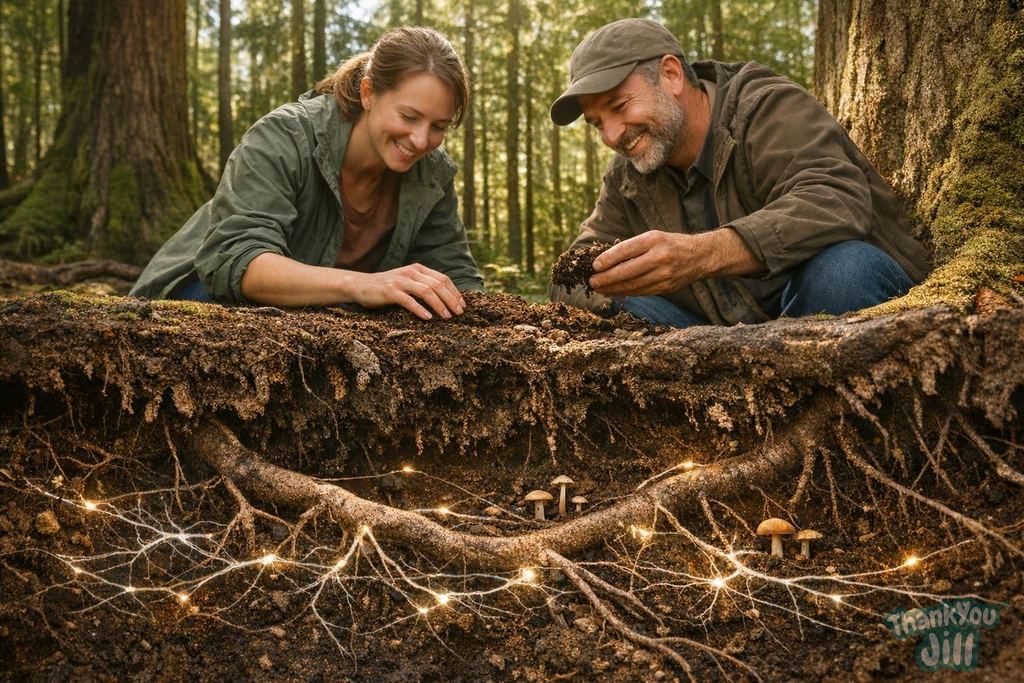
Mycorrhizal networks are a critical component of the global carbon cycle and ecosystem response to climate change. Carbon sequestration: mycorrhizal fungal hyphae are rich in glomalin (a glycoprotein produced by AM fungi): it's estimated that glomalin contains 30–40% of the soil's total organic carbon. It's one of the largest terrestrial organic carbon stocks. ECM fungi in boreal and temperate forests sequester enormous amounts of carbon through their metabolic waste and necromass (dead hyphae). Response to warming: climate warming alters the composition of mycorrhizal communities: some fungal species tolerate heat, others don't. Changes in mycorrhizal communities can alter forest ecosystems' capacity to sequester carbon and resist drought. Drought and AM: drought reduces AM activity but plants that maintain robust AM networks resist water stress better (hyphae access water in soil micropores inaccessible to roots). Mycorrhizal inoculation is an adaptation strategy to increasing drought in agriculture as well. Wildfires and CMN: forest fires destroy soil CMN (especially in shallow soils). The speed of CMN recovery after a fire depends on fragments of adjacent intact forest (inoculum source) and the presence of surviving host plants.
Frequently Asked Questions
What is the main difference between arbuscular and ectomycorrhizae?
Arbuscular mycorrhizae penetrate root cells forming arbuscules for nutrient exchange, while ectomycorrhizae wrap around roots with an external sheath without penetrating cells, exchanging nutrients in the intercellular space.
How do mycorrhizae improve plant drought resistance?
Mycorrhizal hyphae increase water absorption by reaching soil micropores inaccessible to roots, improving the plant's water capacity and helping it better resist water stress during drought periods.
When is it worthwhile to use mycorrhizal inoculants in agriculture?
It's worthwhile to use them in depleted soils or after intensive agricultural practices that destroy fungal networks, to reduce phosphate fertilizer requirements and improve nutrient absorption and crop resistance.
How do mycorrhizae influence the flavor and quality of agricultural products?
Mycorrhizae increase the absorption of essential micronutrients that promote the synthesis of antioxidants, vitamins, and essential oils, improving the flavor, aroma, and shelf-life of fruits, vegetables, and aromatic plants.
Latest News



Comments
No comments yet. Be the first!
Leave a comment