


 Italiano
 Français
 Deutsch
 Español
 Português
 Svenska
 Suomi
Suomi
Carnivorous Plants
When They Hunt to Survive
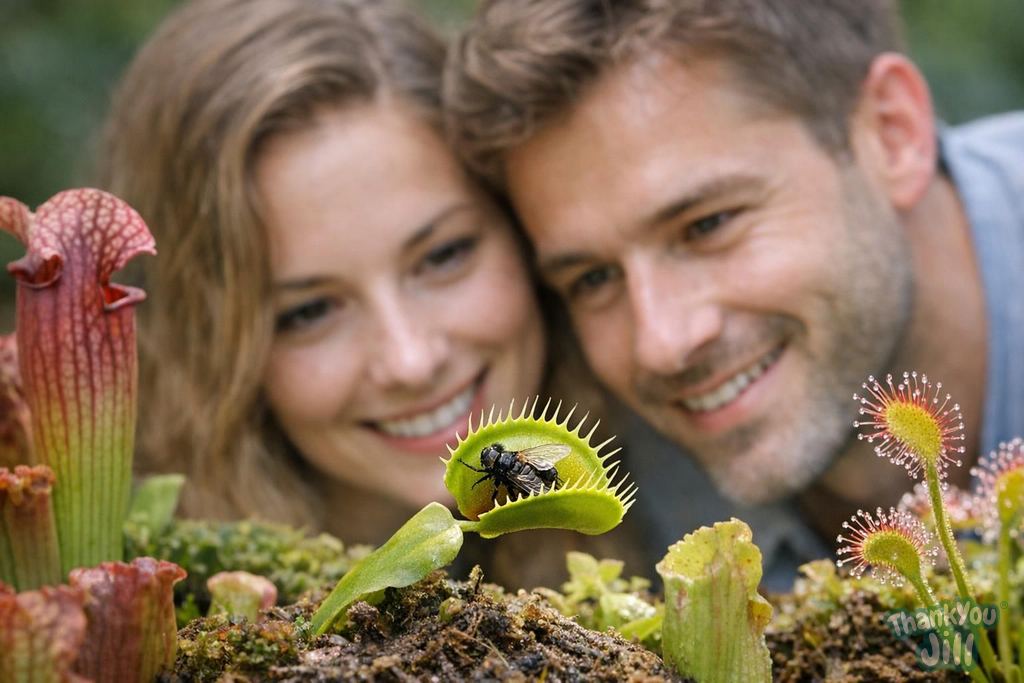
Carnivorous plants (more accurately called "insectivorous plants" or "proto-carnivorous plants") are plants that have evolved the ability to attract, trap, kill, and digest small animals (mainly insects, but also spiders, nematodes, and occasionally small vertebrates like frogs and lizards in larger species) to obtain nutrients, primarily nitrogen, which are scarce in their natural habitats. Plant carnivory has evolved independently at least 6 times across different phylogenetic lineages, confirming that it's an adaptive solution that evolution "discovers" repeatedly under conditions of severe nitrogen deficiency.
The conditions that favor plant carnivory
Carnivorous plants live almost exclusively in habitats with nitrogen deficiency in the soil, combined with abundant sunlight. The paradox: a habitat rich in light (for photosynthesis) but poor in nitrogen (limiting for growth). In these habitats, obtaining nitrogen from digesting animals is more advantageous than the energy cost of producing and maintaining capture organs. Carnivorous plant habitats include: acidic bogs and marshes (pH < 5: acidic soil depletes available nitrogen and limits nitrogen-fixing bacterial activity), white sands (quartzite, with poor nutrient-retention capacity), humid granite rocks (tropical rock faces), oligotrophic waters (nutrient-poor). Carnivory as a supplement: carnivorous plants still perform photosynthesis (they are autotrophs) and obtain most of their energy from photosynthesis. Carnivory supplements nitrogen and phosphate nutrition, it doesn't replace it. In nitrogen-rich environments, some cultivated carnivorous plants (like Dionaea) reduce trap production: the cost of maintaining them isn't justified when nitrogen is available in the soil. An example of metabolic regulation of capture strategy based on environment.
Capture mechanisms: a survey of evolutionary solutions
Carnivorous plants have evolved at least five different types of capture mechanisms. Suction trap (Utricularia: bladderwort): approximately 200 species, found worldwide, including Italy. Small floating or underground bladders with a valve-like door. The bladder is under negative pressure relative to the outside (actively pumped by ion channels). When sensitive hairs on the door are touched by a small aquatic organism (water fleas, copepods, mosquito larvae), the door opens instantly → the negative pressure sucks water and prey into the bladder → the door closes in 0.5–1.5 ms (one of the fastest biological traps known). Prey is digested by enzymes secreted in the bladder. Sticky trap (Drosera, Pinguicula): Drosera (sundew) has leaves covered with glandular hairs with viscous mucus droplets that glisten in the sun like dew. Prey (insects, spiders) stick to the mucus and the more they struggle, the more they become glued. The leaves and hairs slowly bend toward the prey (a process taking hours to days), increasing contact with digestive glands. Pinguicula (butterwort) has flat leaves with a sticky surface. It mainly captures small soft-bodied insects (dipteran larvae, springtails) and occasionally seeds. Snap trap (Dionaea, Aldrovanda): already discussed in detail in the article on touch. The two-lobed trap closes in 100–300 ms at the second stimulus of sensitive hairs. Pitcher trap (Nepenthes, Sarracenia, Heliamphora, Darlingtonia): leaves modified into urns containing digestive fluid. Prey slides over the rim (often waxy or with structures preventing grip) and falls into the liquid. Digestion is partly enzymatic (enzymes secreted by the plant) and partly bacterial. Trapdoor trap (Genlisea): aquatic plants with roots modified into spiral shapes with one-way openings. Nematodes and other soil microorganisms enter the spiral but cannot exit (internal hairs orient them inward). They are digested in the central bulb.
Carnivorous plants in Italy: where to find them
Italy hosts several native carnivorous plant species, some very rare and protected. Drosera rotundifolia (round-leaved sundew): the most common. Present in alpine bogs of Trentino, South Tyrol, Friuli, the Ligurian Alps, and the northern Apennines. Protected in all alpine regions. Drosera intermedia and D. anglica: less common, associated with high-altitude bogs. Pinguicula alpina (alpine butterwort): widespread in bogs and humid rocky faces of the Italian Alps. Pinguicula vulgaris: on humid calcareous rocks in the Alps. Pinguicula corsica (endemic to Corsica and Sardinia). Utricularia vulgaris and U. minor: in stagnant waters and low alpine and subalpine bogs. The submerged leaves with characteristic bladders are visible in summer. Utricularia australis: more common, in stagnant or slowly flowing freshwaters. Conservation status: Italian bogs, the primary habitat of native carnivorous plants, are in sharp decline due to agricultural drainage, peat extraction, eutrophication (nitrogen enrichment from agricultural activities), and climate change (increasing summer drought). Many populations of alpine Drosera and Pinguicula are threatened. Collecting wild carnivorous plants is illegal in Italy (all are protected by the Bern Convention and regional laws). Carnivorous plants for cultivation must come from nursery propagation.

A plant that photosynthesizes like all the others and at the same time sets traps for insects: not out of evolutionary whim, but because it lives in a place where soil nitrogen is nearly zero and light is abundant. Carnivory is the most creative solution to the problem of how to grow when an essential nutrient is lacking. And it works so well that evolution invented it six different times, in different places around the world, with different mechanisms.
Cultivating carnivorous plants: a practical guide
Carnivorous plants are among the most fascinating and increasingly popular houseplants. But they require specific care that mimics their natural nutrient-poor habitat. Fundamental rules for cultivation: water: use exclusively distilled, rainwater, or reverse osmosis water (never tap water: mineral deposits and dissolved substances "fertilize" the substrate and kill carnivorous plants adapted to nutritional poverty). Tray method: keep plants with roots immersed in 2–5 cm of distilled water in a saucer: mimicking the constantly saturated soil of bogs. Substrate: unfertilized acidic peat + perlite in a 50:50 ratio, or sphagnum moss (Sphagnum: bog moss, available from specialized nurseries). Never commercial potting soil, never fertilizers, never garden soil. Light: as much light as possible. Sunny terrace, south-facing windowsill. Dionaea and Sarracenia in full direct sunlight grow magnificently. Drosera and Pinguicula tolerate slightly less light. Feeding the traps: not necessary if the plant is outdoors and catches insects on its own. Indoors, you can offer a small insect (fly, mosquito) every 4–6 weeks per trap. Don't overload. Don't feed mammal meat: the traps don't digest it effectively and produce bacterial rot. Winter dormancy: Dionaea, Sarracenia, and Drosera from temperate zones require winter dormancy (2–4 months at 3–10°C: in a fridge or cold room). Without dormancy, the plant weakens and dies within the next 1–2 years. Tropical Nepenthes (pitcher plants) don't require dormancy. Where to buy: Italian specialized nurseries and certified carnivorous plant shops (such as Carnivorus.it, Sarracenia.it). Avoid plants sold in supermarkets or generic garden centers: they're often in unsuitable substrate and water and die within months.
The controversial ecological use of carnivorous plants: mosquito control
Some carnivorous plants (especially Utricularia) have been studied as potential biological control agents for mosquito larvae in stagnant waters. The potential: Utricularia vulgaris is an efficient predator of mosquito larvae in stagnant waters. Its suction bladders trap first and second instar larvae (the youngest larvae) with high efficiency. Under experimental conditions, dense populations of Utricularia significantly reduce larval populations of Culex and Aedes. The reality: large-scale introduction of Utricularia into water bodies for mosquito control is not practiced on a wide scale because: Utricularia naturally colonizes oligotrophic waters but competes with algae in eutrophic waters (typical of periurban environments where mosquitoes are more abundant); Utricularia populations vary greatly seasonally; they are difficult to manage as a control agent in a predictable way. It remains a fascinating example of potential natural biocontrol, still far from large-scale practical application. Carnivorous plants on terraces and in gardens: some Pinguicula species are excellent traps for aphids and dipterans (fungus gnats) in houseplant pots. Pinguicula vulgaris or the Mexican P. moranensis positioned near houseplants effectively capture small flying insects. A form of non-invasive domestic biocontrol.
Frequently Asked Questions
What are the main capture mechanisms of carnivorous plants and how do they work?
Carnivorous plants use five main mechanisms: suction traps (Utricularia), sticky traps (Drosera, Pinguicula), snap traps (Dionaea), pitcher traps (Nepenthes, Sarracenia), and trapdoor traps (Genlisea). Each mechanism captures and digests small animals to supplement nutrients, especially nitrogen.
How do you properly cultivate a carnivorous plant at home?
Use distilled or rainwater, don't fertilize, and use a poor substrate like acidic peat and perlite. Keep roots moist using the tray method and ensure plenty of sunlight. Some species require winter dormancy to survive.
When is it worthwhile to use Utricularia for biological control of mosquito larvae?
Utricularia is effective at preying on young mosquito larvae in stagnant oligotrophic waters. However, its large-scale use is limited due to competition with algae in eutrophic waters and seasonal variability of populations.
How can you tell if a carnivorous plant needs winter dormancy?
Temperate species like Dionaea, Sarracenia, and Drosera require 2–4 months of dormancy at 3–10°C to prevent weakening and death. Tropical species like Nepenthes don't require dormancy and can grow year-round.


Latest News




Comments
No comments yet. Be the first!
Leave a comment