

 English
 Italiano
 Français
 Deutsch
 Español
 Português
 Svenska
 Suomi
Suomi
Urban Trees
Mental Health in the City
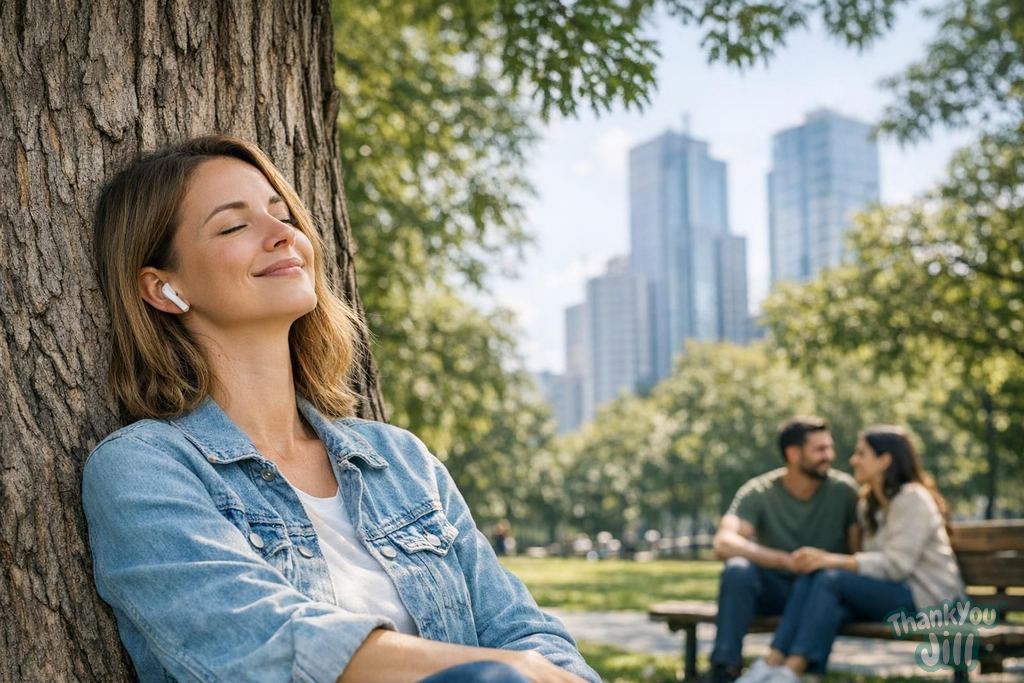
Cities are biologically hostile environments for humans: stripped of the nature in which we evolved, densely populated, noisy, polluted, and overheated by the urban heat island effect. In this context, urban trees are far more than decoration—they're public health infrastructure with measurable effects on residents' physical and mental health. Two decades of research has produced a body of evidence that fundamentally shifts how we see trees in cities: from optional aesthetic element to public health necessity.
Urban Trees and Mental Health: The Epidemiological Evidence
Epidemiological studies (correlating tree presence with population-level health indicators) have produced consistent results. Kardan et al.'s study (Scientific Reports, 2015): analyzing data from 31,000 Toronto residents and correlating street tree density (trees per block) with health records, researchers found that living on a block with 10 more trees than average is associated with: perceived health equivalent to being 7 years younger, a gain of $10,000 CAD annually in perceived well-being, and significant reduction in cardiovascular disease and diabetes risk. Exposure to urban parks and mental health: a study by Toftager et al. (2011) showed that proximity to urban green spaces (parks, public gardens) is associated with: lower prevalence of depression and stress, reduced use of anti-anxiety and antidepressant medications, and increased physical activity. White et al.'s study (2019, Scientific Reports) analyzed well-being data from 20,000 people in the UK: living within 1 km of a green space (park, woodland, coastline) was associated with significantly higher well-being levels—effects equivalent to having employment (versus being unemployed). Street trees and crime: a controversial but widely cited study by Donovan and Prestemon (2012) in Portland, Oregon neighborhoods showed that street tree presence was negatively correlated with crime (especially violent crime and property crime). The hypothesis: trees increase "guardianship" of public space (more people spend time outdoors where trees are present), reducing crime opportunities. An effect of urban safety through green planning.
The Biological Mechanisms: How Trees Affect the Urban Mind
The mechanisms through which urban trees produce mental health benefits are multiple and still partially understood. Direct effect: visual and olfactory: as discussed in the biophilia article, simply viewing natural elements reduces stress (cortisol, heart rate, blood pressure). In cities, even a few street trees produce this visual effect. Urban trees expose passersby to phytoncides: even in urban settings, a tree-lined avenue produces significantly higher concentrations of α-pinene and other terpenes than a treeless street. Effect mediated by physical activity: the presence of trees and green spaces increases the likelihood of walking outdoors, exercising outside, and taking children out to play. Physical activity has well-documented antidepressant and anti-anxiety effects. Trees indirectly stimulate physical activity. Effect on skin and respiratory microbiome: similar to Shinrin-yoku, exposure to the bioaerosols of a tree-lined avenue (soil bacteria, benign fungal spores, pollen—at much lower concentrations than in forests) could have positive effects on the microbiome and immune system. Heat reduction: the urban heat island effect is one of the primary physiological stressors for city residents during increasingly hot summers. Trees reduce air temperature by 2-8°C in the area beneath their canopy. Heat reduction decreases thermal stress, improves sleep quality (high nighttime temperatures are a major summer sleep disorder in cities), and reduces mortality during heat waves. Noise attenuation: tree-lined avenues reduce traffic noise by 5-10 dB in nearby areas. Chronic exposure to traffic noise is a documented physiological stress that increases cardiovascular risk and sleep disorders. Urban trees as natural sound barriers reduce this stress.
Environmental Justice in Urban Trees: Green for All
One of the most concerning aspects of urban tree distribution is its correlation with neighborhood wealth: wealthier neighborhoods tend to have significantly more tree cover than poorer ones. This is an environmental justice issue. The data: in nearly all studied cities (New York, London, Barcelona, Rome), neighborhoods with the highest average income have double or triple the tree cover of neighborhoods with the lowest income. The implications: poor neighborhoods have fewer trees → hotter temperatures → more thermal stress → worse mental and physical health. Residents of poor neighborhoods have less access to green spaces → less stress recovery → higher incidence of depression, anxiety, cardiovascular disease. A chain of environmental injustice layered on top of all other inequalities. Environmental justice policies for urban green: many cities (Amsterdam, Barcelona, Singapore, some US and UK cities) have adopted explicit policies for equitable urban green distribution, prioritizing tree planting in neighborhoods with the lowest tree cover. The "Million Trees" programs in various cities (Los Angeles, New York, Melbourne) explicitly target equity in tree distribution. In Italy: the National Recovery and Resilience Plan (PNRR) includes funding for urban forestry in Italian cities (Mission 2, Component 4), with the goal of planting 6.6 million trees in the 14 major metropolitan areas by 2024. Implementation has been slower than expected due to bureaucratic difficulties and challenges in finding suitable spaces.

Living on a block with 10 more trees is like being 7 years younger. That's not hyperbole—it's epidemiological data from 31,000 people in Toronto. Trees in cities aren't decoration: they're health infrastructure, like hospitals and sewers. The difference is that a hospital costs billions and a tree costs tens of euros. And that's exactly why wealthy neighborhoods have more trees: the wealthy know green is good for you, and they can afford it. Environmental justice in green space is one of the most concrete and pressing challenges facing our cities.
Choosing the Right Trees for Italian Cities
Selecting tree species for urban forestry in Italy requires balancing very different needs: resistance to urban conditions (compacted soil, heat, pollution, drought), ecological benefits (biodiversity, pollinators, shade), maintenance (pruning, fall risk), pollen allergenicity, and leaf litter production. Recommended species for central and northern Italy: linden (Tilia cordata, T. platyphyllos): one of the best trees for Italian cities. Highly valued by pollinators (especially bumblebees). Excellent shade. Fragrant flowers. Pollution-resistant. Moderate allergenicity. European hornbeam (Carpinus betulus): excellent resistance to pruning and urban conditions. Dense canopy. Low allergenicity. Native to Italy. Service tree (Sorbus domestica) and rowan (S. aucuparia): native species with high biodiversity value (fruit for migratory birds). Moderate size. Low allergenicity. Field maple (Acer campestre): native species resistant to pollution and drought. Beautiful autumn coloring. Ornamental cherries (Prunus spp.): spectacular spring blooms. Avoid near sidewalks due to falling fruit. Olive (Olea europaea): species for central and southern Italy. Evergreen, highly drought-resistant. Historical and cultural significance. Species to avoid: poplars (Populus spp.): invasive roots that damage sidewalks, highly allergenic pollen, brittle branches. Oriental plane (Platanus orientalis): vulnerable to Ceratocystis fimbriata (plane canker). Tree of heaven (Ailanthus altissima): invasive species—never plant. Already widespread in Italian cities as a spontaneous species. Princespia and Paulownia: invasive exotic species. National guidelines: CREA (Council for Research in Agriculture) has produced guidelines for urban tree planting in Italy with recommendations on species, planting spacing, distances from infrastructure, and post-planting care.
How ThankYouJill Contributes to the Health of Italian Cities
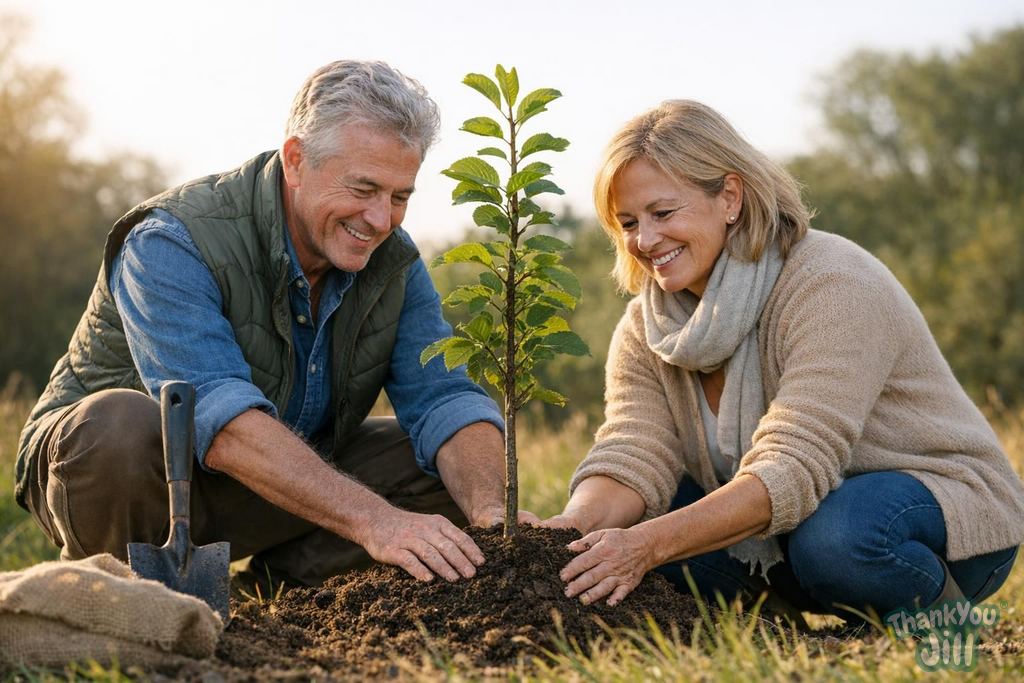
The ThankYouJill tree-planting project in Italy fits into this growing awareness of trees' importance for public health and community well-being. Each tree planted is: a contribution to long-term CO2 sequestration, a biodiversity element in often-simplified landscapes, a potential connection point between fragments of urban and peri-urban nature, a health benefit for people living in surrounding neighborhoods, a tangible legacy that will grow for decades after planting. The systemic vision: the strength of a collective planting project like ThankYouJill isn't in a single tree—it's in the network of trees growing together, forming groves, corridors, and eventually fragments of urban forest. Science tells us this network has emergent properties (heat reduction, improved biodiversity, hydrological services, mental health benefits) that isolated individual trees don't have. Each planted tree is a brick in this collective green infrastructure. The future of Italian cities: demographic projections show that by 2050, 70-80% of the world's population will live in cities. In Italy, 85% of the population is already urban today. Quality of life in cities will increasingly depend on the quality and quantity of urban green space. Investing in trees today is investing in the well-being of future generations in tomorrow's cities. The connection between the individual tree and collective health: each tree planted by ThankYouJill embodies this understanding: nature is not separate from human health. It's its foundation. Planting a tree is an act of public health.
Frequently Asked Questions
What are the direct benefits of urban trees on residents' mental health?
Urban trees reduce visual and olfactory stress, lower cortisol levels and blood pressure, improve sleep quality through heat reduction, and attenuate traffic noise, all contributing to measurable mental well-being in residents.
How does the presence of street trees affect urban safety and crime?
Street trees increase public space usage, improving natural surveillance and reducing crime opportunities, especially violent crimes and property crimes, as demonstrated by studies in urban neighborhoods.
Why is environmental justice important in urban tree distribution?
Wealthier neighborhoods often have greater tree cover while poorer ones have less, causing greater thermal stress and worse mental health in disadvantaged areas. Equity policies aim to balance this disparity to improve public health.
How do you choose the right tree species for urban forestry?
Selection must balance resistance to urban conditions (pollution, drought), ecological benefits, maintenance needs, and allergenicity. Species like linden, European hornbeam, and field maple are recommended, while poplars, tree of heaven, and oriental plane should be avoided due to specific problems.

Latest News
Comments
No comments yet. Be the first!
Leave a comment