


 Italiano
 Français
 Deutsch
 Español
 Português
 Svenska
 Suomi
Suomi
Fair Trade Products
Trustworthy Certifications
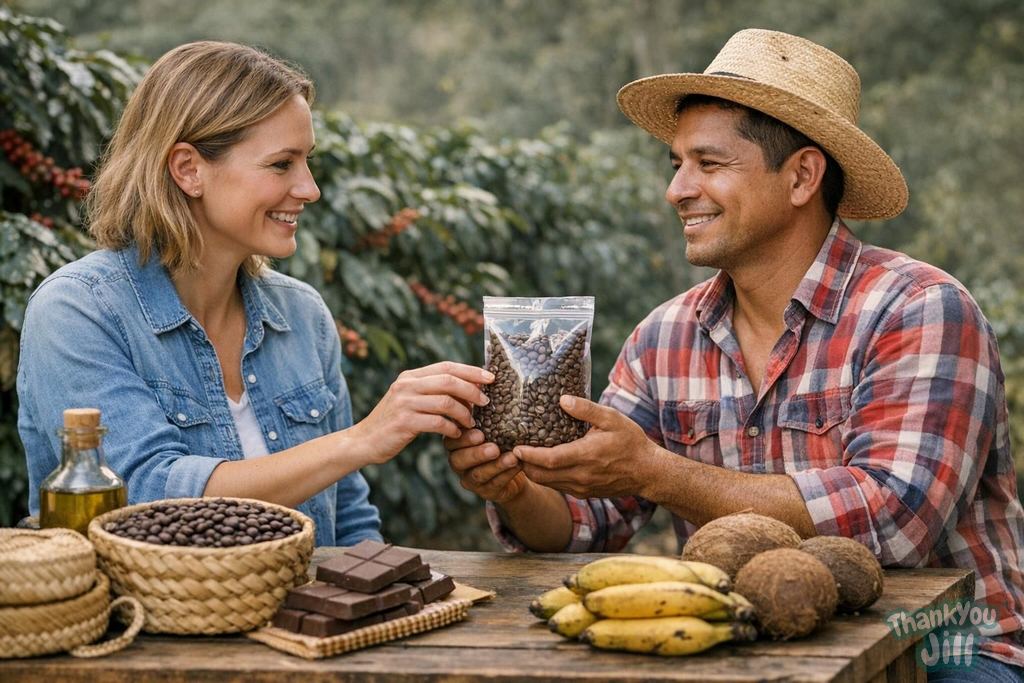
Every morning, when you drink a cup of coffee or eat a chocolate bar, there's a chain of people behind that product: farmers in Ethiopia, harvesters in Ghana, workers in Honduras. Fair trade exists to ensure these people receive fair compensation for their work, rather than being exploited by supply chains where profit concentrates at one end—with large retailers in wealthy countries.
What is fair trade: the fundamental principles
Fair trade is built on several principles: paying producers a guaranteed minimum price that covers sustainable production costs even when global markets collapse; paying an additional "premium" that producers invest in community services (schools, wells, hospitals); building long-term commercial relationships instead of one-off bargain purchases; supporting cooperatives of small producers rather than large plantations; promoting sustainable environmental practices.
Fairtrade: the world's most recognized certification
The Fairtrade International mark (with its stylized triangle logo) is the most widespread and recognized fair trade certification in the world. Managed by Fairtrade International, headquartered in Bonn, it certifies both producers (who must meet Fairtrade standards on prices, working conditions, and the environment) and traders and final producers (who must pay the Fairtrade price and premium).
Fairtrade International operates in over 75 countries, with more than 1.7 million farmers and workers involved. It undergoes regular audits by FLOCERT, an independent certification body. Annual reports are public and verifiable.
Fairtrade vs other marks: the differences
Rainforest Alliance: focuses mainly on environmental sustainability and worker welfare, less on guaranteed minimum prices for producers. It doesn't always guarantee an economic premium. It's preferred by large multinationals because it's cheaper to implement. It's not false, but has different standards from Fairtrade.
UTZ Certified: was another sustainability scheme, now merged with Rainforest Alliance (2018). Products with the old UTZ logo now follow Rainforest Alliance standards.
Bio Equo (BioFairTrade): combines organic and fair trade certification. It's the most complete choice: it guarantees both absence of synthetic pesticides and fair compensation for producers. There's also the Naturland Fair mark that combines Naturland organic with fair trade standards.
Italian fair trade marks
In Italy there are fair trade networks with their own marks: Agices-Equo Garantito certifies Italian fair trade shops. WFTO (World Fair Trade Organization) certifies organizations entirely dedicated to fair trade, not just individual products. CTM Altromercato, Equomercato, Libero Mondo: Italian fair trade importers with long histories and established credibility.
"Fair-washing": how to recognize it
As the fair trade market has grown, so have attempts to exploit the concept without real guarantees. Words like "responsible trade," "sustainable production," "worker respect" without an independent certification logo guarantee nothing. Some large companies use their own internal "sustainability" or "responsibility" schemes without external certification: these are self-declarations with no oversight.
Rule: always look for a recognized third-party certification logo (Fairtrade International, Rainforest Alliance, WFTO, Naturland Fair). Don't trust generic claims without verifiable external certification.
Where to buy reliable fair trade products
Fair trade shops (Altromercato, Libero Mondo, etc.) are the most reliable channel: the entire organization's mission is fair trade. Selected organic supermarkets often have a good selection of certified Fairtrade products. GAS (Solidarity Purchasing Groups) buy directly from verified producers. Online, the shops of Italian fair trade organizations are safe and transparent.
What to buy fair trade makes the most difference
Products where fair trade has maximum impact: coffee (an industry notoriously unfair to growers), cocoa and chocolate (among the most problematic supply chains for rights and working conditions), tea and herbal teas, bananas, cane sugar, cotton. Starting with these products you use regularly maximizes the impact of your choice.

Every fair trade product you choose is a vote for a more just commercial system. You don't need to change everything in a day: start with coffee, chocolate, and bananas. Three choices that make a difference.
The fair trade shopping list to get started
If you want to gradually transition to fair trade without blowing your budget, start with products you use most often and where the price difference is minimal: coffee (1-2 euros more per kg), cocoa powder for baking (Fairtrade available in supermarkets), dark chocolate (Fairtrade brands available in mainstream retail), bananas (Fairtrade ones often cost just a few cents more). These four products already cover the most critical supply chains.
Read Fairtrade's annual reports
Fairtrade International publishes a detailed report every year: how many certified organizations, what premium was distributed, in which countries, for which projects. It's one of the most transparent accountability mechanisms in the sector. Reading even just the summary gives you a concrete idea of where the extra money you pay goes. You'll find the reports on fairtrade.net, available for free.
Teach children why prices are higher
The higher price of a fair trade product is an excellent teaching opportunity with children. Explain why that coffee or chocolate costs a bit more: because the person who grew it was paid fairly, can send their children to school, has access to clean water. The connection between what you buy and the people who produce it is one of the most powerful lessons you can pass on.
Frequently Asked Questions
What is the main difference between Fairtrade and Rainforest Alliance certification?
Fairtrade guarantees a minimum price and an economic premium to producers, ensuring fair compensation and community investments. Rainforest Alliance focuses more on environmental sustainability and worker welfare, but doesn't always guarantee an economic premium to producers.
How can you tell if a fair trade product is truly certified and reliable?
Check for the presence of recognized certification logos such as Fairtrade International, Rainforest Alliance, WFTO, or Naturland Fair. Be wary of generic claims like "responsible trade" without verifiable external certification, as these are often self-declarations with no oversight.
When should you start buying fair trade products and which ones make the most difference?
You should start right away, beginning with everyday products like coffee, chocolate, bananas, and cocoa, where fair trade has maximum impact and the price difference is minimal, thus maximizing your contribution to fairer commerce.
How much does the Fairtrade premium affect the final product price and how is it used?
The Fairtrade premium adds a slightly higher cost to the base price, which is invested by producers in community services such as schools, wells, and hospitals, improving living and working conditions in the agricultural communities involved.


Latest News



Comments
No comments yet. Be the first!
Leave a comment