


 Italiano
 Français
 Deutsch
 Español
 Português
 Svenska
 Suomi
Suomi
Hive Products
How to Recognize Pure Honey and Propolis
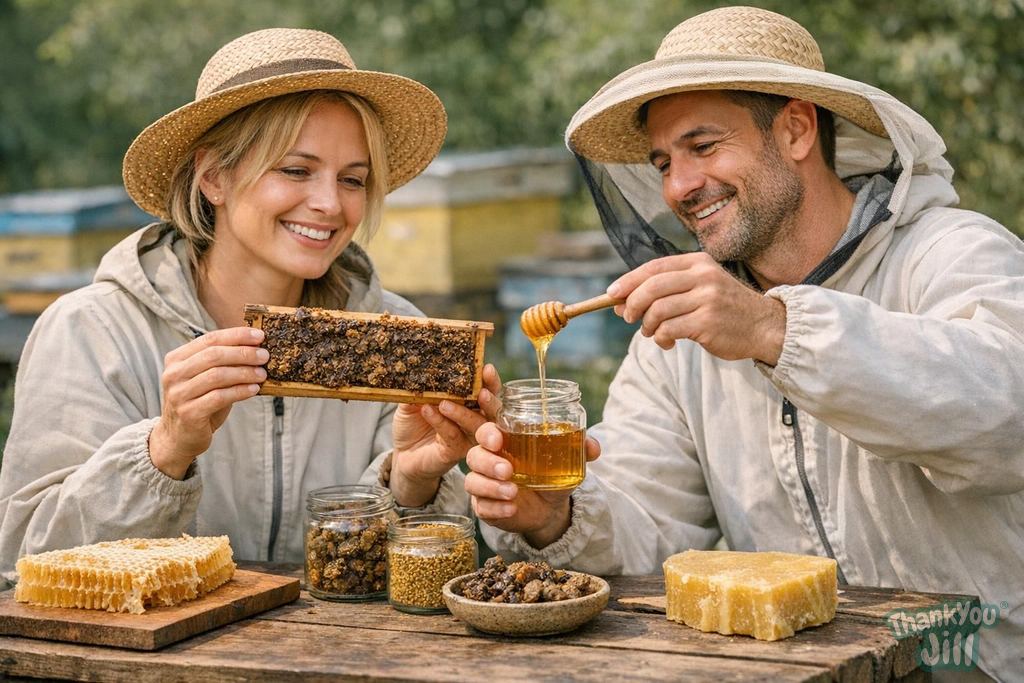
Honey is one of the most counterfeited foods in the world. Not because it's rare, but because it's expensive to produce the right way and easy to adulterate without the average consumer noticing. Glucose syrups, high-fructose corn syrups, Chinese honey treated with antibiotics banned in Europe—the honey market is full of pitfalls. The same goes for propolis, royal jelly, and pollen. Learning to recognize genuine quality is worth a few minutes of reading.
How Honey Is Produced: The Basics for Understanding Quality
Bees collect flower nectar, transport it to the hive, and transform it through salivary enzymes, water evaporation, and maturation in cells. The process takes weeks. Mature honey has a moisture content below 20%, which gives it natural stability and resistance to fermentation.
Honey produced hastily, extracted before complete maturation, has too much moisture and ferments. To extend shelf life, some unscrupulous producers overheat it: this eliminates fermentation problems but destroys enzymes, vitamins, and natural antibacterial properties.
How to Recognize Quality Pure Honey: The Signs
Crystallization: pure honey crystallizes naturally over time (except for some varieties like acacia and chestnut honey, which crystallize slowly). Honey that never crystallizes, even after months, may have been adulterated with syrups or excessively heated. Crystallization is a positive sign, not a flaw.
Color and aroma: these vary greatly depending on the flower source. Acacia honey is light and delicate. Wildflower honey is amber-colored. Chestnut is dark and bitter. Eucalyptus honey has a minty note. A "wildflower" honey that's always identical, bottle after bottle, is suspicious: floral biodiversity produces natural variations.
Label: it must indicate the country or countries of origin of the honey (European requirement since 2015). "Blend of honeys from multiple EU and non-EU countries" is legal but doesn't say much. Quality honey lists a specific country, geographic region, and named apiaries.
The Most Common Honey Adulterations
Addition of glucose or fructose syrup: increases sweetness, reduces crystallization, lowers production costs. Hard to detect without laboratory analysis (NMR test—nuclear magnetic resonance). It's the most widespread fraud globally.
Imported honey without traceability: much Chinese honey enters Europe through triangulation (declared as coming from other countries). The issue isn't necessarily taste quality, but the presence of antibiotic residues (chloramphenicol, nitrofurans) banned in Europe.
Excessive heating: destroys enzymes like diastase and invertase, lowers hydroxymethylfurfural content (HMF within limits). Honey with low enzyme activity has likely been treated at high temperatures.
How to Buy Honey with Real Guarantees
Direct local beekeepers are your best guarantee: you can visit the hives, see the process, ask questions. Farmers' markets with certified beekeepers. Honey with organic certification (EU organic leaf): guarantees the absence of pesticide and antibiotic residues in the hive and foraging radius. Italian beekeeping cooperatives with supply chain traceability.
Propolis: A Hive Treasure Often Adulterated
Propolis is the resin collected by bees from tree buds and bark, processed with wax and salivary secretions. Bees use it to seal the hive and defend it against microbial infections. It has antibacterial, antiviral, and antifungal properties documented by scientific research.
The problem: pure propolis is dense, sticky, and has a strong, pungent taste. Commercial propolis is often diluted with alcohol, water, glycerin, and various additives. A quality propolis tincture has a dry extract concentration of at least 10-15%. Always read the label and verify the percentage of actual propolis in the product.
Royal Jelly and Pollen: How to Recognize Quality
Royal jelly deteriorates quickly: it must be stored in the refrigerator (0-4°C) or frozen. Freshness is essential. Buy only from producers who guarantee the cold chain. Bee pollen should be dry (moisture below 6%), fragrant, and varied in color (floral biodiversity). Monochromatic pollen is often poor quality.

A jar of pure honey is a concentrate of labor: thousands of bees, hundreds of trips, weeks of maturation. Paying the fair price for real honey isn't a luxury—it's respect for those who produce it and for yourself.
The Crystallization Test
Buy a jar of acacia honey (crystallizes slowly) and one of wildflower honey (crystallizes faster). Store them at room temperature. After three or four months, the wildflower honey should begin to crystallize in a granular way. If it remains liquid and transparent for many months, it may have been adulterated or excessively heated. Natural crystallization is never uniform: it's a good sign of purity.
Where to Buy Verified Quality Honey
Look for certified organic local beekeepers: on the Ministry of Agriculture website you'll find a list of organic operators by region, filtering for "beekeeping." Visit local beekeeping fairs: beekeepers present are often artisans with limited, high-quality production. Regional beekeeping associations (each Italian region has one) can point you to reliable member producers.
How to Use Propolis Effectively
Alcohol-based propolis tincture is the most concentrated and bioavailable form. For internal use (immune system, throat): 20-30 drops in water, two or three times daily, for short periods. For external use (minor wounds, canker sores, gingivitis): apply directly with a cotton swab. Don't use during pregnancy without consulting a doctor. If you're allergic to bees or pollen, do a skin test first.
Honey Isn't for Everyone in the Same Way
Honey is a natural sugar, but it's still sugar: about 300 kcal per 100 grams, with variable glycemic index (lower for acacia, higher for clover honey). For diabetics, it should be used with great moderation and never as a "healthy" sugar substitute. For children under 12 months it's forbidden: it can contain Clostridium botulinum spores that the immature immune system cannot neutralize.
Frequently Asked Questions
How do you recognize pure, unadulterated honey?
Pure honey crystallizes naturally over time, has a moisture content below 20%, and varies in color and aroma based on the flower source. Honey that never crystallizes or has an always-identical aroma may be adulterated or excessively heated.
What are the most common honey adulterations and how do they affect quality?
The most common adulterations include adding glucose or fructose syrups, which increase sweetness but reduce crystallization, and excessive heating, which destroys natural enzymes. These treatments compromise the nutritional and antibacterial properties of honey.
How do you choose authentic, quality propolis?
Pure propolis is dense, sticky, and has a strong taste. Quality tinctures contain at least 10-15% dry extract of propolis. It's important to read the label to verify concentration and be wary of products diluted with alcohol, water, or additives.
When is it worth buying honey from certified organic local beekeepers?
It's worth buying from certified organic local beekeepers because they guarantee the absence of pesticide and antibiotic residues, allow you to verify the production process directly, and offer honey with superior traceability and quality compared to industrial products.
Latest News




Comments
No comments yet. Be the first!
Leave a comment