


 Italiano
 Français
 Deutsch
 Español
 Português
 Svenska
 Suomi
Suomi
How to Wash Fruit and Vegetables to Remove Residues
Effective techniques for eliminating residues
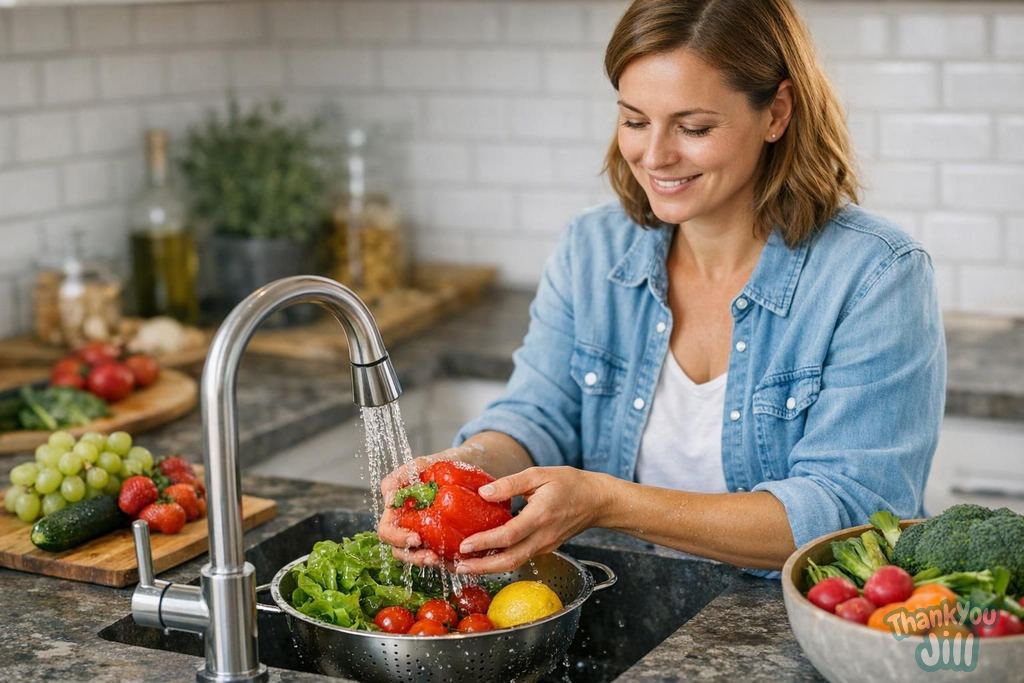
How many times have you rinsed an apple under water for five seconds and eaten it convinced you've "washed" it? It's better than nothing, but far from ideal. The surfaces of fruit and vegetables can harbor pesticide residues, coating waxes (used for shine and preservation), bacteria (E. coli, Salmonella, Listeria), mold spores, soil, and dust. Effective washing requires a bit more attention.
Water alone works, but with the right conditions
Research from the University of Massachusetts compared various washing methods. Running water, if used for at least 30-60 seconds with light mechanical scrubbing, removes most surface residues. Water is more effective than simple soaking: the physical flow carries away contaminants instead of recycling them in stagnant water.
Water temperature makes little difference for pesticides. Cold water is sufficient. Hot water can damage some delicate produce (strawberries, raspberries) and accelerate deterioration.
Baking soda: the most effective method for pesticides
A study published in the Journal of Agricultural and Food Chemistry in 2017 compared various methods for removing pesticides from apples. The surprising result: a baking soda solution (1 teaspoon per 250 ml of water) soaked for 12-15 minutes removed 70-80% of surface pesticides—significantly more than plain water alone (plain water: 20%) or sodium hypochlorite (diluted bleach, used by industry: about 50%).
The mechanism: baking soda has an alkaline pH (around 8.3) that helps degrade and solubilize certain organophosphate and pyrethrin pesticides. It's not magic, but it's the best home method available with scientific evidence to support it.
Vinegar: useful against bacteria, less effective for pesticides
Diluted white vinegar (1 part vinegar to 3 parts water) is effective against bacteria like E. coli and Salmonella. It has documented antimicrobial action. For pesticides, however, effectiveness is modest and similar to water alone. The acidic pH doesn't degrade pesticides as well as baking soda.
Ideal use of vinegar: for produce consumed raw and where bacterial risk is relevant (salads, fresh herbs, strawberries). Don't expect major pesticide removal.
Salt: myth or reality
Saltwater is a traditional method in many Asian and Mediterranean kitchens. It effectively removes hidden insects (cabbage, broccoli, lettuce: small aphids detach in saltwater). Against pesticides, effectiveness is no better than plain water. Salt has no special properties for degrading pesticides.
Commercial fruit and vegetable washing products
There are commercial sprays and solutions "specifically for fruit and vegetables" sold in health food stores. Some research shows that certain products (based on citric acid, natural surfactants) can be slightly more effective than plain water. But none significantly outperform baking soda. And they cost far more than a 500-gram box of baking soda.
Specific technique by product type
Hard-skinned fruits (apples, pears, peaches, zucchini): soak in baking soda solution for 10-15 minutes, then scrub with a vegetable brush under running water. Delicate fruits (strawberries, raspberries, blueberries): rinse in a colander under running water for 30-60 seconds, without soaking (they'd lose flavor and texture). Leafy vegetables (lettuce, spinach, arugula): immerse in water with a little vinegar or baking soda for 5 minutes, then rinse. Vegetables with crevices (broccoli, cauliflower): soak in saltwater for 15 minutes to remove hidden insects, then rinse thoroughly.
What washing cannot do
Washing removes surface pesticides, not systemic ones (those that penetrate the flesh through the plant's circulation). Some modern pesticides are designed to be systemic: they enter the plant to be more resistant to rain. Washing won't remove them. For these, the only protection is organic.
Peeling the produce removes most pesticides (concentrated in the skin), but also eliminates fiber, vitamins, and antioxidants contained in the skin. For "Dirty Dozen" products where you can peel (peaches, apples): it's a choice, not an obligation if you buy organic.

Washing fruit and vegetables properly is the simplest act of care you can do for your table. Nothing special is needed: baking soda, water, and a little time. Surface pesticides disappear, flavor remains.
The optimal washing protocol for daily use
For non-organic fruit and vegetables you eat with the skin: fill a bowl with fresh water and dissolve one teaspoon of baking soda per 250 ml. Immerse the produce for 10-15 minutes. Rinse thoroughly under running water, scrubbing with your hands or a brush. Dry with a clean cloth. For organic produce, running water with scrubbing for 30 seconds is sufficient.
The vegetable brush: a one-euro investment
Buy a vegetable brush (they cost about one euro and are available at any hardware store or supermarket). Using it to scrub apples, pears, cucumbers, zucchini, and carrots increases washing effectiveness by 30-40% compared to hands alone. Wash it after each use and replace it every three months.
Don't wash before storing
The most common mistake: washing fruit and vegetables and then storing them in the refrigerator. Moisture promotes bacterial growth and accelerates deterioration. Always wash only immediately before eating, never before storing.
Teach children proper washing
Children touch produce with their hands and put it in their mouths before any washing. Teach them to wash their hands before touching food, and to wash fruit and vegetables together as a routine: it's an important hygiene habit just like washing hands before eating.
Frequently Asked Questions
What is the most effective method for removing pesticides from hard-skinned fruit?
The most effective method is soaking in a baking soda solution (1 teaspoon per 250 ml of water) for 10-15 minutes, followed by scrubbing with a brush under running water, which removes up to 70-80% of surface pesticides.
How to use vinegar to wash fruit and vegetables and what are its limitations?
Diluted white vinegar (1 part vinegar to 3 parts water) is effective at reducing bacteria like E. coli and Salmonella, but has modest effectiveness against pesticides, similar to plain water. It's recommended for produce consumed raw with relevant bacterial risk.
When is it worth using saltwater to wash vegetables?
Saltwater is useful for removing hidden insects in vegetables with crevices or leaves like broccoli and lettuce, but it's no more effective than plain water at removing pesticides. It's a traditional method for eliminating small pests.
What happens if you wash fruit before storing it in the refrigerator?
Washing fruit before storing it increases moisture, promoting bacterial growth and accelerating deterioration. It's best to wash fruit and vegetables only immediately before eating to maintain freshness and safety.


Latest News




Comments
No comments yet. Be the first!
Leave a comment