


 Italiano
 Français
 Deutsch
 Español
 Português
 Svenska
 Suomi
Suomi
Bread
Sourdough vs Commercial Yeast - Key Differences
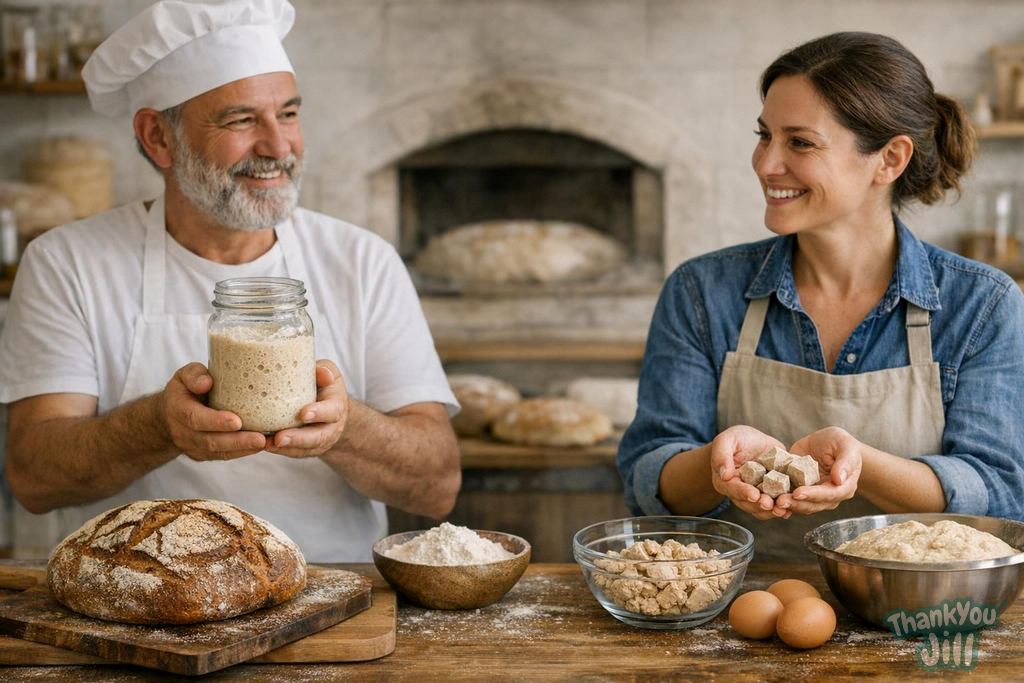
Sourdough bread is experiencing a global renaissance. Artisanal bakeries, food blogs, trendy pastry shops: everyone celebrates "sourdough" as if it were a modern discovery. In reality, sourdough is as ancient as bread itself. For millennia, it was the only way to leaven dough. Commercial baker's yeast is the historical newcomer: it's existed in commercial form since the 19th century. But beyond the romantic historical narrative, are there real, documented nutritional and digestive differences between the two methods?
What are these two leavening agents: the biology
Baker's yeast (Saccharomyces cerevisiae) is a single-celled fungus industrially selected for its efficiency: it produces CO2 rapidly and predictably. A cube of fresh yeast or a packet of active dry yeast can leaven 500g of flour in 1-2 hours. It's practical, economical, and replicable with industrial precision.
Sourdough starter (mother culture, sourdough starter) is a complex biological consortium: it contains saccharomycetes (wild yeasts, often multiple species), lactic acid bacteria (primarily Lactobacillus plantarum, L. sanfranciscensis, L. brevis), and acetic acid bacteria. This fermentative ecosystem requires days to work, not hours. It's not just leavening: it's lactic and acetic fermentation happening simultaneously.
Long fermentation: what it produces differently
Fermentation with sourdough typically lasts 8-24 hours (compared to 1-3 hours with baker's yeast). During this time, lactic acid bacteria produce lactic and acetic acids that lower the bread's pH, profoundly modifying the structure of starches and proteins.
Reduced glycemic index: lactic acid modifies starch structure, making it less accessible to digestive enzymes. Sourdough has a GI of 52-56, while bread made with baker's yeast has a GI of 70-75. For those monitoring blood sugar, this difference is significant and clinically relevant.
Reduced phytates: whole grains contain phytate (phytic acid), which chelates minerals like iron, zinc, and calcium, reducing their absorption. During long lactic fermentation, the enzyme phytase naturally present in grains breaks down phytates. Whole grain sourdough bread has significantly more bioavailable iron and zinc compared to the same bread made with baker's yeast. One study showed iron bioavailability increases of 50% and zinc increases of 60%.
Pre-digested gluten: bacterial proteases and wild yeast enzymes begin breaking down gluten proteins during long fermentation. Sourdough isn't suitable for celiacs (it still contains gluten), but many people with non-celiac gluten sensitivity tolerate it better. The gluten structure changes during fermentation in ways that make it more digestible for some people.
How to recognize authentic naturally leavened bread
The bread market is full of misleading labels. "Artisanal bread," "country bread," "rustic bread": none of these say anything about the leavening method. To identify real sourdough, you need to read the ingredient list. It must contain: flour, water, salt, and "sourdough starter" or "natural yeast" or "sourdough culture." It should not contain baker's yeast (if both sourdough and baker's yeast are present, fermentation has been accelerated: fewer benefits).
Authentic sourdough has a slightly tangy flavor (you can taste the lactic and acetic acids), a thick and crispy crust, a crumb with irregular air pockets (the holes aren't uniform like in industrial bread), and better shelf life: its natural acidity protects it from mold for 4-7 days instead of 1-2 days for regular bread.
Baker's yeast: when it's the right choice
Baker's yeast isn't the enemy. For doughs that need to rise quickly, for focaccia and pizza, for leavened pastries, for those without time to maintain a sourdough starter: it's a perfectly valid tool. The nutritional difference compared to sourdough is real, but not dramatic for those with an overall varied and balanced diet. Demonizing baker's yeast is just as excessive as uncritically praising sourdough.

Sourdough is time transformed into nourishment. Every hour of fermentation lowers the glycemic index, improves digestibility, and releases minerals. It's not nostalgia: it's biochemistry that industrial bread made in 90 minutes simply cannot replicate.
How to create your own sourdough starter from scratch
Day 1: Mix 50g of whole wheat flour (or rye) with 50ml of room temperature water. Cover with a damp cloth, leave at 20-25°C. Day 2: Add 50g of flour and 50ml of water, stir. Days 3-7: Repeat daily (the so-called "feeding"). Around day five, you'll see bubbles and the mixture will rise after feeding: it's ready. It takes 7-14 days to become active. Once ready, it can live in the refrigerator and be fed once a week.
How to recognize authentic naturally leavened bread at an artisanal bakery
Ask the baker three questions: Do you use sourdough starter or baker's yeast? How long does the dough ferment? The answer "overnight" or "12-24 hours" is a good sign. What flour do you use? An answer with specific varieties (spelt, heritage wheat, rye) indicates expertise and care. A baker who answers with pride and details probably makes good bread. One who responds with vague generalities probably uses baker's yeast with a bit of sourdough for marketing purposes.
The slice test: how to evaluate the bread you buy
Cut the bread and observe the crumb: irregular air pockets with holes of varying sizes indicate true slow fermentation. Smell it: it should have a slight tangy aroma. Taste it: a mildly tangy finish, not unpleasant. Leave it out of the fridge for three days: if it molds quickly, it wasn't made with true sourdough (the acidity of real sourdough delays mold growth). These sensory tests aren't absolute but provide reliable indicators.
Bread at home: a basic recipe without complications
If you don't have sourdough but want bread that's more digestible than regular bread: use less baker's yeast (2-3g per 500g of flour instead of the usual 7-10g) and let it ferment in the refrigerator for 12-18 hours. This "cold retard" technique slows fermentation, allows natural bacteria in the flour to work a bit, and produces bread with better flavor and digestibility compared to rapid fermentation at room temperature.
Frequently Asked Questions
What are the main differences between sourdough and baker's yeast in bread fermentation?
Sourdough ferments slowly (8-24 hours) with lactic and acetic acid bacteria, lowering pH and improving digestibility and glycemic index. Baker's yeast acts quickly (1-3 hours), producing CO2 but without lactic fermentation, resulting in less digestible bread with a higher glycemic index.
How can you recognize authentic naturally leavened bread when purchasing?
Authentic naturally leavened bread contains only flour, water, salt, and sourdough starter without baker's yeast. It has a slightly tangy flavor, thick and crispy crust, crumb with irregular air pockets, and keeps longer without molding compared to bread made with baker's yeast.
When is it better to use baker's yeast instead of sourdough in bread making?
Baker's yeast is ideal for doughs requiring quick rising, such as pizza, focaccia, and leavened pastries, or when time is limited. While it has fewer nutritional benefits than sourdough, it's practical, economical, and suited for those seeking speed without significantly compromising quality.
How can you improve the digestibility of homemade bread without using sourdough?
Use a reduced amount of baker's yeast (2-3g per 500g of flour) and let the dough ferment in the refrigerator for 12-18 hours (cold fermentation). This slows fermentation, promotes natural bacterial activity, and produces more digestible and flavorful bread compared to rapid fermentation.


Latest News




Comments
No comments yet. Be the first!
Leave a comment