


 Italiano
 Français
 Deutsch
 Español
 Português
 Svenska
 Suomi
Suomi
Farmed vs Wild Fish: Pros and Cons
Pros and Cons
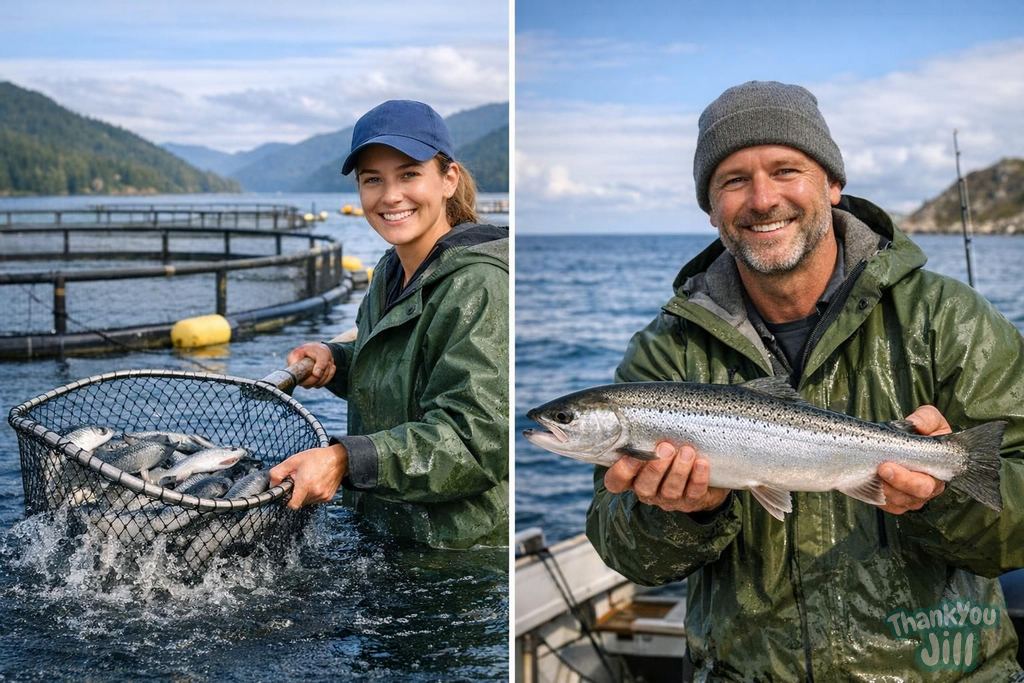
Farmed fish is often viewed with suspicion: antibiotics, artificial dyes, overcrowding, feed-based diets. Wild fish is idealized: natural, pure, free. The reality, as almost always, is far more nuanced. Some certified farmed fish species are nutritionally excellent and environmentally preferable to wild fishing of certain species. Others truly have concerning profiles. The key is understanding the differences case by case.
Salmon: The Most Studied Case
Atlantic salmon (Salmo salar) is almost entirely farmed: wild Atlantic stocks are nearly depleted. The salmon you eat almost certainly comes from Norway, Scotland, or Chile.
Omega-3: Farmed salmon has total omega-3 levels (EPA+DHA) similar to or even higher than wild: 2-3g per 100g compared to 1.5-2g in wild Pacific salmon. This is because modern salmon feed includes fish oil and algae rich in omega-3. However, the omega-3/omega-6 ratio is less favorable in farmed fish (corn and soy-based feeds increase omega-6).
Contaminants: Farmed salmon historically accumulated more PCBs and dioxins than wild salmon (feeds concentrated these contaminants). Modern feeds have drastically reduced these levels: from 2000 to 2020, PCB levels in farmed salmon dropped by about 70% thanks to cleaner feeds. Today, Norwegian ASC-certified farmed salmon has contaminant levels well within European safety limits.
Astaxanthin dye: Wild salmon has pink flesh due to astaxanthin naturally present in the crustaceans it feeds on. Farmed salmon must receive astaxanthin in its feed to achieve the same coloring. This is not a safety issue: astaxanthin is a powerful antioxidant also used as a human supplement. But the choice of coloring level is aesthetic, not nutritional.
Sea Bass and Gilthead Bream: Farmed vs Wild Comparison
Farmed sea bass and gilthead bream (dominant in Mediterranean production, mainly Greece, Turkey, Italy) generally have lower omega-3 content than wild fish: feeds based on grains and soy don't favor long-chain omega-3 synthesis. However, many modern farms are incorporating algae meals and quality fish oils into feeds, improving the profile.
The advantage of farmed sea bass and bream: farmed species reduce pressure on wild stocks of these species, which are limited in the Mediterranean anyway. ASC-certified farmed sea bass has a more controlled environmental impact than wild-caught fish caught with non-selective methods.
Species Where Wild Is Always Preferable
Some species show very marked nutritional differences between wild and farmed. Wild Pacific tuna (Albacore, Skipjack) has superior omega-3 profiles and protein quality compared to farmed varieties (still very rare). Wild Atlantic cod (from the North Atlantic, MSC-certified) has superior organoleptic quality and excellent safety profile. Sardines and anchovies are practically never farmed: they're almost always wild, and are among the best choices for this reason.
Real Problems with Uncertified Aquaculture
Not all aquaculture is the same. Uncertified aquaculture, predominantly in Southeast Asia (shrimp, pangasius, tilapia), can present real problems: use of unregulated antibiotics (some banned in Europe), excessive stocking density, poor-quality feed, feed contamination from untraced fish meal. For these products, ASC certification or European/North American origin are important indicators.
How to Read Farmed Fish Labels
By European law, farmed fish must indicate on the label: "farmed" (or "farm-raised"), the country where it was farmed, the production method (aquaculture). This also applies to restaurants (obligation to indicate on the menu or upon request). Norwegian farmed salmon with ASC certification is among the safest and best-controlled choices available. "Basa" pangasius from Vietnam without certification is among the choices with the fewest guarantees.

It's not wild vs farmed: it's certified quality vs unknown quality. ASC-certified Norwegian farmed salmon nourishes better and more safely than wild fish of unknown origin. The logo matters as much as the species.
The Practical Hierarchy of Choices
First choice: certified wild local fish MSC (sardines, mackerel, Italian anchovies, Mediterranean blue fish). Second choice: ASC farmed salmon (Norway, Scotland), Mediterranean ASC sea bass and bream. Third choice: MSC-certified canned tuna, European or North American ASC shrimp. Avoid or rarely buy: uncertified pangasius, Asian shrimp without ASC, fish of unknown origin without complete labeling.
Frequency and Variety: The Best Strategy
Instead of always eating the same type of fish (often canned tuna or salmon), build a rotation: blue fish twice a week, salmon once, white fish (cod, plaice, sole) once. This rotation diversifies your omega-3 and mineral intake, reduces repeated exposure to potential contaminants specific to one species, and distributes consumption pressure across multiple fish stocks.
How to Cook Fish Without Destroying Omega-3
Omega-3 EPA and DHA are sensitive to excessive heat and oxidation. Ideal cooking: steaming, en papillote (in parchment), at low temperature (60-70°C at the center) or raw for quality salmon (sashimi, carpaccio). Deep frying at high temperature oxidizes omega-3 fats and significantly reduces the cardiovascular benefits of fish. Brief grilling over high heat is fine if not charred. Avoid frying fatty fish (salmon, mackerel): it wastes its main nutritional advantage.
Frequently Asked Questions
What is the main difference between farmed and wild salmon in terms of omega-3?
Farmed salmon contains similar or higher total omega-3 levels (EPA+DHA) compared to wild salmon, thanks to enriched feeds, but has a less favorable omega-3/omega-6 ratio due to ingredients like corn and soy.
How can you tell if farmed fish is safe and high quality?
Safe, high-quality farmed fish must have certifications like ASC and clearly indicate origin and farming method on the label. These elements guarantee controls on contaminants, feed, and farming practices.
When is it worth choosing farmed fish over wild?
It's worth choosing certified farmed fish when wild stocks are depleted or at risk, as in the case of Atlantic salmon, or for species like sea bass and bream, where farming reduces pressure on wild populations.
How should you cook fish to preserve omega-3?
To keep omega-3 intact, it's best to cook fish at low temperature (60-70°C), steamed, in parchment, or consume it raw if high quality. Avoid high-temperature frying, which oxidizes and destroys omega-3.

Latest News




Comments
No comments yet. Be the first!
Leave a comment