

 English
 Italiano
 Français
 Deutsch
 Español
 Português
 Svenska
 Suomi
Suomi
Vegetable Oils
Which to choose for frying and for raw consumption
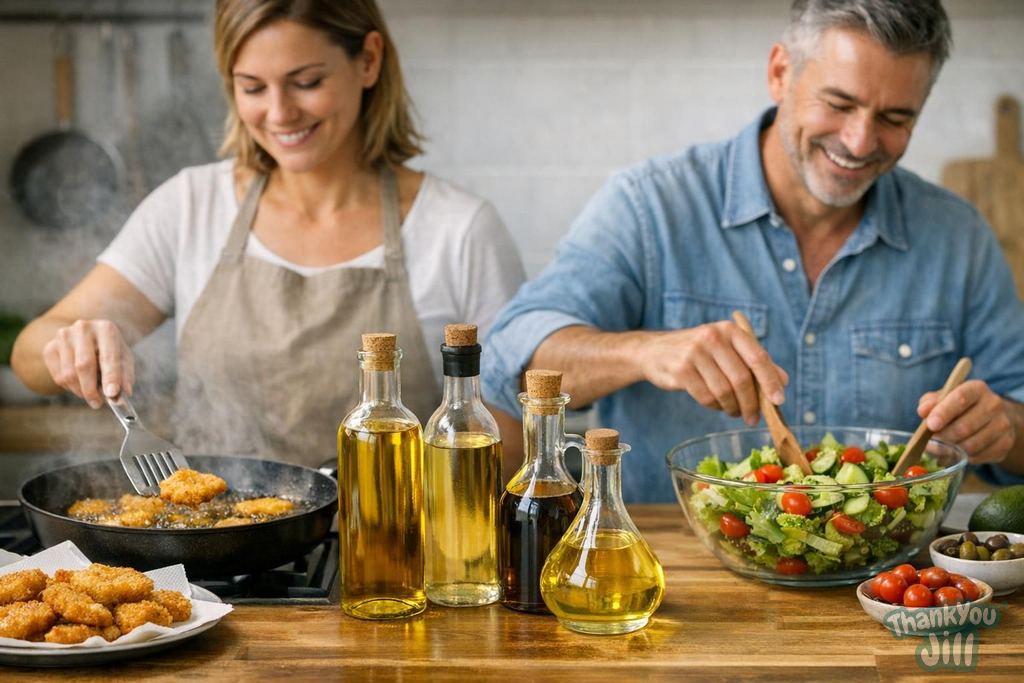
Most kitchen cabinets hold three or four different oils. But do you really know which one to use for what? Peanut oil, sunflower oil, coconut oil, corn oil, flaxseed oil, hemp oil—each has a completely different fatty acid profile, smoke point, and heat stability. Using the wrong oil for frying isn't just about flavor: it can produce toxic compounds nobody wants in their food.
Smoke point: the most important parameter for cooking
The smoke point is the temperature at which oil begins to break down, producing visible smoke and oxidation compounds: acrolein, aldehydes, free radicals. These compounds are irritating, potentially toxic, and increase the risk of chronic disease if consumed regularly. For frying and high-temperature cooking, it's essential to use oils with a smoke point above your intended cooking temperature.
Reference temperatures: pan frying 160–180°C, deep frying 175–190°C, wok cooking 200–230°C, light sautéing 120–150°C, oven cooking 160–200°C.
The best oils for frying
Extra virgin olive oil (EVOO): smoke point 180–210°C (varies with quality). Stable thanks to antioxidant polyphenols that protect fats from oxidation. Excellent for pan frying and moderate-temperature cooking. Contrary to popular myth, frying with EVOO is safe and produces quality fried foods. Only for very intensive frying (190°C+) or professional large-scale operations is it less economical than other oils.
Peanut oil: smoke point 230°C. Excellent for deep frying and wok cooking. Stable fatty acid profile (predominantly monounsaturated). Neutral taste that doesn't alter food flavor. Caution: peanut allergy (allergen declaration required on label).
Refined coconut oil (not virgin): smoke point 230–240°C. Composed predominantly of saturated fats (very stable at heat, don't oxidize easily). Lacks the tropical characteristics of virgin coconut oil (neutral taste). Used professionally in some industrial frying. The debate about the health effects of coconut oil's saturated fats remains open: use in moderation.
High oleic sunflower oil: smoke point 230°C. Rich in oleic acid (monounsaturated, stable), low in unstable polyunsaturated fats. Excellent for frying. Neutral taste. Often used in the food industry for its stability and relatively low cost.
The best oils for raw consumption
Extra virgin olive oil: the absolute reference for raw use in Mediterranean tradition. Rich in oleocanthal, oleuropein, oleic acid. Raw, it preserves all polyphenols. A drizzle on salads, pasta, steamed vegetables, legumes, or finished soups adds flavor and nutrients.
Flaxseed oil: the richest in vegetable omega-3s (ALA, about 55%). Use only raw and cold: polyunsaturated fats oxidize easily with heat. Excellent on salads, yogurt, smoothies. Becomes rancid quickly: store in the refrigerator and consume within 4–6 weeks of opening. Not everyone enjoys the taste: slightly bitter with an herbaceous note.
Hemp oil: excellent omega-3 to omega-6 ratio (1:3), which is close to optimal for human health (1:4). Raw only. Nutty, green, characteristic flavor. On salads and vegetables.
Oils to avoid or use with caution
Standard sunflower oil (not high oleic): smoke point 130–160°C for crude, 220°C for refined. Regular sunflower is very high in omega-6 (linoleic acid, 65–70%): polyunsaturated fats oxidize easily with heat, producing aldehydes. If you use sunflower oil for cooking, always choose high oleic. Corn oil: similar to sunflower in risk profile (high in omega-6, oxidizes easily). Better for raw use in small amounts. Palm oil: very heat-stable (high percentage of saturated fats), but its environmental impact (deforestation) makes its use questionable. Present in many industrial fried products.

The right oil in the right place isn't perfectionism: it's respect for what you put in your body. Flaxseed oil in a sauté and extra virgin on bread are simple swaps that the chemistry of fatty acids makes important every single day.
The simple rule to guide you
Remember two principles: for high-temperature cooking (frying, searing, stir-frying), use oils rich in stable monounsaturated fats: extra virgin olive oil, peanut oil, high oleic sunflower oil, or standard sunflower oil. For raw dressing, use oils rich in valuable polyunsaturated fats: flaxseed (omega-3), hemp (omega-3/omega-6), quality extra virgin olive oil (polyphenols). Never use the same oil for both purposes: each oil has its ideal temperature.
How to tell if oil has reached its smoke point
Visible signs that oil is too hot: visible smoke rising from the pan, color darkening rapidly, acrid or sharp smell (different from normal cooking smell). If you see smoke: immediately lower the heat or remove the pan from the stove. Oil that has smoked has produced oxidation compounds: discard it and start fresh with new oil. It's not just about flavor: it's about health.
Store oils correctly
Polyunsaturated oils (flaxseed, hemp, walnut) oxidize rapidly and must be refrigerated after opening. Extra virgin belongs in a cool, dark place, away from the stove. Don't buy huge cans of seed oil if you don't use it quickly: oxidized (rancid) oil isn't good for you. Better to buy smaller, fresher bottles than 5-liter cans that sit open for two years.
The rancid oil test
How to tell if oil is rancid: smell it. Smell of paint, old grease, pencil, or wet cardboard: it's rancid. Rancid oil isn't acutely dangerous, but it has lost its nutritional benefits and contains oxidation products that, consumed regularly, can have pro-inflammatory effects. Throw it out: the savings aren't worth the risk.
Frequently Asked Questions
What's the ideal smoke point for choosing an oil to fry in a pan?
For pan frying, it's advisable to use oils with a smoke point above 160–180°C, such as extra virgin olive oil (180–210°C) or peanut oil (230°C), to prevent the formation of toxic compounds during cooking.
How can you tell if an oil has exceeded its smoke point during cooking?
Signs that the smoke point has been exceeded include visible smoke, rapid darkening of the oil, and an acrid or sharp smell different from normal. In these cases, it's important to lower the heat or replace the oil for health reasons.
When is it worth using flaxseed oil and how should you store it properly?
Flaxseed oil should only be used raw to preserve omega-3s, avoiding heat that oxidizes its polyunsaturated fats. It must be stored in the refrigerator and consumed within 4–6 weeks of opening to prevent it from becoming rancid.
Which vegetable oils are best suited for raw dressing and why?
The most suitable oils for raw consumption are those rich in valuable polyunsaturated fats, such as flaxseed oil (omega-3), hemp oil (optimal omega-3/omega-6 ratio), and extra virgin olive oil, which preserve nutrients and polyphenols without risk of oxidation.


Latest News




Comments
No comments yet. Be the first!
Leave a comment