


 Italiano
 Français
 Deutsch
 Español
 Português
 Svenska
 Suomi
Suomi
Leg Circulation
Effective Natural Remedies
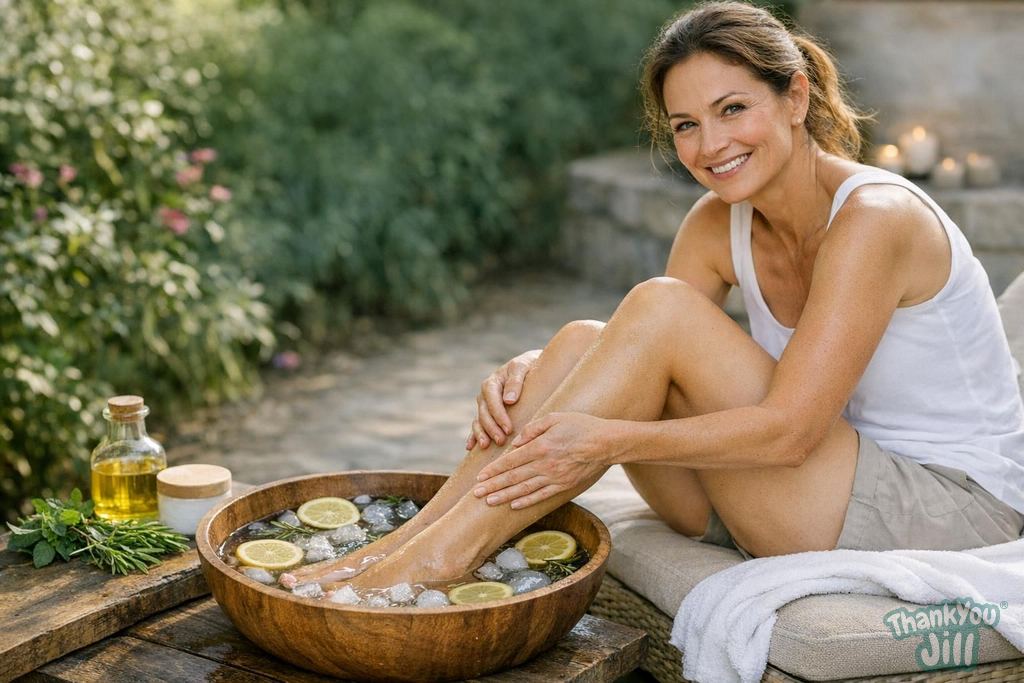
Heavy legs, ankle swelling in the afternoon and evening, nighttime cramps, a sensation of heat in the legs—these are symptoms of chronic venous insufficiency, a condition affecting 30-40% of adults that worsens with sedentary habits, heat, prolonged standing, pregnancy, and aging. It's not just a cosmetic issue: venous insufficiency compromises quality of life and, if neglected, can progress to thrombosis, venous ulcers, and serious complications.
How leg venous circulation works
Venous blood must travel up from the legs toward the heart against gravity. The main mechanisms that help: venous valves (which prevent backflow), the calf muscle pump (each contraction of the gastrocnemius muscle compresses the veins and pushes blood upward), breathing (changes in intrathoracic pressure draw blood toward the chest). When valves weaken (valve insufficiency), blood flows backward and accumulates in superficial veins: swelling, heaviness, varicose veins.
Diet and venous circulation
Diet influences venous circulation through several mechanisms: venous tone (the ability of veins to contract), capillary permeability (the tendency of fluids to leak from capillaries into tissues), blood viscosity, and inflammation of the venous wall.
Venoactive flavonoids: bioflavonoids (diosmin, hesperidin, rutin, proanthocyanidins) have documented effects on reducing capillary permeability, increasing venous tone, and reducing inflammation of the venous wall. They're found in: citrus fruits (especially the white pith, rich in hesperidin), blueberries and berries (proanthocyanidins, anthocyanins), dark grapes and moderate red wine (resveratrol, proanthocyanidin oligomers), ginkgo biloba (in specific extracts), horse chestnut (aescin, documented effectiveness against venous insufficiency). These compounds also form the basis of venotonic drugs like Daflon (diosmin+hesperidin) and Venoruton (rutin).
Hydration and blood viscosity
Dehydrated blood is more viscous and flows more slowly through veins, increasing thrombosis risk and worsening venous drainage. Drinking at least 1.5-2 liters daily is essential for blood fluidity. During hot summer periods, when leg swelling worsens due to vasodilation, hydration becomes even more critical. Heat causes venous vasodilation: vessels relax, valves become relatively insufficient, and blood stagnates.
Salt: the main aggravator of fluid retention
As discussed in the article on water retention: salt holds water in tissues. In those with venous insufficiency, excess sodium worsens leg swelling by increasing extracellular fluid volume. Reducing salt to less than 5g daily is one of the most effective interventions for evening leg swelling.
Postural and movement habits: as important as diet
Walking: it's the calf muscle pump that activates with each step. Thirty minutes of walking daily is the minimum to support venous return. Swimming and cycling are even more effective: the horizontal or seated position reduces gravitational pressure on veins. Avoid prolonged immobile standing: the worst enemy of venous circulation. If you work on your feet, alternately raise your heels (pump your calf even while standing). Elevation of lower limbs during rest: 15 minutes with legs raised 20-30 cm reduces swelling. Graduated compression stockings (20-30 mmHg): the most effective physical remedy, worn from morning before swelling forms.

Heavy legs demand two things: less salt that traps water and more movement that pushes it upward. Flavonoids from blueberries and citrus support veins from within. But no food replaces daily walking, compression stockings, and evening rest with legs elevated.
The natural cocktail for venous circulation
Every morning: 150 ml of unsweetened blueberry juice (or a handful of fresh blueberries). At breakfast or lunch: grated organic orange zest on yogurt or salad (hesperidin and bioflavonoids concentrated in the white pith). A cup of green tea (catechins, vascular effects). These three sources of venoactive flavonoids, consumed regularly for 4-6 weeks, have effects on venous tone and capillary permeability comparable to low-dose venotonic drugs. Cost: nearly zero. Side effects: zero.
The calf pump exercise
Do this exercise every hour if you're sitting or standing all day: 20 alternating heel raises (standing, rise onto your toes and lower slowly). One minute of this exercise equals about 5 minutes of walking as a stimulus for venous return. Set a reminder every 60-90 minutes. In 8 hours of work, you complete 8 sets: a little vascular workout distributed throughout your day.
How to choose compression stockings
Graduated compression stockings (tighter at the ankle, progressively looser toward the thigh) are the most effective physical remedy for venous insufficiency. Class 1 (15-21 mmHg): for prevention and mild symptoms. Class 2 (23-32 mmHg): for moderate venous insufficiency, varicose veins, pregnancy. Class 3 (34-46 mmHg): for severe cases, by medical prescription. Put them on in the morning before getting up, when your legs aren't yet swollen: the pressure is much more effective if applied before fluids accumulate. Remove them in the evening before bed and keep your legs elevated.
Frequently Asked Questions
Which natural foods help improve leg venous circulation?
Foods rich in flavonoids like blueberries, citrus fruits (especially the white pith), dark grapes, and green tea contain compounds that increase venous tone, reduce inflammation and capillary permeability, naturally improving venous circulation.
How do you choose compression stockings for leg venous insufficiency?
Graduated compression stockings are chosen based on severity: Class 1 (15-21 mmHg) for mild symptoms, Class 2 (23-32 mmHg) for moderate insufficiency or pregnancy, Class 3 (34-46 mmHg) for severe cases by medical prescription. They're put on in the morning when legs aren't swollen.
How much does hydration affect venous circulation and leg swelling?
Good hydration (1.5-2 liters daily) reduces blood viscosity, facilitating venous return and preventing stagnation. During hot periods, hydration becomes even more important to counteract vasodilation and leg swelling.
What movement habits are most effective for improving leg venous circulation?
Walking at least 30 minutes daily activates the calf muscle pump, essential for venous return. Swimming and cycling are even more effective because they reduce gravitational pressure. Avoiding prolonged immobile standing and doing heel-raise exercises every hour helps significantly.

Latest News



Comments
No comments yet. Be the first!
Leave a comment