


 Italiano
 Français
 Deutsch
 Español
 Português
 Svenska
 Suomi
Suomi
Baby-Led Weaning
Pros, Cons, and Safety
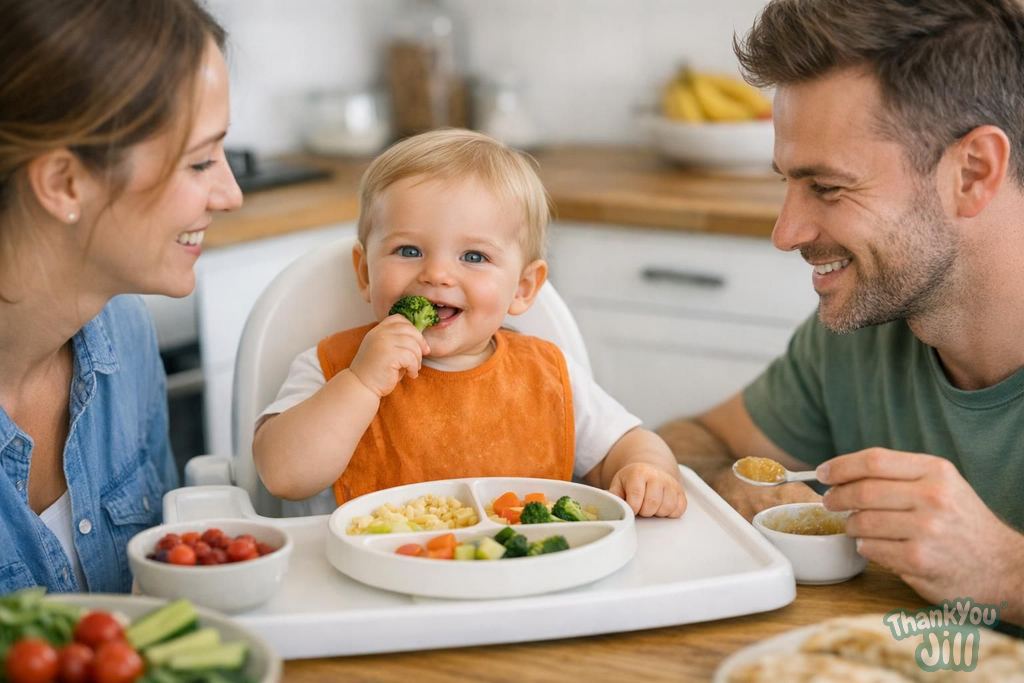
Baby-Led Weaning (BLW), or self-weaning, is a weaning approach introduced by British nutritionist Gill Rapley in 2008. It proposes offering babies soft food pieces from the start of weaning instead of pureed baby food. The baby grasps the food themselves, brings it to their mouth, chews or gums it, and decides how much to eat. The approach has become very popular over the past fifteen years, with an enthusiastic parent base and ongoing scientific debate.
The philosophy of BLW: respecting food autonomy
BLW is based on three fundamental principles: autonomy (the baby controls how much and what they eat), complete sensory approach (handling food develops a multisensory relationship with it), and participation in family meals (the baby eats family food adapted in texture). Supporters argue that this approach better develops appetite regulation, reduces the risk of future overweight and food neophobia, and creates a more positive relationship with food.
The scientific evidence: what it really shows
Body weight: some studies show that BLW babies have slightly lower BMI at 2 years, but the differences are small and inconsistent. Food acceptance: BLW babies tend to show greater acceptance of different textures and flavors. Choking risk: the BLISS Trial (New Zealand) showed that with appropriate food selection, BLW does not carry a higher choking risk than traditional weaning. Iron intake: this is the main documented concern. BLW babies have lower iron levels at 12 months in some studies: meat purees and iron-fortified cereals are easier to offer systematically.
Safe and dangerous foods in BLW
Safe foods: soft cooked vegetables (zucchini, carrot, broccoli, squash), ripe fruit (banana, peach, avocado), tender shredded meat (boiled chicken, salmon), very soft cooked pasta and rice, soft cheese. Foods to avoid until age 4 due to choking risk: whole grapes (cut into quarters lengthwise), whole cherry tomatoes, whole blueberries (cut in half), whole nuts and dried fruit, hard raw vegetables like carrot and celery, hard candies, marshmallows, popcorn.
BLW and iron: the critical point
The main concern is iron intake. Strategies to ensure it in BLW: soft meatballs made from ground meat (the baby grasps them easily), steamed shredded chicken sticks, legume hummus spread on soft bread, soft tofu sticks, oatmeal porridge with milk. These offerings cover iron and nutrients in the early BLW phase without sacrificing the autonomous approach.
The mixed approach: the solution for many families
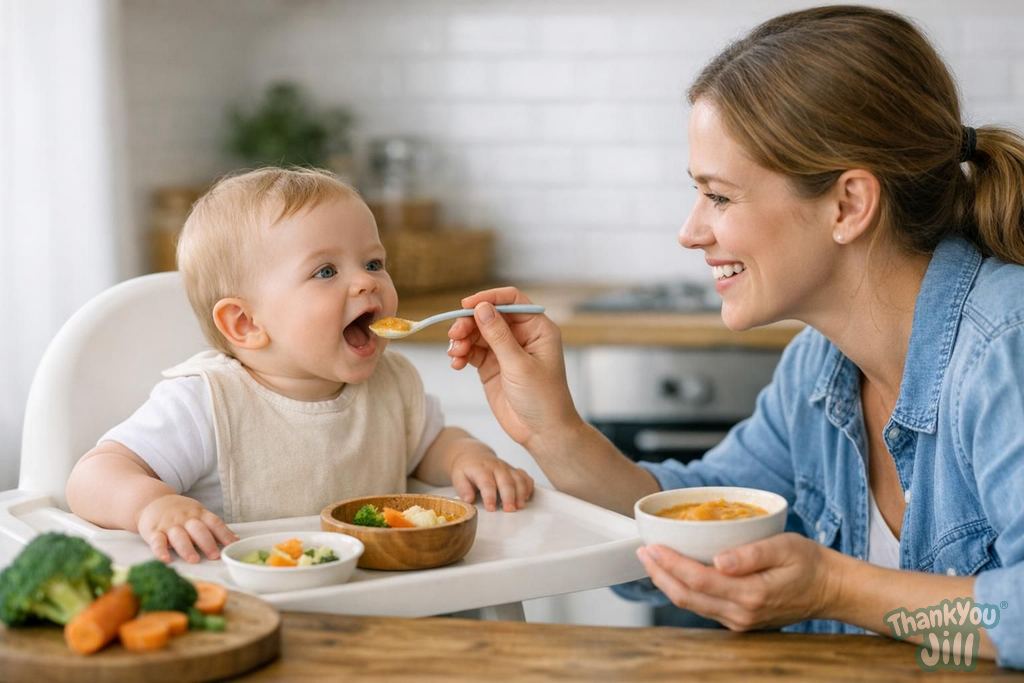
Many families and pediatricians recommend a mixed approach: purees to ensure critical nutrient intake and soft pieces to develop oral motor skills. The WHO and ESPGHAN do not specifically recommend pure BLW as an exclusive method: they recommend complementary feeding with various textures appropriate to age. BLW is a valid option, not an ideological necessity.

BLW is neither better nor worse than traditional weaning: it's different. It works well for some families, less so for others. The only absolute rule is ensuring iron intake. Everything else is adapting to your baby's and family's needs, not a dietary dogma to follow uncritically.
How to do BLW safely: the fundamental rules
Your baby never eats without direct, continuous adult supervision. They must always be seated with back support, never reclined. Size: nothing smaller than your baby's fist in the early phase. Learn the difference between gagging (normal, the baby manages it themselves) and choking (no cough, bluish skin tone: intervene immediately). Take a pediatric first aid course before starting BLW: it's the most important safety prerequisite of any other advice.
First offerings in BLW: practical list
Steamed zucchini sticks (soft, easy to grasp). Very soft cooked carrot sticks. Banana stick (peeled 2/3 from the base: the banana acts as a natural handle). Slices of ripe peach or pear. Avocado slices. Soft, well-cooked ground meat meatballs. Soft tofu sticks. These foods cover variety, safe textures, and important nutrients including iron from the first weeks.
When a mixed or traditional approach is preferable to pure BLW
Premature baby with delayed motor development, baby with hand-to-mouth coordination difficulties, baby with poor weight gain, family with high anxiety about choking: in these cases, a mixed or traditional approach is preferable. BLW can always start as a mixed approach without ideological pressure in any direction: your baby's wellbeing and your family's peace of mind come before any methodology.
Frequently Asked Questions
What are the main choking risks in Baby-Led Weaning and how can you prevent them?
Choking risk in BLW is reduced by choosing soft foods and cutting them correctly, avoiding foods like whole grapes, whole nuts, and raw carrots. Continuous adult supervision is essential, and the baby must always be seated with back support during meals.
How can you ensure adequate iron intake for your baby during baby-led weaning?
To ensure iron in BLW, you can offer soft ground meat meatballs, shredded chicken sticks, hummus on soft bread, soft tofu, and oatmeal porridge with milk. These foods are easy to grasp and help meet requirements without sacrificing food autonomy.
When is a mixed or traditional approach preferable to pure BLW?
A mixed or traditional approach is recommended for premature babies, children with motor delays or hand-to-mouth coordination difficulties, poor weight gain, or families with high choking anxiety. In these cases, the mixed approach ensures safety and adequate nutrition without ideological pressure.
What are the real advantages of Baby-Led Weaning compared to traditional weaning?
BLW promotes food autonomy, better appetite regulation, greater acceptance of different textures and flavors, and can reduce food neophobia. Additionally, it allows your baby to participate in family meals, developing a positive multisensory relationship with food.
Latest News




Comments
No comments yet. Be the first!
Leave a comment