

 Italiano
 Français
 Deutsch
 Español
 Português
 Svenska
 Suomi
Suomi
Healthy Snacks for Toddlers (Ages 1-3)
Smart snack ideas for children ages 1 to 3
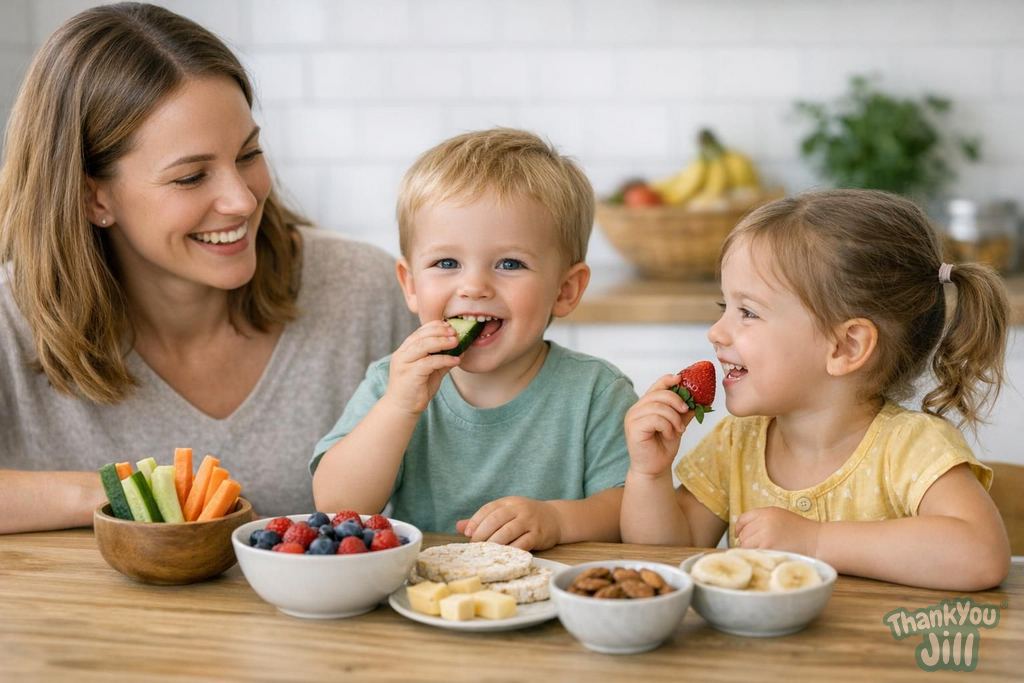
Children between 1 and 3 years old typically eat every 2-3 hours: their stomach is small (about the size of their fist) and their metabolism runs much faster than adults'. Snacks aren't a luxury—they're a physiological necessity. The problem is that the children's snack market is flooded with ultra-processed products loaded with sugar, salt, and additives, packaged in bright colors and cartoon characters. Building healthy snack habits from an early age is one of the best investments in your child's future health.
Principles of Snacks for Ages 1-3
An ideal snack includes: a source of complex carbohydrates (steady energy), a source of protein or healthy fats (lasting fullness), fresh fruit or vegetables (micronutrients and variety exposure). Keep portions small: a snack of 100-150 kcal is plenty. Snacks shouldn't meet your child's daily nutritional needs—they should bridge the gap between main meals without spoiling their appetite for the next one.
Two-Minute Ready Snacks: The Practical List
Fresh sliced fruit: banana slices, ripe peach wedges, pitted cherries cut into quarters, grapes cut into quarters (never whole due to choking risk), halved strawberries, melon cubes. Plain whole-milk Greek yogurt with no added sugar, topped with a few fruit slices. Protein, calcium, probiotics. Cheese cubes: Parmesan, mozzarella, Emmental. Whole-grain crackers with homemade hummus (chickpeas, olive oil, lemon, no salt). Whole-grain toast with mashed avocado. Omelet strips (eggs and vegetables): ready in 5 minutes and keeps in the fridge for 2 days.
Make-Ahead Snacks: Weekend Prep
Mini legume patties (cooked lentils, mashed, baked into patties): keep 3-4 days in the fridge. Oat and banana muffins (oats, mashed ripe banana, egg, optional raisins): no added sugar, naturally sweet, keep 3-4 days. Mini frittatas in muffin tins (eggs, vegetables, cheese): baked and refrigerated. Polenta squares (cooled cooked polenta cut into cubes: easy to bite even without teeth).
What to Avoid in Snacks for Ages 1-3
Fruit juices (even 100%): the WHO recommends limiting them under age 3 to a maximum of 120 ml per day. Commercial "kids" snacks: most are ultra-processed despite reassuring packaging (cookies, "grain" crackers, packaged juices). Read the ingredients: if sugar or syrup appears in the first three, leave it on the shelf. Candy, chewing gum, lollipops: pure sugar with devastating effects on developing teeth and palate.
Snack Timing: Structure That Works
A predictable routine reduces constant food requests and tantrums. Typical schedule for ages 1-3: breakfast 7:30 am, snack 10:00 am, lunch 12:30 pm, snack 3:30 pm, dinner 7:00 pm. At least 2 hours should pass between a snack and the next meal. Outside these times, don't offer food except in emergencies: a child who knows something good is coming at snack time learns to wait and eats better when mealtime arrives.

A healthy snack doesn't need to be complicated—it needs to be real. A banana slice, a spoonful of hummus on a cracker, a cube of Parmesan, two halved strawberries. Nothing fancy, nothing expensive, nothing that takes more than two minutes. Just real food, at the right time, without screens in front.
The Healthy Snack Pantry: What to Keep on Hand
Fridge: whole-milk Greek yogurt, cheese pieces, fresh seasonal fruit cut and stored in containers, homemade hummus, omelet pieces prepared the day before. Pantry: rice or whole-grain spelt crackers with few ingredients, rolled oats, unsalted almond butter (from age 2). Freezer: banana-oat muffins frozen individually (thaw in 20 minutes at room temperature). With this pantry stocked, you always have a balanced snack ready in 2 minutes without buying anything special.
Getting Grandparents on Board with Healthier Snacking
Grandparents often show affection through sweet foods: cookies, candy, packaged snacks. Don't ban them outright (it creates conflict): give grandparents equally appealing alternatives like colorful cut fruit, yogurt with honey after 12 months, banana slices with almond butter. Frame the request as caring for your child's health, not criticism of their caregiving habits. Grandparents want what's best for their grandchild: giving them the right tools works much better than prohibition.
Snacks and Teething: Caring for Baby Teeth
Baby teeth are more vulnerable to cavities than adult enamel. Snack and dental health rules: avoid sticky sweet snacks (raisins, gummy candies, sticky dried fruit). Offer water after every snack. Before bed: brush teeth or at least rinse with water. Your pediatric dentist recommends a first visit within 12 months of the first tooth erupting—don't wait until there's a visible problem.
Frequently Asked Questions
What are the ideal ingredients for a healthy snack for children ages 1-3?
A healthy snack for toddlers should include complex carbohydrates for steady energy, protein or healthy fats for lasting fullness, and fresh fruit or vegetables for micronutrients and variety. The ideal portion is about 100-150 kcal.
Why is it important to avoid ultra-processed snacks for children ages 1-3?
Ultra-processed snacks often contain excess sugar, salt, and additives that can damage dental health and create poor eating habits. It's better to choose real, simple foods to support balanced development.
How should you schedule snack times for toddlers to avoid constant food requests?
Setting predictable snack times, for example every 2-3 hours between main meals, helps reduce constant food requests and tantrums. It's important not to offer food outside these times, except in emergencies, to teach your child to manage hunger.
How can you encourage grandparents to offer healthier snacks to toddlers without creating conflict?
Instead of prohibiting, it's effective to suggest healthy and tasty alternatives like cut fruit or yogurt with honey. Presenting these options as a way to care for your child's health helps gain their support without tension.
Latest News




Comments
No comments yet. Be the first!
Leave a comment