


 Italiano
 Français
 Deutsch
 Español
 Português
 Svenska
 Suomi
Suomi
Vegetables for Kids
Tricks to Get Them to Eat Them
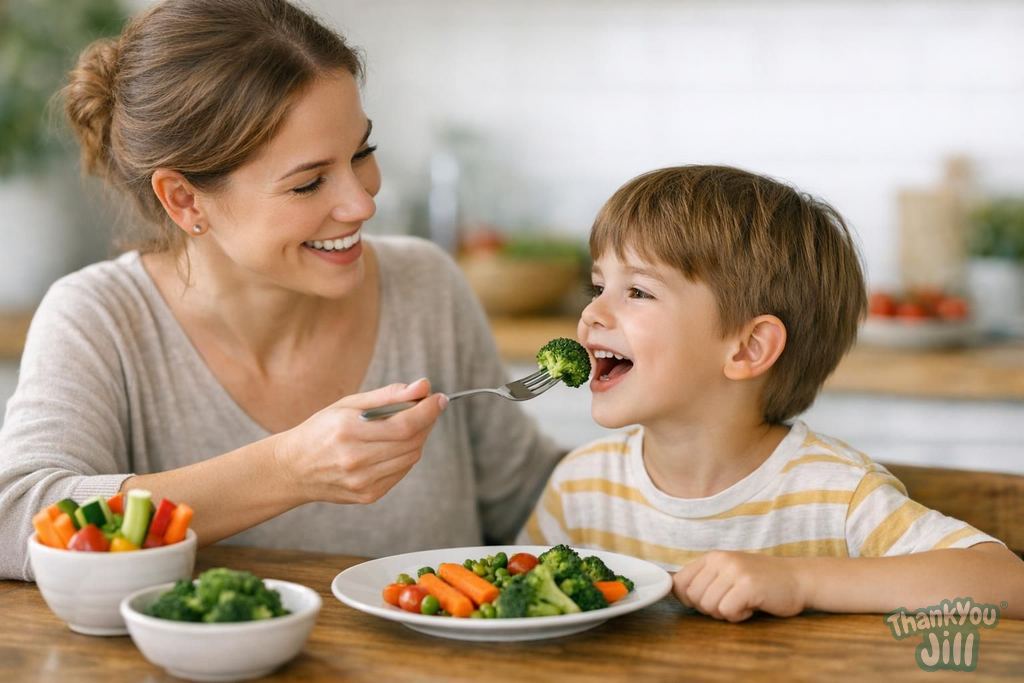
The statistics are clear: only 20-30% of school-age children in Italy eat the recommended amount of vegetables. Vegetable rejection is one of the most common eating behaviors in childhood and most frustrating for parents. But neophobia toward vegetables, especially bitter ones (cruciferous vegetables, dark leafy greens), has precise biological roots: children have more taste buds than adults and are genuinely more sensitive to bitterness. It's not stubbornness: it's physiology.
The Biology of Vegetable Rejection in Children
Children have an average of 30,000 taste buds (adults have 9,000-10,000). This higher density makes children hyperresponsive to intense flavors, especially bitterness. Bitter vegetables (broccoli, Brussels sprouts, arugula, radicchio, artichokes) are perceived by children as much more intense than we adults perceive them. Evolutionarily, bitterness was a signal of possible toxicity: wariness toward bitter vegetables was an evolutionary protection. As they grow, the number of taste buds decreases and sensitivity reduces: many adults who hated broccoli as children appreciate it as adults. Rejection of bitter vegetables is often physiological, not willful.
The Most Accepted Vegetables for Kids: Where to Start
Start with less bitter vegetables and more pleasant textures: corn (sweet, colorful, easy to eat), raw carrots (slightly sweet, crunchy), peas (sweet, small, easy to pick up), sweet potato (sweet, soft, versatile), grilled zucchini (mild, not very bitter), cherry tomatoes (sweet, colorful, perceived as fruit). Once these are accepted, you can gradually add vegetables with more intense flavor in small quantities alongside the ones already loved.
The Cooking Tricks That Really Work
Seasoning reduces perceived bitterness: a drizzle of extra virgin olive oil, a few drops of lemon, a tablespoon of grated Parmesan, a spritz of reduced balsamic vinegar all reduce the perception of bitter taste. Cooking transforms flavor: steamed broccoli is less bitter than boiled, roasted Brussels sprouts with olive oil caramelize and reduce bitterness. Dips are a powerful ally: raw carrots, celery, cucumber with hummus, Greek yogurt with herbs. Hiding vegetables in batter (grated zucchini in meatballs, spinach in muffins) works for nutritional intake but doesn't educate the palate: use it as a complement, not as your only strategy.
Modeling: Eat Them Yourself in Front of Him
Like general food education: children eat what they see parents eating with pleasure. A father eating broccoli with obvious satisfaction is more effective than any cooking strategy. Don't pretend: children sense inauthenticity. If you don't love a vegetable, don't give it to him until you've found one you genuinely love first and can offer with authentic enthusiasm.
The Gradual Exposure Program: Patience Is the Strategy
Research shows it takes an average of 10-15 exposures to a new food before a child accepts it. Every time a rejected vegetable is placed on the plate (without pressure, without comment) counts as an exposure. Typical progression: first exposure: just looking at it is fine. Fifth: touching it with fingers. Tenth: smelling it. Fifteenth: maybe a bite. With this pressure-free progression, most children come to accept the vegetable within 3-4 months. Celebrate each small step discreetly: don't make it a big event, normalize the process.
The Container Garden: Growing to Eat
Children who have grown a cherry tomato in a pot eat it with completely different enthusiasm. Involvement in the production process (planting, watering, harvesting) creates an emotional bond with the vegetable that no cooking strategy can replicate. Start with something simple: basil in a small pot, cherry tomatoes in a larger pot. The time investment with your child is minimal; the return in terms of relationship with food is extraordinary.

Your child doesn't refuse vegetables because they're difficult: they genuinely perceive them as bitter in a much more intense way than you do. The solution isn't to force them: it's to reduce the bitterness with the right cooking method, season with the right fat, offer the right dip, and eat them yourself in front of them every day with genuine pleasure. Nature will do the rest as they grow.
Recipes That Hide Vegetables Without Sacrificing Education
Zucchini and meat meatballs: ground meat + finely grated zucchini + egg + breadcrumbs + Parmesan. The zucchini disappears into the mixture. Savory spinach muffins: flour + egg + ricotta + finely chopped cooked spinach: green color, mild flavor. Green dragon smoothie: banana + kiwi + a handful of fresh spinach: interesting color, sweet taste. Basil pesto pasta (an excellent starting point for picky eaters). Always pair these preparations with small amounts of recognizable vegetables: your child needs to learn the original shape and taste too, not just the hidden version.
How to Use Play at the Table for Vegetables
Children under 7-8 years think concretely and playfully: use that. Give vegetables fun names ("broccoli trees," "space carrots," "spinach forest"). Create challenges: "who can find the most peas on their plate?". Use cookie cutters to give vegetables shapes. Have your child help with preparation: "you're the broccoli chef tonight." Play isn't manipulation: it's learning through the right cognitive channel for that age.
The 15-Exposure Test: An Experiment With Your Child
Choose a rejected vegetable. Every 3-4 days put it on the plate (small portion, in plain sight). Say nothing. Don't ask if they eat it. Don't remove it if they don't eat it. Mentally note the exposures. After 15 exposures (about 6-8 weeks), observe: have they at least tasted it? Probably yes. Have they accepted it? It depends on the vegetable and the child. But the immediate rejection reaction has almost certainly decreased. This experiment, done with patience, works because it removes the pressure that was causing the rejection, not the vegetable itself.
Frequently Asked Questions
Which vegetables are easiest to get kids who reject bitter ones to accept?
It's best to start with sweet vegetables with soft texture like corn, raw carrots, peas, sweet potato, grilled zucchini, and cherry tomatoes. These are perceived as less bitter and more pleasant, making it easier to gradually accept more bitter vegetables later.
How can you reduce the bitter taste of vegetables to make them more appealing to children?
Use seasonings like extra virgin olive oil, lemon, Parmesan, or balsamic vinegar to reduce bitterness. Steaming or roasting in the oven can soften the taste. Dips made with hummus or Greek yogurt also help make vegetables more appealing.
Why is it important for parents to eat vegetables in front of children?
Modeling is crucial: children tend to imitate their parents. Seeing an adult eat vegetables with genuine pleasure increases the likelihood that the child will accept them. Authenticity is key, because children sense when a parent is pretending.
How does the gradual exposure program work to get children to accept vegetables?
It involves exposing the child to the rejected vegetable without pressure, gradually increasing contact: first looking at it, then touching it, smelling it, and finally tasting it. After 10-15 exposures, often within 3-4 months, the child may accept the vegetable with less rejection.

Latest News




Comments
No comments yet. Be the first!
Leave a comment