


 Italiano
 Français
 Deutsch
 Español
 Português
 Svenska
 Suomi
Suomi
Cooking with Kids
Educational and Fun Recipes
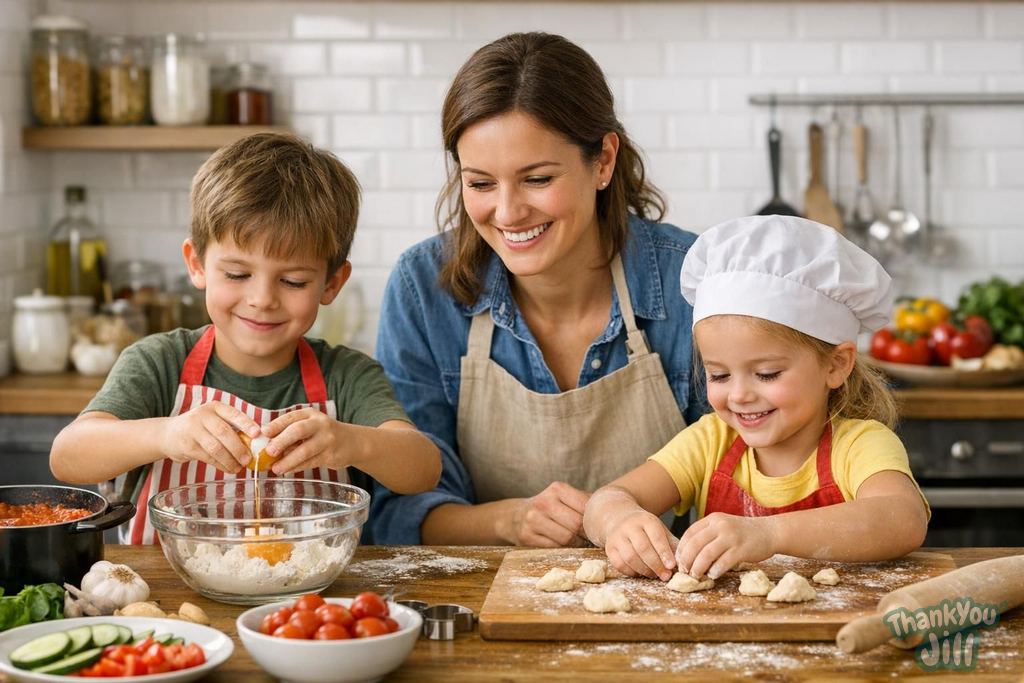
Research consistently shows that children who participate in food preparation eat what they've made more willingly, try foods they would normally refuse, and develop a more curious and less anxious relationship with food. It's not just about entertainment: cooking with kids is a scientifically validated tool for food education. And the memories created in the kitchen with a parent or grandparent are among the most lasting of childhood.
Cooking by Age: What Kids Can Do Safely
Ages 2-3: washing fruits and vegetables, tearing lettuce, mixing ingredients in a bowl, mashing banana with a fork, pouring pre-measured ingredients into a bowl, decorating cookies or pizza with small pieces. Ages 4-6: kneading dough, using cookie cutters, squeezing lemon with a citrus press, grating cheese (with supervision), weighing ingredients with a scale, breaking bread into pieces, washing and drying salad leaves. Ages 7-9: peeling soft fruit, using a vegetable peeler (with supervision), cutting soft vegetables with a rounded-edge knife, reading recipes and following steps, mixing batter with an electric mixer (with supervision), assembling ingredients. Ages 10+: using a chef's knife on a stable cutting board (with proper technique instruction), cooking scrambled eggs or an omelet, preparing complete salads, following simple recipes with partial independence.
Perfect Starter Recipes: Simple, Delicious, Nutritious
Colorful Smoothie (from age 3): banana + strawberries + milk or Greek yogurt blended. The child chooses the colors, presses the blender button (with supervision), pours into glasses. Caprese Salad (from age 4): the child washes cherry tomatoes, cuts them with a rounded-edge knife (supervision), arranges the mozzarella, adds basil leaves, drizzles with extra virgin olive oil. Homemade Margherita Pizza (from age 3): pre-made dough (or store-bought), the child spreads it, adds tomato sauce, distributes mozzarella, adds favorite toppings. Oat and Banana Pancakes (from age 4): mashes the banana, mixes with egg and oats, spoons into the pan (with supervision). Energy Balls (from age 6): mixes oats + almond butter + honey + cocoa, forms balls, rolls in coconut or cocoa.
Turning the Kitchen into a Sensory Experience
The kitchen is a multisensory experience that educates about food in every way. Encourage your child to: touch the ingredients (the difference between flour and semolina, between soft butter and cold butter, between raw and cooked dough), smell before and after cooking (fresh basil vs. wilted basil, raw tomato vs. cooked sauce), listen (garlic sizzling in the pan, water bubbling), watch the changes (tomato color concentrating, dough rising, egg coagulating). Every question a child asks in the kitchen is an opportunity for simple science education: "Why does bread grow?" "Why does cheese melt?" "Why does fruit turn black when I cut it?"
Kitchen Safety Rules for Cooking with Kids
Never leave a child alone near open flames or operating appliances. Teach knife safety before handing over any knife: claw hand on the food, knife moving downward, never toward fingers. Use non-slip cutting boards (place a damp cloth underneath). Explain that steam is more dangerous than boiling water. Always wash hands before starting. These rules, taught early with calm and without excessive anxiety, create kids who are confident in the kitchen rather than afraid of cooking.

Cooking with kids isn't mess to manage: it's education to invest in. The child who made the omelet eats it without complaint. The one who kneaded the bread understands what's inside. The one who chose the vegetables for the soup tastes them with curiosity. An apron in the kitchen is the most underrated educational tool that exists.
Recipe of the Week: Involve Your Child Every Sunday
Set a regular appointment: every Sunday morning, the child chooses (from a list of 3 options you provide) what to prepare together. It can be simple: pancakes, smoothie, salad, mini-pizza, oat cookies. Consistency matters more than complexity. In a year of Sunday cooking, your child has prepared 52 dishes, developed motor skills, explored 52 flavors independently, and created 52 shared memories with you. You don't need much time: 20-30 minutes is enough for most kid-friendly recipes.
Connecting Cooking to School Subjects
Math: weigh ingredients, multiply the recipe for more people ("if the recipe is for 4 and we want to make it for 8, how much of everything do we need?"). Science: observe how dough rises (yeasts are living organisms!), why eggs cook (proteins denature with heat), how emulsion works in oil and vinegar. Geography: discover where ingredients come from (rice from Asia, cocoa from South America, pasta from Italy). History: why did Romans use garum? Who invented ice cream? The kitchen is a sensory encyclopedia.
Three Scalable Recipes for Every Age
Age 3 version: peeled banana + Greek yogurt + blueberries = layered parfait in a glass. Age 6 version: same base, adds granola weighed with a scale, decorates with fruit cut with a small knife. Age 10 version: prepares homemade Greek yogurt (milk + cultures), makes granola in the oven, composes the parfait with self-chosen proportions. The same preparation grows with the child: no special new recipe to learn each year, just the same one becoming increasingly independent.
Frequently Asked Questions
What kitchen activities are safe and appropriate for children ages 2-3?
Children ages 2-3 can wash fruits and vegetables, tear lettuce, mix ingredients, mash banana with a fork, pour pre-measured ingredients, and decorate cookies or pizza with small pieces, always under supervision.
How can you turn the kitchen into an educational sensory experience for kids?
Encourage children to touch, smell, listen, and observe ingredients and changes during preparation, such as the difference between flour and semolina or color changing during cooking, stimulating curiosity and scientific learning.
What are the fundamental kitchen safety rules to teach children?
Never leave children alone near flames or appliances, teach proper knife technique, use non-slip cutting boards, explain the dangers of steam, and always wash hands before cooking.
How do you choose age-appropriate recipes to involve children in cooking?
Choose simple and nutritious recipes like smoothies from age 3, caprese salad from age 4, margherita pizza with ready-made dough from age 3, and energy balls from age 6, adapting activities to each age group's motor skills and safety abilities.

Latest News




Comments
No comments yet. Be the first!
Leave a comment