


 Italiano
 Français
 Deutsch
 Español
 Português
 Svenska
 Suomi
Suomi
Monocultures
Loss of Biodiversity
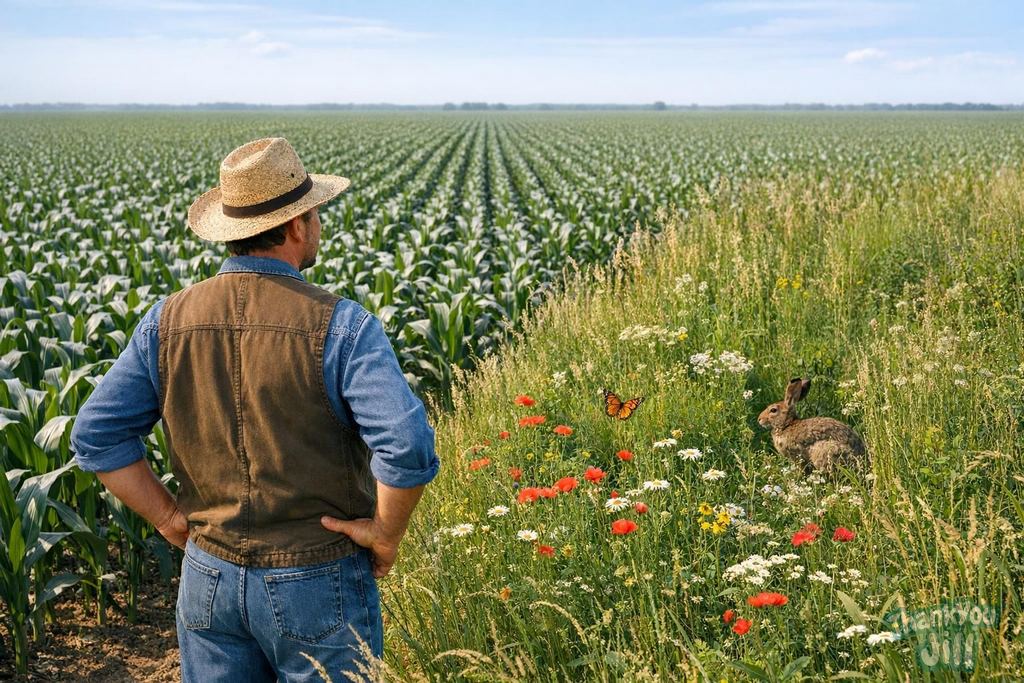
The corn we eat today around the world descends from just a few dozen high-yield hybrid varieties, selected to maximize production in intensive systems. Yet corn originally possesses extraordinary genetic biodiversity: thousands of local varieties developed by indigenous populations of Latin America over millennia of adaptive selection. The same applies to wheat, rice, potatoes, and tomatoes: 20th-century agricultural industrialization drastically reduced the genetic diversity of crops, leaving the global food system more vulnerable than ever.
The collapse of agricultural biodiversity: by the numbers
The FAO estimates that 75% of the genetic diversity of cultivated plants was lost during the 20th century, as local varieties were abandoned in favor of a few uniform commercial varieties. In 1900, American farmers cultivated over 7,000 apple varieties; today fewer than 100 survive commercially. In India, thousands of local rice varieties were grown before the Green Revolution; today only a few hundred remain. Of the 30,000 edible plants humanity has used throughout history, only about 150 are commercially cultivated today, and just 12 species provide 75% of global food. Monoculture is not only spatial (a single field planted with one species): it is also genetic (millions of hectares of the same genetically identical variety).
The systemic risk of monocultures: the lesson of the Irish Famine
The Great Irish Famine (1845-1852) is the most eloquent historical case of monoculture risk. Ireland depended on a single potato variety (the "Lumper") for 60-80% of the rural population's caloric intake. When Phytophthora infestans (late blight) struck this variety, there were no locally cultivated resistant varieties. The result: 1 million deaths and 2 million emigrants. Today, the Cavendish banana (the variety we find in supermarkets: 50% of global banana production) is threatened by a fungus (Fusarium oxysporum TR4) to which it has no genetic resistance, exactly like the Gros Michel (the previous variety, wiped out by another fungal disease in the 1950s). A disease of wheat or rice with similar virulence could threaten billions of people who depend on a few genetically identical varieties.
Genetic erosion and climate change
Climate change makes the genetic biodiversity of crops even more critical. Traditional local varieties have been selected over centuries to adapt to the specific climate conditions, soils, and pests of their region: they contain genes for tolerance to drought, heat, flooding, and local diseases that uniform commercial varieties do not possess. As climate changes, agronomists need these genes to develop new resistant varieties. If local varieties are lost, this genetic repertoire is lost too. Seed banks (such as the Svalbard Global Seed Vault in Norway, or the Italian Germplasm Bank in Bari) preserve these genes, but they do not replace varieties cultivated and kept alive by farmers.
How consumers can support agricultural biodiversity
The market plays a direct role in conserving agricultural biodiversity: varieties that are bought and cooked survive; those ignored disappear. Concrete actions: purchase local or heirloom varieties of fruits and vegetables when available (farmers' markets and short supply chains offer them more often than supermarkets), choose products certified with geographical indications (PDO, PGI, DOC: often linked to specific local varieties), support farms that grow traditional varieties (e.g., Pachino tomato, annurca apple, Cosenza fig, Sarconi bean), buy seeds of heirloom varieties for your home garden (Italian Rural Seeds Association, local seed exchange networks). Eating biodiversity is preserving it.

We eat 12 plants out of 30,000 edible ones that exist. We have the most vulnerable food system in human history, protected by the genetic memory of thousands of varieties that are disappearing in abandoned fields. Every time you look for a corbarino tomato or Storo corn instead of the usual F1 hybrid at the supermarket, you're voting for a more resilient system.
Seed banks: guardians of genetic diversity
The Svalbard Global Seed Vault (in Norwegian: Svalbard globale frøhvelv) is the world's most important seed repository: carved into Arctic permafrost 130 meters deep, it preserves over 1.3 million seed samples from around the world at -18°C. It was designed to withstand any global catastrophe. In Italy, the Germplasm Bank in Bari of the IPSP-CNR preserves thousands of varieties of Italian cultivated plants. But seed banks preserve genes "statically": varieties that are not cultivated and reproduced lose their coevolution with local environments. "In situ conservation" (keeping varieties alive in farmers' fields) is complementary and indispensable to ex situ conservation in banks.
Heirloom varieties in Italian cuisine: a heritage to rediscover
Italy has one of Europe's richest agricultural biodiversities, evidenced by hundreds of recognized local traditional products (over 5,000 on the PAT list). Varieties worth seeking out and cooking: Garfagnana spelt (one of the oldest grain species, digestible, aromatic), Lamon bean (Veneto, large, creamy), Santo Stefano di Sessanio lentil (Abruzzo, thin, cooks without soaking), Corbara tomato (Campania, for sauce), Renetta canadese apple (nearly extinct, highly aromatic), Tropea onion (Calabria, very sweet). Seeking them out is an act of culture as well as sustainability.
How to participate in conserving agricultural biodiversity
Rete Semi Rurali (seminaturali.it): Italy's most active association in the conservation and promotion of traditional varieties. Organizes seed exchanges, courses, and fairs. Semintesta.it and Biforcuto.com: Italian platforms for buying and exchanging heirloom seeds. Seed Savers Exchange (USA, but ships internationally): the world's largest amateur seed bank, with thousands of rare varieties. If you have a garden: dedicate space to traditional local varieties, let some plants go to seed and save them for the next season. You are a guardian of biodiversity.
Frequently Asked Questions
What is the main risk of monocultures for global food security?
Monocultures drastically reduce the genetic diversity of crops, making the food system vulnerable to disease and climate change, as demonstrated by the Irish Famine caused by dependence on a single potato variety.
How does climate change affect the importance of agricultural biodiversity?
Climate change increases the need for local varieties with genes for tolerance to drought, heat, and disease, since these traditional varieties are adapted to specific conditions and help develop new resistant crops.
How can consumers help preserve agricultural biodiversity?
By purchasing local or heirloom varieties of fruits and vegetables, preferring products with geographical indications, and supporting farms that grow traditional varieties, consumers help keep these crops alive and protect genetic diversity.
Why are seed banks alone insufficient for conserving agricultural biodiversity?
Seed banks preserve genes statically, but varieties must be cultivated and reproduced in fields to maintain their adaptability and coevolution with the environment, making in situ conservation alongside ex situ conservation indispensable.
Latest News


Comments
No comments yet. Be the first!
Leave a comment