


 Italiano
 Français
 Deutsch
 Español
 Português
 Svenska
 Suomi
Suomi
Food Biodiversity
Why Eating Forgotten Varieties Matters
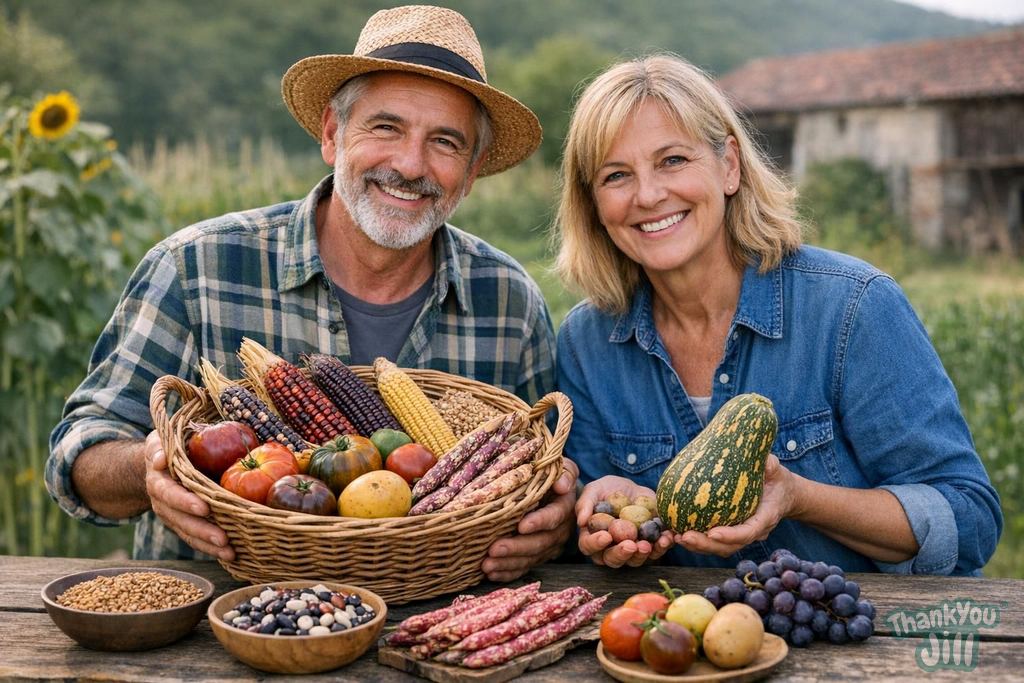
The modern food paradox is that we live in an era of apparent product variety on supermarket shelves, yet face one of the greatest genetic uniformities in agricultural history. The supermarket offers 40,000 product lines, but 75% of global food comes from just 12 plants and 5 animal species. This concentration has consequences for food system resilience, agricultural ecosystem biodiversity, and surprisingly, for our health and taste pleasure too.
Why Forgotten Varieties Are More Nutritious
Modern commercial varieties have been selected to maximize yield, transport durability, aesthetic uniformity, and shelf life. Nutritional traits—vitamin C content, antioxidants, minerals, fatty acids—were not selection criteria: they were often sacrificed for yield and appearance. A University of Texas study (Davis et al., 2004) analyzed the nutritional content of 43 vegetables and fruits between 1950 and 1999, finding significant reductions in calcium (16%), iron (15%), vitamin C (20%), and riboflavin (38%). Traditional varieties, developed over centuries for taste and local resilience rather than industrial yield, often have superior nutritional profiles compared to modern hybrid varieties.
Forgotten Italian Varieties Worth Rediscovering
Italy is one of Europe's countries with the highest agricultural biodiversity: hundreds of local varieties survive thanks to custodian farmers and heritage protection associations. Forgotten tomatoes: Costoluto Genovese (meaty, low water content, concentrated flavor), Cuore di Bue (compact flesh, almost seedless), Pomodoro di Pachino (original variety, not the commercial hybrid), Canestrino di Lucca. Forgotten apples: Renetta Canadese (intensely aromatic), Mela Rosa dei Monti Sibillini, Calvilla Bianca d'Inverno. Forgotten beans: Fagiolo di Lamon (Veneto, creamy, thin-skinned), Fagiolo di Sarconi (Lucania, PDO), Fagiolino di Sant'Anna (Tuscan, green, very sweet). Ancient grains: Senatore Cappelli (pre-Green Revolution Italian durum wheat, with different gluten), Verna (Tuscan soft wheat), Farro di Monteleone di Spoleto (PDO). Forgotten roots and tubers: Topinambur (high prebiotic inulin, frost-resistant), Rapa di Orbassano (Piedmont), Parsnip, Scorzonera.
The Taste of Biodiversity: Why It's Different
Anyone tasting a ripe Costoluto Genovese grown in open field in August for the first time, or an October Renetta Canadese apple, or a Fagiolo di Lamon slowly cooked in a terracotta pot, immediately understands this is something completely different from the commercial version. It's not romanticism: it's chemistry. Traditional varieties, growing more slowly in systems with greater biological competition in the soil, develop more complex sugars, more organic acids, more volatile aromatic compounds (esters, aldehydes, alcohols) that build flavor complexity. Slow ripening—impossible in industrial agriculture that harvests before maturity for shelf life—is essential for the complete development of these compounds.
How to Eat Biodiversity in Daily Practice
The goal isn't to replace all conventional food with ancient varieties: it's to add biodiversity gradually. Concrete practices: each week, choose at least one "unusual" product at the market or from a local producer (a squash variety you've never cooked, an apple you don't know, a rare legume), visit Slow Food markets or farmers' markets where niche producers sell varieties you won't find elsewhere, ask your favorite restaurant if they use traditional local varieties, grow at least one traditional local variety in your garden or on your balcony (seeds are available online from Rete Semi Rurali, Biforcuto.com, and exchanges among enthusiasts). Food biodiversity is preserved by eating it.

The 12 plants that feed the world aren't enough: not nutritionally, not agronomically, not culturally. Every time you choose Costoluto Genovese instead of an anonymous round tomato, every time you cook Santo Stefano di Sessanio lentils instead of bagged red ones, you're voting for a richer, more resilient, better food system.
Where to Find Forgotten Varieties in Italy
Rete Semi Rurali (seminaturali.it): Italy's main network for conservation and exchange of traditional seeds. Organizes exchanges, fairs, and courses. Slow Food Italia (slowfood.it/presìdi): the Slow Food Presidia map includes hundreds of protected Italian traditional varieties, with the producers who grow them. Slow Food Mercato della Terra: monthly markets in over 30 Italian cities with traditional variety producers. AIAB (aiab.it): the organic farming association has many members cultivating traditional varieties. Online platforms: Orto di Casa, Semintesta.it, Biforcuto.com sell ancient variety seeds for home gardening. GAS and short supply chains: solidarity purchasing groups often have agreements with niche producers growing traditional varieties.
How to Cook Ancient Varieties: Basic Principles
Traditional varieties often require different cooking times than conventional ones. Ancient legumes (Fagiolo di Lamon, Fagiolo di Sarconi) have thinner skins and cook faster: no excessive soaking, slow cooking over low heat in unsalted water (salt at the end of cooking). Ancient grains like Senatore Cappelli have a slightly higher glycemic index than modern wheat due to different starch structure, but produce pasta with much more intense flavor: less seasoning is needed. Ancient apples are often less crisp and richer in aromas: excellent for cooking (pies, compotes, sauces) as well as eating raw. Ancient ribbed tomatoes have more flesh and less water: ideal for sauces, salsas, bruschetta where concentrated flavor is an asset.
Grow Biodiversity: Three Easy Crops for Beginners
Costoluto Genovese tomato: sow in March in warm pots, transplant in May in full sun. Slower than commercial tomato but much more flavorful. Fagiolo di Sarconi or Nano di Roveja bean: direct sowing in open ground from April, moderate watering, harvest in August. Very easy, abundant, excellent fresh and dried. Marina di Chioggia squash (the Venetian "zucca barucca"): sow in May, grows without special care, produces enormous squashes with very sweet flesh that keeps for months. These three plants, all Italian traditional varieties, are suitable even for beginners starting a garden.
Frequently Asked Questions
What are the nutritional advantages of forgotten food varieties compared to modern ones?
Forgotten varieties often have superior nutritional profiles, with more vitamins, minerals, and antioxidants, because they weren't selected solely for yield and appearance, unlike modern varieties which have experienced significant reductions in essential nutrients.
How can I integrate forgotten food varieties into my daily diet?
You can add biodiversity by weekly choosing unusual products at the market, visiting niche markets like Slow Food ones, asking restaurants for traditional varieties, or growing ancient variety seeds at home, which are available online.
Why does the taste of traditional varieties differ from and often surpass commercial varieties?
Traditional varieties ripen more slowly and grow in complex biological systems, developing complex sugars, organic acids, and volatile aromatic compounds that provide richer and more complex flavors compared to industrial varieties harvested immature.
What are some ancient varieties easy to grow for someone starting a home garden?
Costoluto Genovese tomato, Fagiolo di Sarconi or Nano di Roveja bean, and Marina di Chioggia squash are simple traditional varieties to grow, require minimal care, and offer abundant and flavorful harvests, ideal for beginners.
Latest News




Comments
No comments yet. Be the first!
Leave a comment