


 Italiano
 Français
 Deutsch
 Español
 Português
 Svenska
 Suomi
Suomi
Home Composting
A practical step-by-step guide
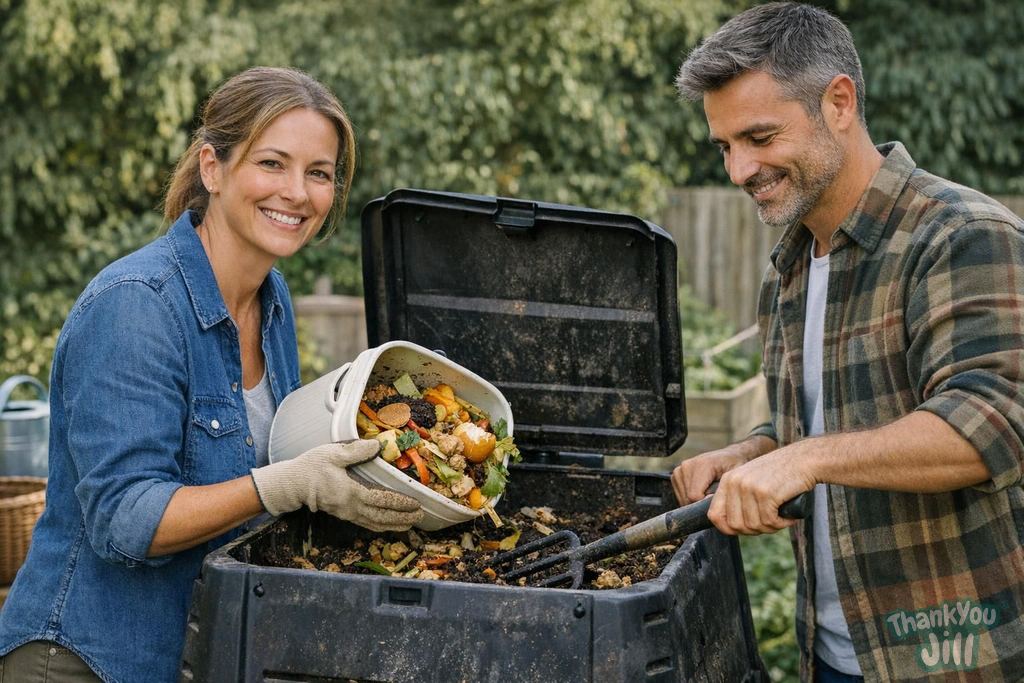
In Italy, the organic fraction (food scraps and biodegradable materials) represents an average of 35-40% of household waste volume. Most of it ends up in the organic waste collection, treated industrially in composting or anaerobic digestion facilities. But a significant portion still goes to landfills, where it produces methane (a potent greenhouse gas) under anaerobic conditions. Home composting is the most local, most educational, and most efficient solution: it transforms household organic waste into mature compost, the best soil amendment for plants and gardens, reducing waste by 35% and creating a valuable resource.
The composting principle: what happens in the pile
Composting is the aerobic decomposition (with oxygen) of organic waste by microorganisms (bacteria, fungi), invertebrates (earthworms, mites, springtails), and actinomycetes. The result is humus, or mature compost: a dark, crumbly substance with the smell of forest soil, rich in nutrients and beneficial microorganisms for the soil. Aerobic decomposition doesn't smell (or at most produces an earthy odor): it's anaerobic decomposition (without oxygen) that produces hydrogen sulfide and ammonia, the causes of bad odors. Well-managed compost never smells. The four factors that regulate composting: carbon ("brown" materials: dry leaves, cardboard, straw, sawdust), nitrogen ("green" materials: kitchen scraps, grass, coffee grounds), moisture (the pile should be as moist as a squeezed sponge), and oxygen (the pile must be aerated: turn it every 2-4 weeks).
What to compost and what to avoid
You can compost (green materials, rich in nitrogen): fruit and vegetable scraps, peels, coffee grounds and paper filters, tea bags, eggshells (calcium for compost), fresh grass clippings, wilted flowers, green leaves, untreated kitchen paper, dry bread in small quantities. You can compost (brown materials, rich in carbon): dry leaves, cardboard and non-glossy paper (in small pieces), untreated wood chips, straw, dry plant stems. Avoid: meat, fish, dairy and eggs (attract rodents and produce bad odors in surface composting), oils and fats (waterproof the pile slowing decomposition), citrus in large quantities (limonene inhibits microorganisms), diseased plants or those with fungi (risk of surviving and reinfecting your garden), carnivore droppings (dogs, cats: possible pathogens), plastic, glass, metals.
The home composter: how to choose it and where to place it
The composter can be: a commercial plastic compost bin (often available at a reduced price or free through municipalities that encourage home composting: ask your local council), an open pile in a corner of your garden (the most traditional method, requires space but is the simplest), a DIY compost bin made with wooden pallets (four pallets form a perfect square), or vermicomposting (covered in the next article: ideal for those without a garden). Ideal placement: partial shade (not full sun in summer: the pile dries too quickly; not complete shade: decomposition slows down), on soil (earthworms and soil microorganisms must be able to access the pile from below), near your garden (for convenience when using mature compost).
How to manage your composter: the monthly routine
Adding scraps: every 2-3 days, bring kitchen scraps to the composter. Always alternate a layer of "greens" (kitchen scraps, grass clippings) with a layer of "browns" (dry leaves, cardboard pieces). The optimal ratio: 3 parts browns to 1 part greens by volume. Moisture: if the pile is dry (doesn't feel moist when you press it), add water. If it's too wet (dripping), add dry materials and aerate. Aeration: turn the pile every 2-4 weeks with a pitchfork or shovel. This introduces oxygen, speeds up decomposition, and prevents bad odors. Troubleshooting common problems: bad smell = too much nitrogen (add browns and turn) or too much moisture (aerate and add dry material), doesn't heat up = too dry or too little nitrogen (add green scraps and moisten), too many insects = normal if welcome (they eat the material), but if you want to avoid them, cover kitchen scraps with a layer of dry leaves.

A composter isn't just a trash container: it's a living bioreactor. Every day it transforms your leftovers into something that makes things grow. The cycle closes: from soil to table, from table to soil. It doesn't smell when done right. It doesn't require much time. Start with a composter from your municipality and some dry leaves from your last raking.
Is the compost ready? How to recognize maturity
The compost is mature when: it has a uniform dark brown color (almost black), smells like forest soil (never acidic, ammonia-like, or putrid), has a granular and crumbly structure (you can no longer recognize the original materials), and is at room temperature (the pile no longer heats up: the active phase is over). Maturation time varies greatly: 2-3 months under optimal conditions (summer, frequently aerated pile), 6-12 months under standard conditions. You can speed up maturation by shredding materials before adding them, turning more frequently, or adding biological activators (blended nettles or comfrey, or some previous mature compost as a microbial starter).
How to use compost in your garden and on your balcony
Mature compost as soil amendment: mix 20-30% compost with potting soil in containers or spread it in a 5-10 cm layer on the surface of your garden and incorporate lightly. Compost as mulch: a layer of semi-mature compost (after 3-4 months) applied to the soil surface around plants works as nutrient-rich mulch: it feeds plants slowly while decomposing further. Compost tea: soak a bag of mature compost in 10 liters of water for 24 hours (stirring), strain and use the resulting water to water your plants. It's an excellent organic liquid fertilizer and an inoculant of beneficial soil microorganisms.
Composting as a way to reduce bills and waste
Practical benefits of home composting: reduction of organic waste volume by 35-40% (fewer bags to take out, less weight), elimination of the "leaking organic waste bag" problem during warm seasons, savings on buying potting soil and fertilizers (homemade compost is free after the first year), possibility of accessing TARI reductions (waste tax) in many Italian municipalities that encourage home composting with discounts of 10-30%. Ask your municipality: the TARI reduction for home composters is provided for in national regulations and many municipalities have activated it.
Frequently asked questions
Which organic materials can I compost without risking bad odors or infestations?
You can compost fruit and vegetable scraps, coffee grounds, tea bags, eggshells, green leaves, and untreated paper. Avoid meat, fish, dairy, oils, large quantities of citrus, and carnivore droppings to prevent odors and infestations.
How can I tell if the compost is mature and ready to use in the garden or on the balcony?
Mature compost has a uniform dark brown color, smells like forest soil, has a crumbly and granular structure with no recognizable materials, and is at room temperature. Maturation takes 2-3 months under optimal conditions to 6-12 months under standard conditions.
When is it worth using compost as mulch and what benefits does it offer plants?
Semi-mature compost, after 3-4 months, can be used as mulch by spreading it around plants. It feeds the soil slowly while decomposing, improves water retention, and protects the soil from erosion and extreme temperatures.
How do I choose the right home composter and where should I place it for effective decomposition?
Choose between a commercial composter, open pile, DIY pallet bin, or vermicomposting based on space and needs. Place it in partial shade, on soil to encourage microorganisms and earthworms, and near your garden for convenient use.

Latest News




Comments
No comments yet. Be the first!
Leave a comment