


 Italiano
 Français
 Deutsch
 Español
 Português
 Svenska
 Suomi
Suomi
Synergistic Agriculture
Growing Without Tilling
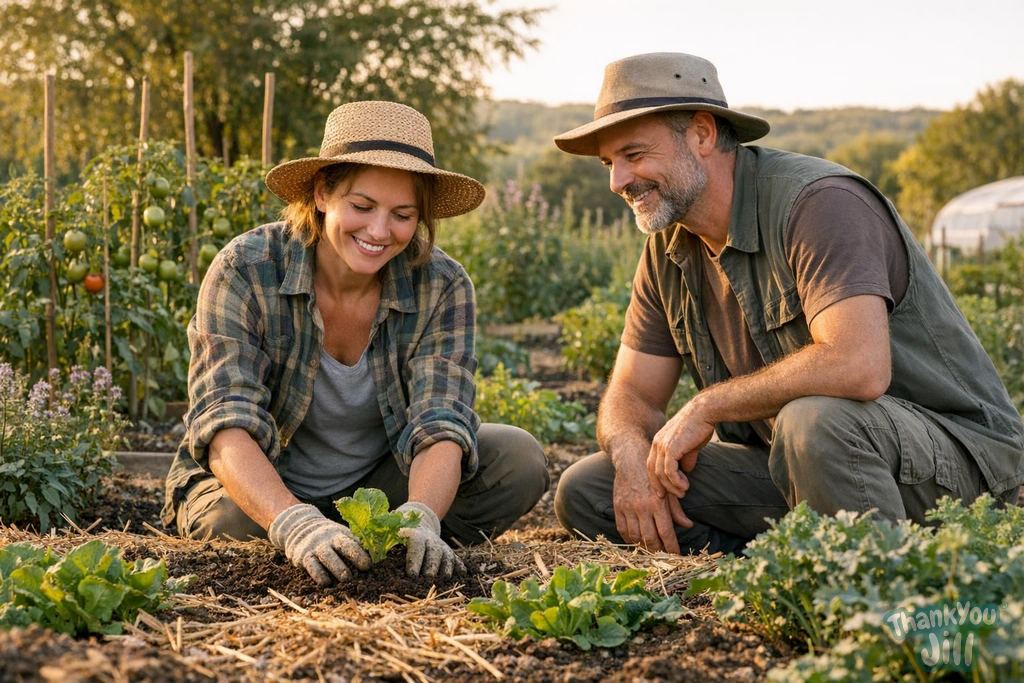
Masanobu Fukuoka, a Japanese farmer and philosopher, spent decades cultivating rice and cereals on his plot in Japan without ever tilling, without artificial fertilizers, without pesticides, and with minimal manual labor. His book "The One-Straw Revolution" (1975) became one of the foundational texts of global agroecology. It's not mysticism: it's a deep understanding of how natural ecosystems work, applied to agriculture. In Europe, the Spanish-born French naturalized Emilia Hazelip adapted Fukuoka's principles to European gardens, developing the synergistic garden system that is now practiced in thousands of gardens across the continent.
Fukuoka's Four Principles
Fukuoka summarized his agricultural philosophy in four fundamental principles: 1. No tilling: the soil is never turned over or worked deeply. The soil structure, built by microorganisms and earthworms over years, is preserved rather than destroyed. Tilling destroys the fungal mycelial network, exposes organic carbon to oxidation, and brings buried weed seeds to the surface. 2. No chemical fertilizers: fertile soil feeds itself through the organic matter cycle (crop residues returned to soil, mulch, nitrogen fixed by legumes). 3. No mechanical or chemical weeding: weeds are controlled through mulch and crop competition, not eliminated. Some "weeds" are useful as cover crops. 4. No pesticide dependence: a balanced ecosystem has its own natural defenses. Pests find their natural predators. Crop diversity reduces vulnerability to epidemics.
Emilia Hazelip's Synergistic Garden: The Practical European Version
Emilia Hazelip adapted Fukuoka's principles to the European garden, developing the synergistic raised bed system. Main features: permanent, fixed raised beds (never walked on: soil doesn't compact, microorganisms aren't destroyed), permanent mulch of straw or dry leaves (maintains moisture, suppresses weeds, nourishes soil through slow decomposition), paired polyculture (different plants grow together for radical synergy and nutrient complementarity), no soil cultivation ("no-dig": seeds are sown in mulch, transplants are inserted by opening small holes), no systematic irrigation (mulch reduces evaporation by 70-80%, allowing very rare watering under normal conditions). The synergistic bed "charges" biologically in the first 2-3 years: yields increase progressively as the soil enriches with life.
Charles Dowding's No-Dig Method: The Contemporary Adaptation
Charles Dowding, a British gardener, made the "no-dig" system popular worldwide through his books and YouTube channel. His version is pragmatic and evidence-based: he applies a layer of mature compost (5-10 cm) to the bed surface each year without ever digging. Seeds and transplants are placed directly in the compost. Dowding's results, documented in systematic comparisons of no-dig versus dug plots over 12+ consecutive years, show comparable or superior yields in no-dig, with much reduced labor (no digging), progressively richer soil organic matter, and fewer weeds (weeds grow from seeds brought to the surface by digging: if you don't dig, you don't expose the seeds).
How to Start With a Synergistic Raised Bed in Your Garden
The ideal synergistic bed is 120 cm wide (to reach the center from both sides without stepping on it), as long as you want, bordered by an edge (wood, stone, bricks). The installation process in 5 steps: 1. Don't dig the existing soil: cut the grass short but don't dig. 2. Cover the entire surface with double-layer cardboard (suppresses existing weeds: decomposes in 2-3 months). 3. Cover the cardboard with 20-30 cm of mature compost. 4. Mulch the entire surface between plants with straw or dry leaves (5-10 cm). 5. Sow or transplant directly into the compost by opening holes in the mulch. Watering: only during prolonged drought. The bed is ready. The following year: add only a new layer of compost to the surface, without digging. The soil will improve every year without further work.

Growing without tilling isn't laziness: it's trust in the earth's intelligence. The soil doesn't need us to break it to feed us: it needs us to respect it, cover it, keep it alive. Fukuoka produced rice like his neighbors, without ever putting his hands in the earth. Every spade you don't use is a mycelial network that survives to nourish your plants.
Synergistic Polyculture: Combinations That Work
Synergistic agriculture pairs different plants for their synergy: the three sisters (corn, beans, squash): an ancient North American indigenous system. Corn provides the stake for beans, beans fix nitrogen for corn and squash, squash covers the soil with its large leaves reducing evaporation. Tomato + basil: basil repels tomato pests (aphids, mites), improves fruit flavor according to tradition (mechanism still debated scientifically). Carrot + onion: the two vegetables protect each other from flies of their respective species (carrot fly is confused by onion smell and vice versa). Brassicas + nasturtium: nasturtium attracts the cabbage white butterfly as a trap plant: eggs are laid on nasturtium instead of cabbage.
No-Dig in Containers: Even on the Balcony
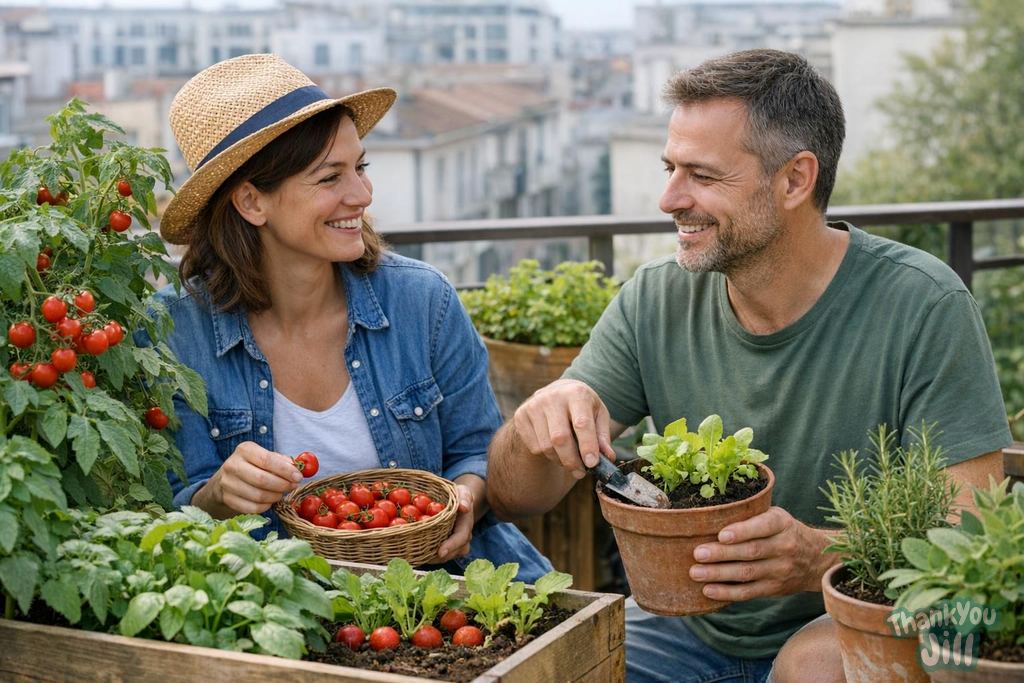
The no-dig principle also applies to balcony containers: each spring, instead of completely emptying and renewing the soil (common but destructive practice for microbiota), add a 5 cm layer of mature compost to the surface. Earthworms and microorganisms from the existing soil will naturally integrate the compost. This technique, applied for 3-4 consecutive years, transforms pot soil into increasingly fertile living substrate, instead of an inert medium requiring chemical fertilizers every year.
Resources for Learning More About Synergistic Agriculture
Essential books: "The One-Straw Revolution" by Masanobu Fukuoka (Libreria Editrice Fiorentina), "No-Dig Organic Home and Garden" by Charles Dowding (in English), "Orto sinergico" by Emilia Hazelip (Macro Edizioni). Online: Charles Dowding's YouTube channel (Huw Richards for Italian is an excellent alternative), original Emilia Hazelip videos available on YouTube (in English and Spanish). Practical courses: Rete Semi Rurali, AIAB and many local associations organize practical courses in synergistic agriculture and no-dig throughout Italy.
Frequently Asked Questions
What are the main benefits of not tilling soil in synergistic agriculture?
Not tilling preserves natural soil structure, protects the fungal mycelial network, maintains organic carbon, and reduces weed germination, promoting a balanced ecosystem and increasingly fertile soil over time.
How are weeds controlled without chemical weeding in the no-dig method?
Weeds are controlled with permanent mulch that suppresses their growth and with competition from synergistic crops, avoiding exposure of weed seeds as happens with digging.
When is it worth adopting the synergistic raised bed system to improve soil?
It's worth starting with synergistic beds when you want to reduce manual labor, improve biological soil fertility, and obtain healthier harvests, since soil enriches progressively in the first 2-3 years without invasive cultivation.
How to apply the no-dig method in containers or balconies to keep soil fertile?
Add about 5 cm of mature compost to the surface of existing soil each spring, without emptying the pot, allowing earthworms and microorganisms to naturally integrate and regenerate the substrate.
Latest News




Comments
No comments yet. Be the first!
Leave a comment