


 Italiano
 Français
 Deutsch
 Español
 Português
 Svenska
 Suomi
Suomi
Circular Economy in the Kitchen
Zero waste cooking
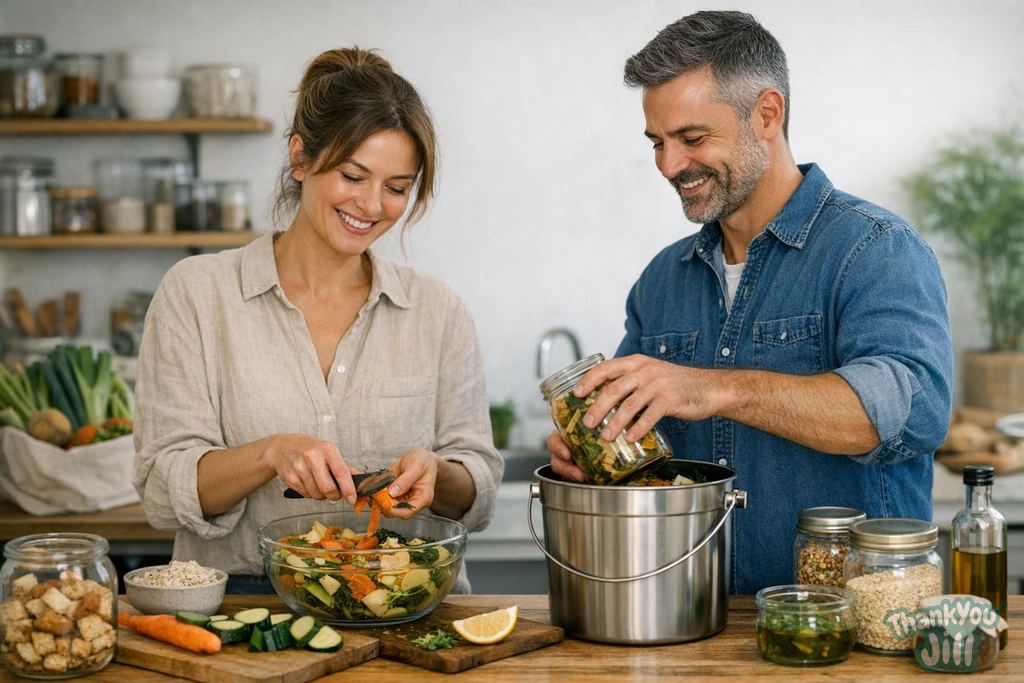
The concept of zero waste cooking is nothing new: it's a rediscovery of traditional culinary practices that existed before abundance and throwaway culture made them obsolete. The Ligurian grandmother who used Parmesan rinds in minestrone, the Sicilian chef who fried fennel fronds, the Veneto farmer who made risotto with zucchini skins—they were practicing zero waste cooking without knowing it. Today, with awareness of the environmental costs of waste and a renewed interest in Italian home cooking, these practices are making a comeback with fresh energy.
The principles of zero waste cooking
The first principle is to shift your perspective: instead of starting with the main ingredient and discarding scraps, look at the entire food item as potentially usable and ask yourself which parts are edible, which can be transformed, and which truly belongs in compost (not the trash). Five practical principles: use the whole animal or whole plant (nose-to-tail for meat, root-to-stem for vegetables), transform leftovers instead of throwing them away (yesterday's bread becomes today's bruschetta, yesterday's rice becomes tomorrow's crispy risotto), use cooking water (chickpea water is aquafaba, pasta cooking water is precious starch, vegetable broth is the foundation of every soup), plan so that scraps from one recipe become ingredients for another, preserve what you can't use fresh (freeze, pickle, dry, ferment).
Root-to-stem: using the whole plant
Celery: the outer leaves (often discarded) have intense flavor and are excellent for broths, flavoring sauces, and salads. The inner stalks are more tender than celery leaves but equally flavorful. Fennel: the feathery fronds are perfect for seasoning fish, as garnish, and in salads. The tough stalks are ideal for vegetable broth. The outer skin of the bulb: add it to your broth. Carrot: the leaves (often thrown away) are edible and taste similar to parsley with a slightly bitter note. Use them in pesto, soffritto, or salad. Broccoli: the central stem (often discarded for being tough) is excellent peeled and grated raw in salads, or cut into cubes and sautéed. Cabbage: the tougher outer leaves make excellent broth, stuffed rolls, or oven-baked chips. Onion: the dry skins from yellow onions, placed in boiling water, create a beautiful golden, flavorful broth. Never throw away the skins—freeze them for your next broth.
Nose-to-tail: using the whole animal
Traditional Italian cooking has always used the fifth quarter: offal, tongue, cheeks, heart, liver, feet, and bones. Modern bourgeois cooking forgot these parts; popular cooking and haute cuisine (great chefs) are rediscovering them. Bones: essential for broths. A beef or chicken bone broth cooked for 4-8 hours is the best collagen, the best natural glutamate, the foundation of every good professional kitchen. Chicken skin: fried in a pan without added oil becomes crispy like chips. Add it to sautéed vegetables for a crispy effect. Fish bones: fumetto (fish broth made with head, bones, and trimmings) is the base for fish risottos and soups. It requires 20 minutes of cooking—it's always worth making instead of throwing away the sea bass head.
How to transform leftovers: basic techniques
Stale bread (from 2-3 days old): bruschetta, panzanella (Tuscan: bread, tomato, basil, onion, vinegar), ribollita (Tuscan), pancotto (Puglian: bread in broth), pappa al pomodoro (Tuscan), meatballs with bread soaked in milk, homemade breadcrumbs (blend and toast in a pan—infinitely superior to store-bought). Leftover rice: arancini or supplì, crispy rice (golden crust in a pan), cold rice salad. Leftover pasta: pasta frittata (Neapolitan: pasta with eggs, pecorino, pepper), baked pasta gratin. Leftover vegetables: mixed frittata, cream soup (blend everything with broth), baked vegetable flan. Leftover meat: hash (shredded meat with potatoes and onion in a pan), meatloaf with ground meat, stuffed with vegetables and pasta.

Circular cooking isn't poverty cooking—it's intelligent cooking. The broth made from onion skins and celery leaves you would have thrown away, the frittata with last night's leftovers, carrot leaf pesto: none of this requires sacrifice. It only requires the curiosity to ask yourself what else can I do with this? before opening the trash bin.
Aquafaba: the chickpea liquid that replaces eggs
Aquafaba is the cooking liquid from chickpeas (or the liquid from canned chickpeas): it's rich in proteins and starches that emulsify, whip, and bind like egg white proteins. Uses include: as an egg white substitute in meringues (3 tablespoons aquafaba = 1 egg white), for whipping into peaks for mousses and vegan desserts, as a binder in vegetable meatballs, for making vegan mayonnaise. If you use canned chickpeas: never throw away the liquid. If you cook chickpeas at home: save the cooking liquid. You can freeze it in ice cube trays and use it as needed.
The zero waste pantry: what to always keep on hand
A good zero waste cook keeps these essentials within reach: a jar of Parmesan rinds (in the fridge, to enrich broths and soups), a bag of onion and celery skins in the freezer (for broth), a bag of bones in the freezer (bone broth), a container of dried pumpkin seeds (snacks, salad toppings), white vinegar in large quantities (quick pickling of vegetables nearing their end), empty glass jars (for storing, fermenting, freezing). With these tools, almost no food scraps end up in the trash—they always find a second life before the compost bin.
How to build a zero waste weekly menu
Zero waste planning: choose a base protein (e.g., a whole chicken) and plan how to use every part: day 1, roasted chicken (the meat); day 2, chicken salad with remaining parts; day 3, broth with bones + vegetables for risotto; day 4, risotto with the broth. Apply the same logic to vegetables: buy cabbage, use the outer leaves for broth or oven-baked chips, use the center leaves raw in salad, use the heart for soffritto. Sequential planning (each leftover becomes the base of the next meal) is the key technique of professional zero waste cooking, applicable at home with a bit of organization.
Frequently Asked Questions
What are the fundamental principles of zero waste cooking to reduce kitchen waste?
The fundamental principles include using all parts of the ingredient (nose-to-tail for meat, root-to-stem for vegetables), transforming leftovers into new dishes, using cooking water, planning sequential recipes, and preserving what you can't use fresh through freezing or fermentation.
How can aquafaba be used in zero waste cooking and what are its main uses?
Aquafaba is the cooking liquid from chickpeas, rich in proteins and starches, that can replace egg white. It's used to whip vegan meringues, prepare mousses, bind vegetable meatballs, and make vegan mayonnaise, thus avoiding waste of the cooking liquid.
How do you plan a zero waste weekly menu to maximize every ingredient?
Choose a base protein, such as a whole chicken, and plan the use of each part across multiple meals: meat for the first day, salad with leftovers the second, broth with bones the third, and risotto with the broth the fourth. The same applies to vegetables, using outer leaves, center leaves, and heart sequentially.
Which commonly discarded vegetable parts can be reused and how?
Outer leaves of celery and cabbage are used for broths or chips, fennel fronds for salads and seasonings, broccoli stems grated raw or sautéed, carrot leaves in pesto or salad. Even dry onion skins can flavor broths, reducing waste.
Latest News




Comments
No comments yet. Be the first!
Leave a comment