


 Italiano
 Français
 Deutsch
 Español
 Português
 Svenska
 Suomi
Suomi
The Oak Tree
The king of Italian forests and Mediterranean history

There exists a tree that has watched civilizations pass. It cast shade over the Romans, nourished medieval shepherds, and provided timber for ships that explored the world. That tree still grows in our forests, in our city parks, along the borders of ancient fields. It is the oak, and it deserves far more respect than we often give it.
A large and ancient family
In Italy, there is not one oak tree, but many. The Quercus robur (pedunculate oak) dominates the forests of the northern plains and hills. The Quercus pubescens (downy oak) thrives on the hot, dry slopes of the Apennines and the South. The Quercus cerris (Turkey oak) prefers the clay soils of central Italy. Then there is the holm oak, an evergreen Mediterranean species we'll discuss elsewhere. Each oak has its own character, habitat, and ecological partnerships. But all share one fundamental trait: ecological generosity. A century-old oak tree hosts up to 2,300 different species of organisms—insects, birds, fungi, lichens, mosses, and mammals. No other European tree matches this record.
The acorn: a fruit that fed a continent
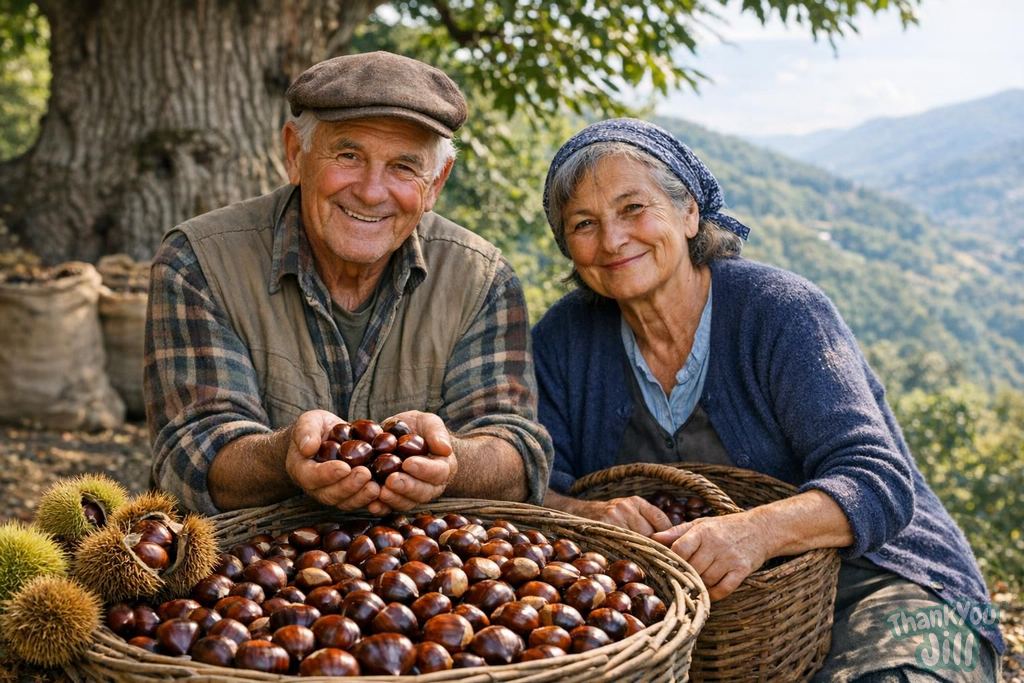
Before wheat became Europe's primary food, the acorn was the forest fruit par excellence. Neolithic peoples ground it into bitter but nutritious flour. Populations in Sardinia and Calabria used it as a staple food until modern times. Even today, in Korea and parts of North Africa, acorns are used to make polenta, bread, and sweets. The acorn contains tannins (which give it bitterness), starches, fats, and proteins. Once the tannins are removed through prolonged washing in running water, it becomes a valuable energy-rich food. For forest animals, the acorn is one of the most important autumn foods: wild boars, deer, jays, squirrels, and field mice stockpile them as essential energy reserves for winter.
Oak wood: a legendary material
The hardness, strength, and longevity of oak wood made it the preferred material for building ships, barrels, floors, beams, and fine furniture for centuries. Oak barrels remain indispensable today for aging wine, whisky, brandy, and balsamic vinegar: the wood imparts tannins, vanillin, and other aromatic compounds that transform young wine into something extraordinary. The oak forests of Limousin (France) and Asturias (Spain) are managed with meticulous care precisely to produce the finest wood for barrels. In Italy, the oaks of Chianti, Monferrato, and central Apennines have been the building material for hillside villages for centuries.
The oak and symbolism
In Greco-Roman culture, the oak was sacred to Zeus and Jupiter, the god of lightning—perhaps because isolated oaks in fields are struck by lightning more often than other trees, due to their height. Celtic priests (the druids, whose name probably derives from the proto-Celtic word for oak, dru) performed rituals in oak groves and harvested mistletoe from branches with a golden sickle. The oak leaf is a symbol of resilience and longevity: it appears on military uniforms, coins, and the coats of arms of dozens of Italian municipalities. The Oak of Mamre, in the Old Testament, is the place where Abraham encounters God.

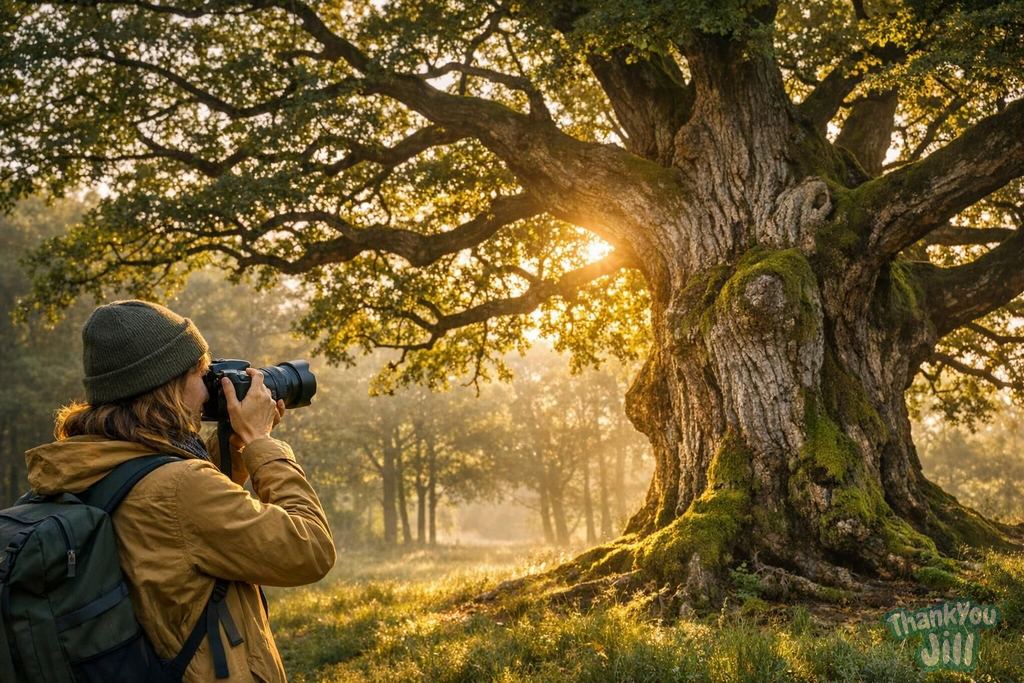
An oak tree that survives a thousand years has witnessed everything. And it is not yet finished hosting, nourishing, and amazing those who take the time to truly look at it.
How to recognize and respect the oak tree near you
The oak is one of the easiest trees to recognize, even for children. Here's how to do it and how to behave when you encounter one.
- Recognize the leaf: The oak leaf is unmistakable—lobed, with wavy and rounded margins. The pedunculate oak has deep lobes and a very short petiole; the downy oak has leaves with a heart-shaped base. If you find acorns on the ground, you're near an oak.
- Look at the bark: In mature oaks, it is deeply furrowed, almost like an old wrinkled face. Gray, hard, thick. In young trees, it is still smooth and gray-beige.
- Look for life around it: Under an oak, you always find something. Furrows in the ground left by wild boars. Woodpecker feathers among the roots. Nibbled acorns. Round galls on branches (the famous wasp galls). Every sign tells the story of who passed through.
- Don't collect acorns indiscriminately: Acorns are food for forest animals. You can collect a few out of curiosity or to play with children, but never strip the ground beneath a tree.
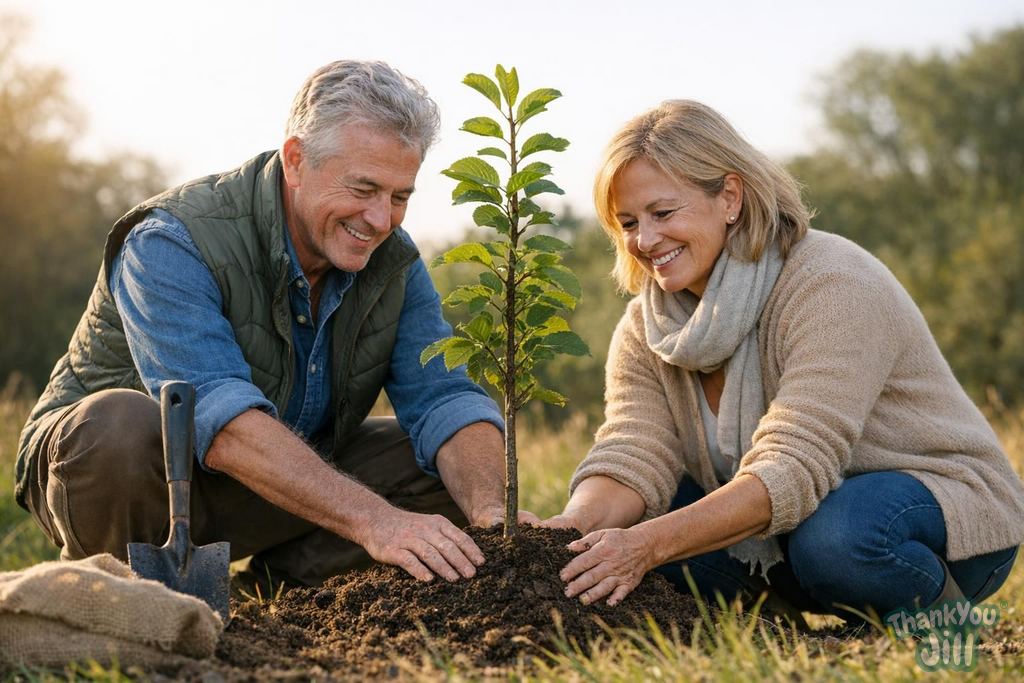
- If you have a garden or land: Consider planting a pedunculate or downy oak. Yes, they grow slowly—but in thirty years they'll already be impressive trees, and in a hundred years they'll be a legacy for whoever comes after you.
- Report monumental oaks: If your municipality has a centuries-old oak that doesn't appear in the register of monumental trees, you can report it to your local government or forestry service. It's a concrete act of conservation.
An oak planted today won't provide shade for you, but for your child, your grandchild, for someone you don't yet know. Planting an oak is the humblest and most audacious gesture a living being can make.
Frequently asked questions
What are the main oak species and how do you identify them?
The main species are Quercus robur (pedunculate oak), Quercus pubescens (downy oak), and Quercus cerris (Turkey oak). The pedunculate oak has leaves with deep lobes and a short petiole, the downy oak has leaves with a heart-shaped base, and the Turkey oak prefers clay soils. The leaves are lobed with rounded margins.
Why was the acorn historically an important food and how is it made edible?
The acorn was a staple food before wheat, used by Neolithic peoples and still today in some cultures. It contains bitter tannins that must be removed through prolonged washing in running water, making it a nutrient-rich food full of starches, fats, and proteins.
What is the ecological role of the oak in European forests?
A century-old oak tree hosts up to 2,300 different species including insects, birds, fungi, and mammals, providing a unique habitat. No other European tree supports such broad biodiversity, making the oak fundamental to forest ecosystems.
How can you contribute to the protection of monumental oaks?
If you identify a centuries-old oak not registered as monumental, you can report it to your local government or forestry service. This helps protect and valorize it, ensuring the conservation of an important natural and cultural heritage.
Latest News


Comments
No comments yet. Be the first!
Leave a comment