


 Italiano
 Français
 Deutsch
 Español
 Português
 Svenska
 Suomi
Suomi
How to Identify a Tree by Its Leaf
Shape, edges, veining, and color: the practical guide for everyone

How many times have you picked up a leaf from the ground, looked at it, and wondered: what tree is this from? Then you put it in your pocket and forgot about it. It's not laziness — it's just that no one ever gave you the tools to answer. Yet the answer is right there, in the leaf itself: you just need to know what to look for.
The first question: simple or compound leaf?
The first step in identifying a leaf is understanding whether it's simple (a single blade attached to the petiole) or compound (divided into multiple leaflets called pinnules, all attached to a central axis called the rachis). This distinction changes everything. Oak, beech, chestnut, and cherry leaves are simple: a single blade. Walnut, ash, black locust, and acacia leaves are compound: many small leaflets along a central axis. Pay attention: a compound leaf can look like a small twig with many leaves at first glance — but it detaches all at once from a single point on the branch. If you're picking something up from the ground that looks like a small twig with 5-11 identical, evenly-spaced leaflets, you're almost certainly holding a compound leaf from a walnut, ash, or black locust tree.
Leaf blade shape: the profile that tells the species
The overall shape of the leaf is one of the most useful indicators. Some iconic shapes worth memorizing: Lobed (with rounded lobes that look like fingers on an open hand): pedunculate and sessile oak. Oval-lanceolate (lance-shaped or elongated almond-like): willow, olive, holm oak. Cordate (heart-shaped, with an indented base): linden, quaking aspen. Dentate-serrate (margins with sharp teeth like a saw): chestnut, birch, hornbeam, hazel. Entire (smooth margins without teeth or lobes): mature holm oak, ash-leaved maple, bay laurel. Palmate (with deep lobes radiating from a center like fingers on a hand): maple, plane tree, horse chestnut. Size matters little — leaves on the same tree vary greatly depending on position, exposure, and age. Looking at shape is more reliable than relying on measurements.
Leaf venation: the internal map of the leaf
Veins transport water and nutrients through the leaf and are an important diagnostic feature. Pinnate venation (a central vein with lateral branches, like a feather): the most common — beech, chestnut, birch, elm, cherry. Palmate venation (multiple main veins radiating from the leaf base like spokes): maple, plane tree, horse chestnut. Arcuate venation (veins following the curve of the leaf margin): dogwood, wayfaring tree, viburnum. This feature is easy to see when you hold the leaf up to light: the sun illuminates the network of veins like a road map.
Color and surface: details that make the difference
Many trees have leaves with different colors and textures on the upper and lower surfaces. Holm oak has a glossy green upper surface and a whitish, slightly hairy lower surface. White poplar has an almost white lower surface due to dense hairiness. Linden has a tuft of orange hairs in the angle between the main and lateral veins (visible with a magnifying glass). Beech has leaves with a lighter lower surface and ciliate margins on young leaves. The surface can be glossy (holm oak, cherry, bay laurel), matte (oak, beech), hairy (alder, hawthorn), or sticky (young white poplar). These details usually require close inspection, but with a bit of practice they become recognizable at a glance.
Scent: the final test
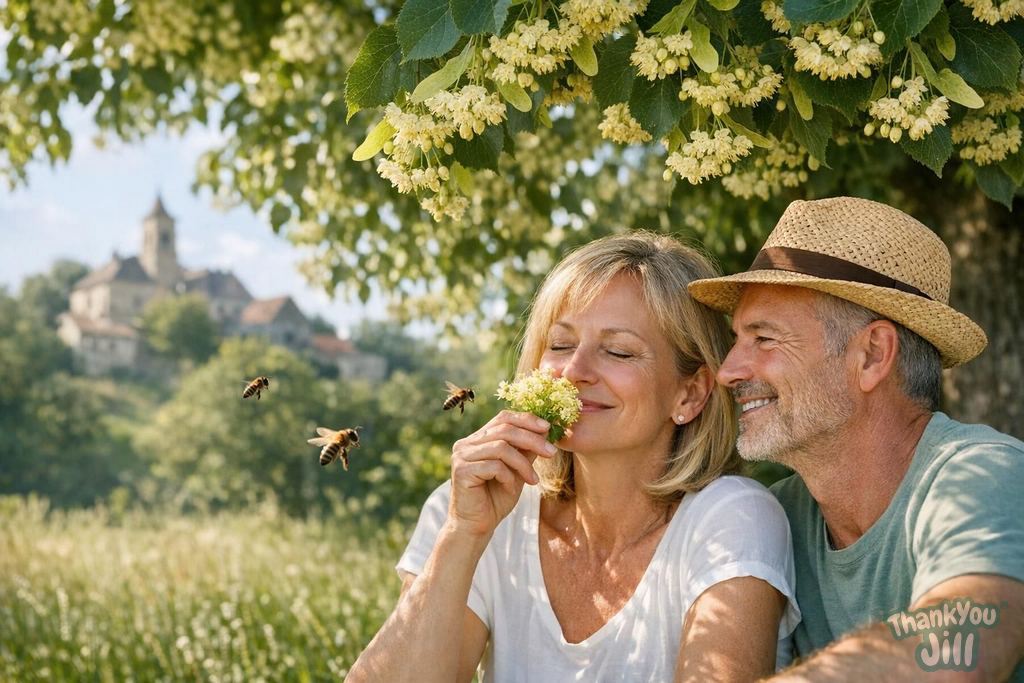
Gently rub the leaf between your fingers and smell it. Scent is often the most unmistakable sign. Walnut has a pungent, characteristic smell that's impossible to mistake. Bay laurel smells like the bay leaf used in cooking (it's the same tree). Elder has an intense, slightly unpleasant odor. Cherry releases a faint almond-like scent when the leaves are rubbed. Linden smells sweetly. Pine releases a fragrant resin. Birch has a fresh, almost balsamic scent. This trick — rub and sniff — works especially well for aromatic species, but it's always useful as confirmation.

Every leaf is an identity card written by nature. You don't need to memorize encyclopedias: just learn to observe shape, edge, venation, and scent. The forest becomes a completely different place when you know how to read what it's telling you.
Practical exercise: how to learn to identify 10 leaves in an afternoon
You don't need a university course. Just an afternoon in a tree-filled park, a clear plastic bag, and the desire to play. Here's how:
- Collect 10 different leaves from the ground (don't pull them from branches) in a park or forest. Place each one on a sheet of paper towel to keep it from getting wrinkled.
- For each leaf, answer these 5 questions: Is it simple or compound? What's its overall shape? Are the edges smooth, dentate, or lobed? Do the veins start from one point or from a central vein? When rubbed, does it have a recognizable scent?
- Photograph each leaf with your phone and use it directly on PlantNet (free app): frame the leaf against a white background (a sheet of paper), select "leaf" as the organ type, and wait for the result. Accuracy is over 80% for common Italian species.
- Keep a notebook: write the tree's name next to a sketch or photograph of the leaf. After cataloging 20 leaves, you'll start remembering the most common ones without needing the app.
- Return to the same tree in different seasons: a cherry leaf in May (bright green, fresh) is very different from one in October (orange, semi-dried). Learning to recognize seasonal variations is the next level.
- With children: turn leaf collecting into a game. Who finds the biggest leaf? Who finds the compound leaf with the most leaflets? Who can identify the tree by scent with eyes closed? Games turn botany into adventure.
The 10 leaves to learn first if you live in Italy: oak (lobed), chestnut (serrate and elongated), beech (oval with cilia), cherry (oval with sharp teeth), maple (palmate), linden (cordate), walnut (compound with 5-9 leaflets), olive (lanceolate bicolor), pine (needles in pairs), plane tree (large palmate). With these 10, you'll recognize 70% of the trees you encounter every day.
Frequently asked questions
How do you distinguish a simple leaf from a compound leaf to identify a tree?
A simple leaf has a single blade attached to the petiole, while a compound leaf is divided into multiple leaflets attached to a central axis called the rachis. The compound leaf detaches from the branch all at once, not leaflet by leaflet.
What venation characteristics help identify a tree species?
Veins can be pinnate (a central vein with lateral branches), palmate (multiple main veins radiating from the base), or arcuate (veins following the curve of the margin). Observing them against light helps identify species like beech, maple, or dogwood.
When is it worth using leaf scent to identify a tree?
Scent is especially useful for aromatic species like walnut, bay laurel, elder, or linden. By rubbing the leaf and smelling it, you can confirm the tree's identity thanks to characteristic, often unmistakable odors.
How can you quickly learn to identify leaves of common trees?
Collect 10 different leaves from the ground and observe whether they're simple or compound, their shape, edges, veins, and scent. Use apps like PlantNet to identify them and record your findings. By repeating the exercise and observing leaves in different seasons, you'll improve rapidly.

Latest News



Comments
No comments yet. Be the first!
Leave a comment