


 Italiano
 Français
 Deutsch
 Español
 Português
 Svenska
 Suomi
Suomi
Bark Tells All
How to Identify Trees by Their Bark in Every Season
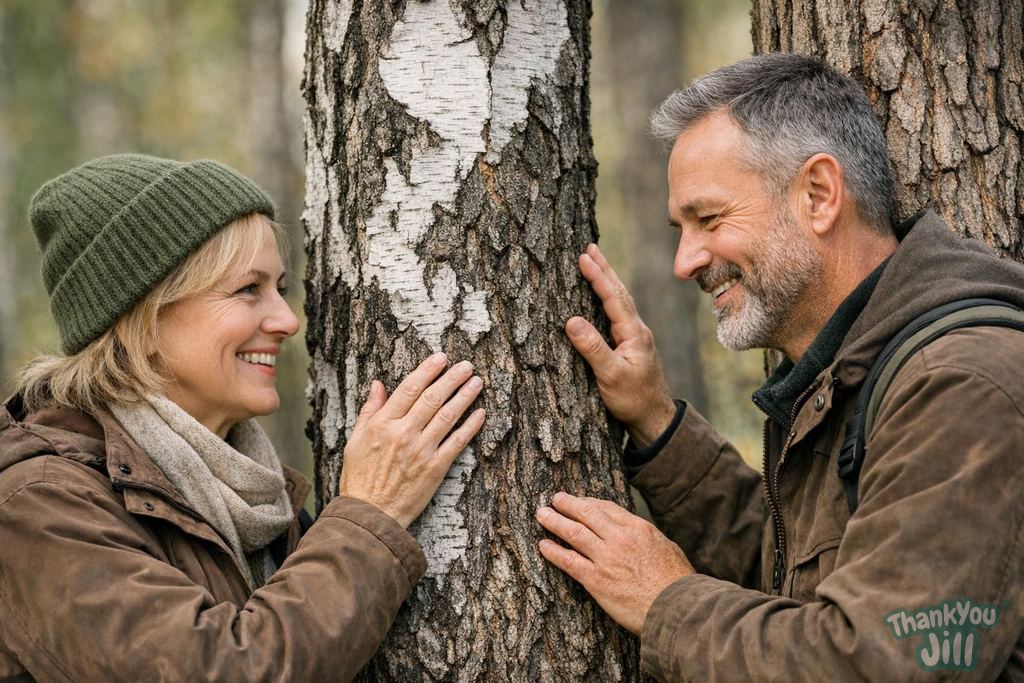
In winter, when leaves have fallen and branches are bare, many people feel lost in the forest. How do I identify trees without leaves? The answer is simple: look at the bark. It's there all year, always visible, and tells a precise story if you know how to read it.
What is bark and why does it differ from tree to tree
Bark is the protective outer layer of the trunk and branches. It's made up of two parts: the inner bark (phloem: living tissue that transports sugars produced by leaves downward) and the outer bark (rhytidome: dead, protective layer). As the tree grows in circumference, the outer bark must adapt: in some species it cracks into plates, in others it peels off in strips, and in still others it remains smooth but thickens. This process creates the characteristic patterns that make each species recognizable. Bark also changes with age: a young beech's bark is smooth and gray; a 200-year-old beech has light cracks but maintains a relatively smooth surface. By contrast, oak becomes increasingly furrowed and wrinkled with age. Learning to read both young and old trees takes some practice, but it's one of the most rewarding exercises in nature.
The most recognizable barks: a visual dictionary
Smooth and silver-gray: beech. Beech bark remains exceptionally smooth throughout the tree's life—almost like elephant skin. It's one of the most beautiful barks in the temperate forest. White with horizontal stripes: birch. The white-silvery bark of birch peels off in thin horizontal strips, revealing reddish layers underneath. Unmistakable. Red-orange on top, gray-furrowed below: Scots pine. The two-tone trunk is the immediate giveaway. Deeply furrowed, almost black: mature oak, mature ash, black locust. Black locust's furrows are particularly deep and irregular. Rectangular plates that peel off: plane tree. Plane bark falls away in irregular pieces revealing light inner layers (beige, green, yellow): a unique mosaic of colors. With prominent horizontal lenticels: cherry, peach, blackthorn. The white or gray horizontal stripes on reddish bark are the signature of Prunus lenticels. With spines or prominent knots: young black locust, honey locust, acacias. Spongy orange cork: young manna ash, barberry. Gray and smooth with blue-green stripes: hornbeam, young hazel.
The smell of bark: an underrated sense
Like leaves, bark also has a characteristic smell. Gently scratch a thin layer of bark with your fingernail on a young branch and sniff. Cherry smells like bitter almond (cyanide in micro-doses: don't worry). Alder has a pungent, almost fermented smell. Birch has a balsamic fragrance similar to wintergreen. Ash has a vaguely bitter smell. Willow has a delicate fresh-bark scent. Black locust, strangely, has almost no smell. These fragrances are most noticeable on young branches and in spring, when bark is more metabolically active.
Bark as habitat: who lives inside and outside it
Bark isn't just a diagnostic sign—it's an ecosystem. Beneath the peeling bark of dead trees live larvae of wood-boring beetles (longhorn beetles, jewel beetles), forest scorpions, millipedes, spiders, and dung beetles. The cracks in the bark of living trees host bats during winter (huddled in the crevices of oak, beech, and chestnut), tits that hide seeds in the furrows, and treecreepers that walk vertically along the bark hunting for insects hidden in the fissures. Lichens growing on bark (gray, yellow, orange, and green crusts) are bioindicators of air quality: the more abundant and diverse they are, the better the local air quality. Bark covered with colorful lichens is a sign of a healthy forest far from pollution.

Bark doesn't lie and can't be removed. It's there all year, in every season, ready to tell you who you're standing in front of. Learn to read it and the winter forest stops being a place of anonymous trees.
How to practice identifying bark: practical tips
- Start with urban trees: tree-lined streets in cities are the perfect laboratory. Each tree has a name tag (in well-managed cities) or you can identify them with the PlantNet app by photographing the bark. Start with plane, linden, horse chestnut, and maple: they're the most common and have very different barks.
- Touch the bark: texture is part of its identity. Beech bark is cold, smooth, and almost hard like ceramic. Black locust bark is fibrous and can be peeled off in strips. Pine bark is scaly and leaves resin residue on your fingers. Cork oak bark is soft and light as a sponge. Using your hands is essential.
- Photograph at different heights: bark at the base of the trunk (older, more furrowed) is different from that on high branches (younger, smoother). For identification, always photograph the main trunk's bark at about 1.5 meters from the ground.
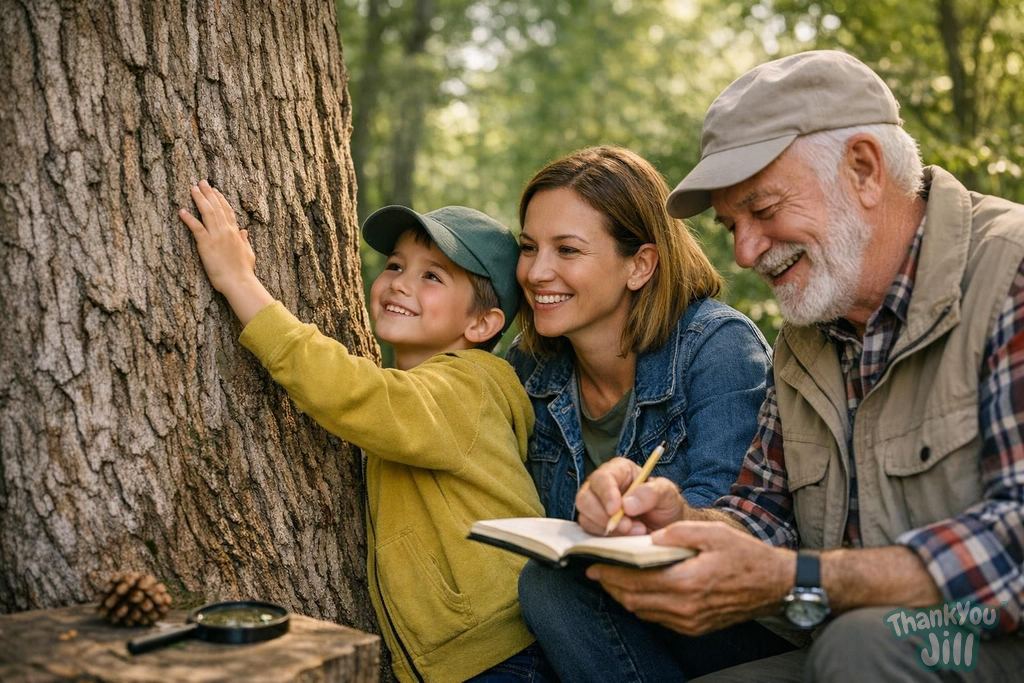
- Use a magnifying glass: fine bark details (lenticels, fissure structure, specific lichens) are much easier to see with a small magnifying lens (5x-10x). An inexpensive field magnifier is available at any optical shop or online for just a few euros.
- Keep a bark notebook: glue a small piece of bark collected from the ground (never peel it from a living tree) onto a notebook page, write the tree's name and date. After 20-30 samples you'll have a small personal tactile and visual library.
- With children: the blind forest game. Blindfold them and have them touch the bark of 3-4 different trees. Then, after removing the blindfold, have them recognize the same tree by touching it again. Children's tactile memory of bark is surprisingly lasting.
Recognizing a tree by its bark requires a bit more practice than by its leaf, but it has an enormous advantage: it works year-round. In the depths of winter, in a bare forest, you can walk and say: that's a beech, that one's a birch, that dark trunk is an oak. It's a form of orientation in the natural world that's priceless.
Frequently Asked Questions
How do you identify a tree in winter without leaves using its bark?
In winter, when leaves are absent, you can identify a tree by observing its bark: its color, roughness, cracking or peeling patterns, and the presence of lenticels are distinctive signals that remain visible year-round.
What bark characteristics change as a tree ages?
With age, bark can become rougher, more furrowed, or thicker. For example, beech maintains smooth bark even as an adult, while oak develops deep furrows and pronounced roughness, making it easier to distinguish young trees from old ones.
How can the smell of bark help in identifying trees?
By gently scratching the bark of young branches, you can detect characteristic odors, such as the bitter almond scent of cherry or the balsamic fragrance of birch, which help identify certain species, especially in spring when bark is more metabolically active.
What tools and methods are recommended for practicing tree identification by bark?
It's recommended to start with common urban trees, touch the bark to feel its texture, photograph it at different heights, use a magnifying glass for fine details, and keep a notebook with samples and notes to improve your tactile and visual memory.


Latest News

Comments
No comments yet. Be the first!
Leave a comment