

 English
 Italiano
 Français
 Deutsch
 Español
 Português
 Svenska
 Suomi
Suomi
Winter
What trees are really doing when they seem to be sleeping
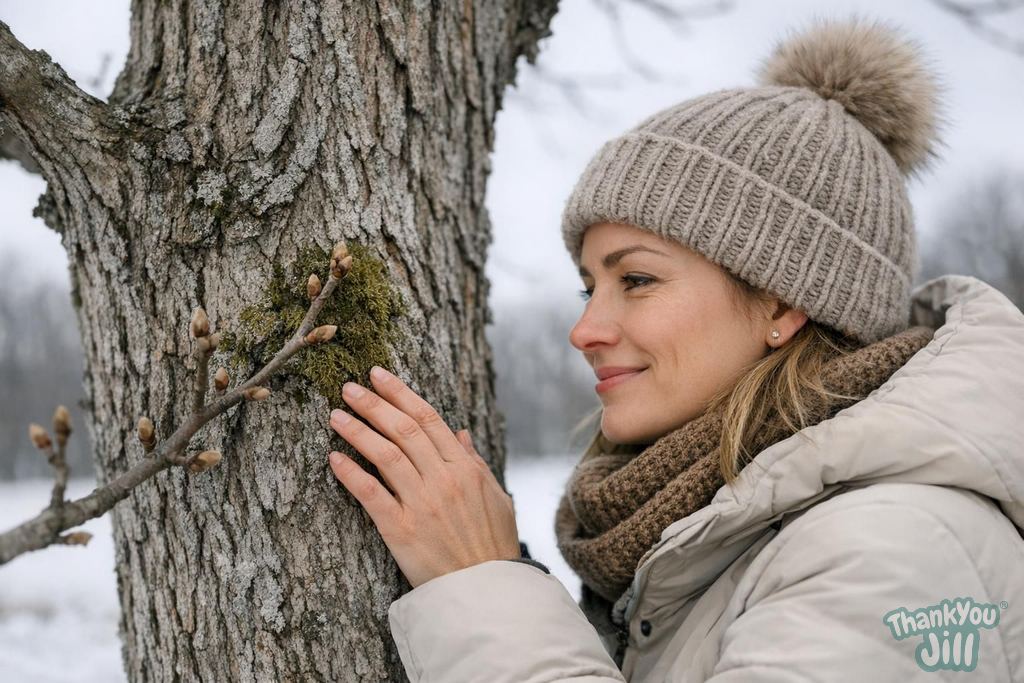
A deciduous forest in January looks like a dormant place. Gray trunks, bare branches, soil covered in brown leaves. You're tempted to call it "sleeping" or even "dead." Yet all you need to do is push your fingers through the snow, reach the soil, and feel it: it's warm. The forest isn't dormant. It's simply working in silence, in a way different from what we see in spring.
Dormancy: not hibernation, but precise slowdown
The winter dormancy of deciduous trees isn't complete hibernation like some mammals experience. It's a state of reduced but active metabolism, maintained by a series of precise molecular mechanisms. The key processes that continue in winter: cellular respiration (slow but continuous) in the living cells of the cambium, phloem, and wood; root growth (the roots of deciduous trees never stop growing if soil temperature exceeds 4-5°C — and forest soil often stays at this temperature even when there's snow on the surface); slow transport of sugars and amino acids from wood reserves to growing roots; bud formation (already completed in summer-autumn) and internal maturation of leaf primordia. What stops completely: photosynthesis (no leaves, insufficient light), transpiration, stem growth.
How trees resist freezing
The main winter challenge for trees isn't the cold itself — it's water freezing inside cells. When water freezes, it expands and breaks cell walls. A tree with cells full of freezing water could suffer serious damage. Trees resist freezing with different strategies. Sugar accumulation in cell sap: in autumn, the tree accumulates high concentrations of dissolved sugars in cells — sugars lower the freezing point of cell liquid (like salt melting ice on a sidewalk), preventing the formation of intracellular ice crystals down to very low temperatures. This explains why fruit that remains on the tree after the first frosts (apples, pears, persimmons) becomes sweeter: the cold stimates the conversion of starch into soluble sugars. Controlled dehydration: some cells of frost-resistant trees actively eliminate part of their intracellular water before freezing, depositing it in intercellular spaces where it freezes without breaking walls. Antifreeze proteins: just as polar fish have special proteins that prevent ice crystal formation, some plants produce similar proteins that inhibit ice crystal growth in tissues.
Life beneath the snow: the winter understory
Beneath a layer of snow, the forest isn't silent. In the damp litter, soil fungi continue decomposing organic matter throughout winter, slowly but without stopping. Mosses are among the few organisms that photosynthesize even in winter months, taking advantage of every hour of available light beneath the snow. Earthworms descend deeper when soil freezes, but return to the surface during thaw weeks. In the snow itself, among the crystals, live tiny organisms called nivicoles (crustaceans and microscopic insects adapted to cold). On trees, tits (blue tits, great tits, coal tits) probe every crack in the bark searching for insect larvae, eggs, and pupae — a fundamental source of protein in winter. They're the most common sound you hear in a winter forest: the tapping of beaks on bark.
Snow as protection
Snow isn't just a challenge for trees: it's also a precious protective layer. Snow-covered soil maintains a stable temperature around 0°C, protecting shallow roots and bulbs of rooted plants from far more severe frosts that would strike bare soil. Snow provides water slowly during spring melt, gradually recharging groundwater and allowing roots to recover before having to support full leaf production. In mountains, conifer forests under snow are active ecosystems: subnivean cavities (the space between soil and snow) host wild mice, voles, and arvicoles that live protected from extreme cold thanks to snow's insulation.

The winter forest isn't an empty theater between shows. It's a different show, slower, more discreet. You have to know where to look — beneath the bark, in frozen soil, on branches where tits tap searching for a hidden aphid egg. There's more life than you think.
How to explore and appreciate the winter forest
- Listen to the silence: the winter forest is the quietest place that exists. Go to a forest on a fresh snow morning, stop, and listen for five minutes. This exercise — recommended by many therapists and mindfulness teachers — is accessible to anyone and has measurable effects on stress reduction.
- Look for tracks in the snow: fresh snow is the notebook of nocturnal wildlife. Search for prints: four close-together paws (squirrel), four large ones in a line (fox or badger), two rows of small dots (field mouse), hand-shaped prints (badger). A walk in the forest after a snowfall becomes a reading of nighttime animal stories.
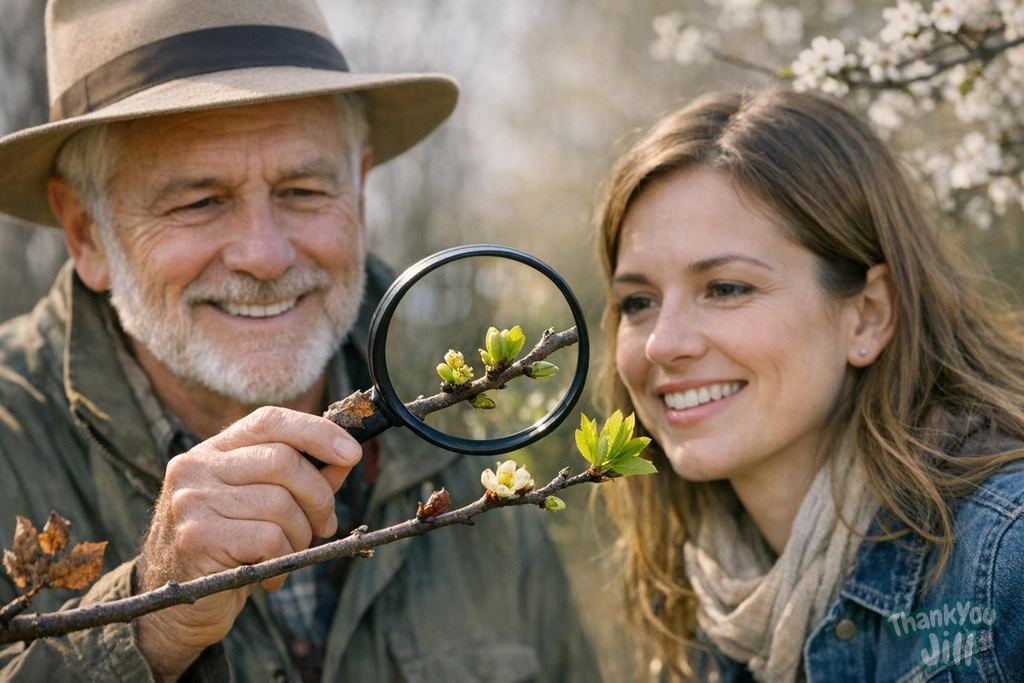
- Observe buds with a magnifying glass: winter buds are perfectly visible this season. With a 5x magnifier, every bud is a world of detail: overlapping scales, protective hairs, variable colors. Compare buds of maple (opposite, green-red), beech (elongated, bronze), ash (black and flat). They're among the most beautiful photographic subjects in the winter forest.
- Take children into the snowy forest: one of the most common mistakes modern parents make is avoiding winter outings with children out of fear of cold. Dressed correctly (layers, waterproofing, gloves), a child playing in a snowy forest gains sensory experiences that no artificial environment can provide. The cold on wet gloves, the crunch of compressed snow, the vapor of breath: bodily memory that lasts a lifetime.
- Observe frost on branches: on frosty mornings after humid nights, frost crystals form on thin branches creating shapes that seem impossible. They're ice crystals grown slowly and very slowly during the night: each with a unique hexagonal structure. Photographing them with your phone's macro lens is an experience of beauty accessible to everyone.
- Plan a sunset walk: in winter the sun sets early, creating orange and pink light that illuminates gray trunks and snow in an extraordinary way. The first 20 minutes after sunset, with low light and changing sky, are perhaps the most beautiful time to photograph the winter forest.
Winter in the forest requires a bit more equipment and a bit less expectation of spectacular colors. But those who learn to appreciate it discover something rare: essential, bare, pure beauty of a gray oak in the snow, with the last dry leaves clinging to the high branches. You don't need Instagram filters to make it beautiful. It's already all there.
Frequently Asked Questions
How do trees survive freezing during winter?
Trees resist freezing by accumulating sugars that lower the freezing point of cells, eliminating part of their intracellular water to prevent damage, and producing antifreeze proteins that prevent the formation of damaging ice crystals.
Why does soil beneath snow stay warmer than winter air?
Snow acts as an insulating layer that maintains stable soil temperature around 0°C, protecting roots from intense frost and allowing root growth when temperature exceeds 4-5°C, even if the surface is snow-covered.
What happens to tree buds during winter?
Buds form in summer-autumn and mature internally during winter without visible growth. This process occurs with reduced but active metabolism, preparing the tree for spring growth without photosynthesis or stem development.
How can you observe and appreciate life in the forest during winter?
You can listen to the silence, search for animal tracks in the snow, observe buds with a magnifying glass, photograph frost on branches, and plan sunset walks to capture special light, discovering the hidden life and beauty of the winter forest.

Latest News


Comments
No comments yet. Be the first!
Leave a comment