


 Italiano
 Français
 Deutsch
 Español
 Português
 Svenska
 Suomi
Suomi
The Phenological Calendar
Learning to read the seasons through the life of trees
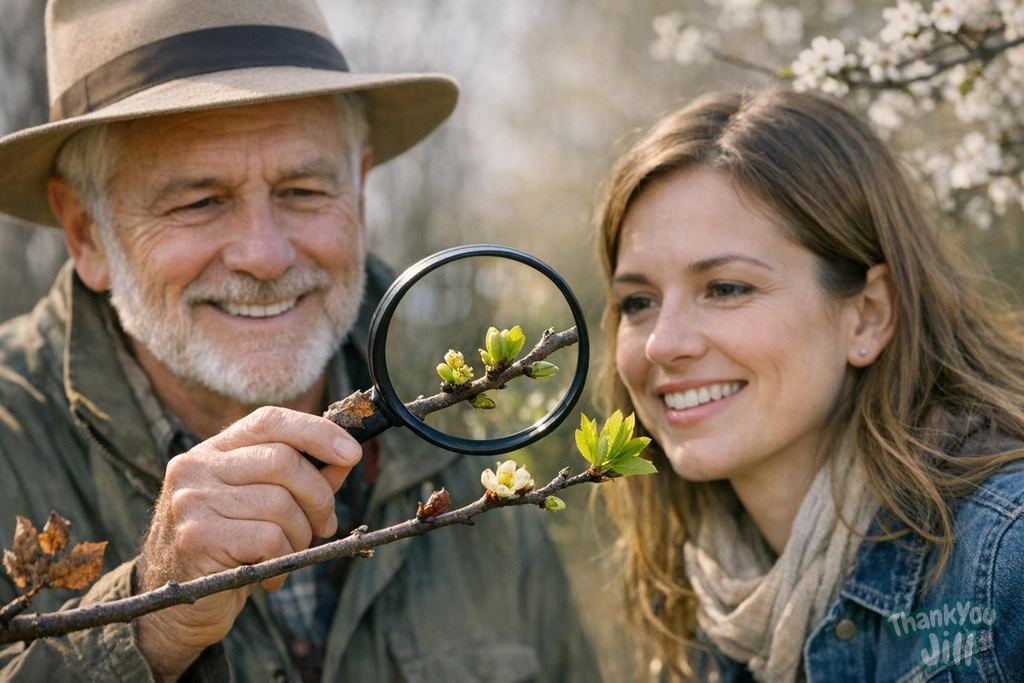
There's an Italy that has always known how to read the seasons without calendars. Farmers knew it was time to plow when wild cherry trees began to flower. Fishermen knew that schools of sardines arrived when broom was in bloom. Shepherds moved their flocks when beech trees put out their first leaves. This knowledge is called phenology — the science of biological timing — and today it has returned to extraordinary relevance for understanding and documenting climate change.
What is phenology and why it matters
Phenology (from the Greek phainomenon: phenomenon) is the branch of biology that studies the timing of recurring biological events (flowering, migration, leaf emergence, fruit ripening) in relation to environmental conditions (temperature, precipitation, day length). The phenological events of trees are among the simplest and most precise to document: the date when a single tree opens its first flowers or puts out its first leaves is reproducible data, comparable across time and space, and directly correlated with average seasonal temperature. This is why phenology has become one of the principal tools for documenting climate change in a visible and intuitive way. You don't need a sophisticated thermometer: just note each year when the cherry tree in your neighborhood park flowers. Historical phenological records — some dating back to the 18th century in Japan and the 19th in Europe — clearly show that spring flowering has advanced by an average of 2-3 weeks over the last half century in temperate zones of the northern hemisphere.
The Italian phenological calendar of trees
The Italian phenological calendar of trees is a natural document that repeats every year with increasingly significant variations. Here are the main phenological events, with average dates (increasingly earlier in recent decades): February (weeks 5-8): hazel flowering (first catkins), willow awakening (pussy willows). March (weeks 9-13): wild cherry and blackthorn flowering, first elm leaves, mountain maple flowering. April (weeks 14-17): oak, hornbeam, maple, and poplar leaf emergence; wild apple flowering. May (weeks 18-22): beech leaf emergence (among the latest), robinia flowering, rowan flowering. June (weeks 23-26): linden flowering. July-August: ripening of first wild fruits (cherry, rowan). September-October: leaf color change (starting with birch, then oak and beech). October-November: leaf fall, beginning of dormancy. Scientific value: each of these events, documented every year at the same site and with the same species, produces a time series of valuable data for understanding how local climate is changing.
Phenological citizen science: how to contribute
In Italy and Europe there are networks of phenological citizen science that collect observations from volunteers to build national datasets. Phenology Italy (CNR project): Italian phenological monitoring network that includes both professional observers and volunteers. Nature's Calendar (UK): the world's largest phenological citizen science project, with over 40,000 volunteers. European Phenology Network: network coordinating European phenological data. Participating is simple: choose 1-3 tree species near your home, note each year the dates of main events (first leaf, first flower, color change, leaf fall), enter your data in the online database. Your data, combined with that of thousands of other observers, becomes a scientific tool for understanding the change underway.

Every year you note when the cherry tree in your garden flowers, you're writing a page of climate history. After twenty years, that page will say something important about the world you're leaving to your children.
How to start your own phenological calendar: practical guide
- Choose 3-5 trees to monitor: they should be trees you see often (in your garden, in the park near your home, on the route between home and office). Best trees to start with: cherry (early and showy flowering), beech (late and very precise leaf emergence), linden (fragrant and highly recognizable flowering), ginkgo (spectacular golden autumn coloring).
- Define the events to record: for each tree, record at least 3 events: first visible leaf (even just 1-2 open leaflets), first flowering (even just 1-2 open flowers), first 50% of leaves fallen. These three events cover the entire seasonal arc.
- Record the date, not the day: the precise date (day/month/year) is the scientific data. It doesn't matter if it rains or is sunny that day — just note when you observe the event.
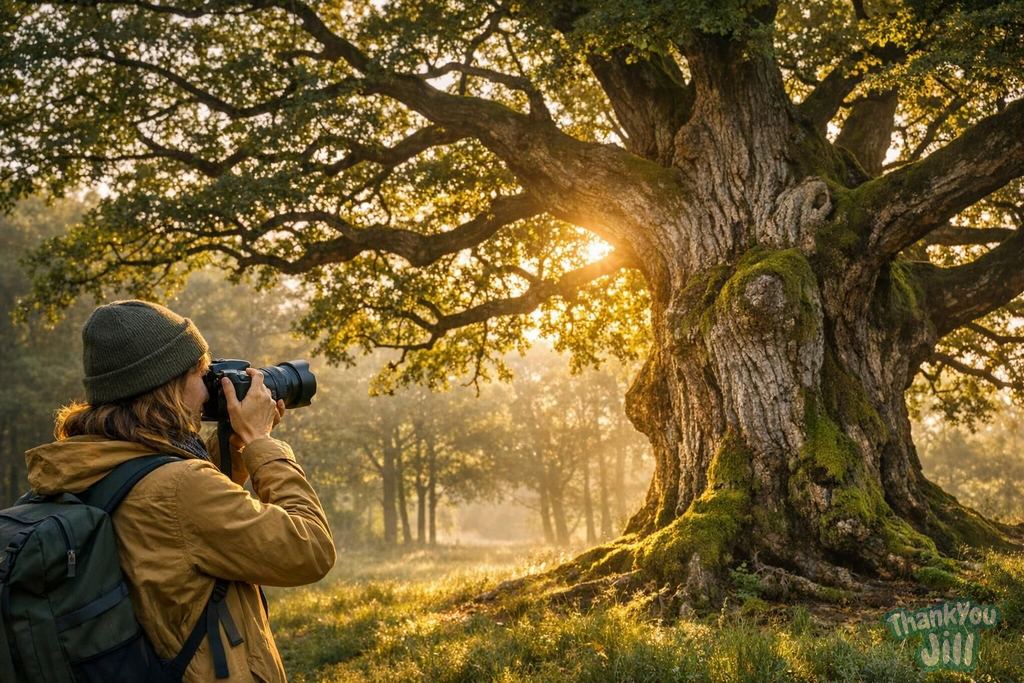
- Photography + notebook: photograph the tree at the moment of the event (first leaf, first flower) and note the date in your notebook. The photograph is documentary proof; the notebook is your comparative record over time.
- Share online: upload your observations to iNaturalist or the Phenology Italy portal. Your data becomes part of a national database accessible to researchers. It's citizen science in the most concrete sense of the term.
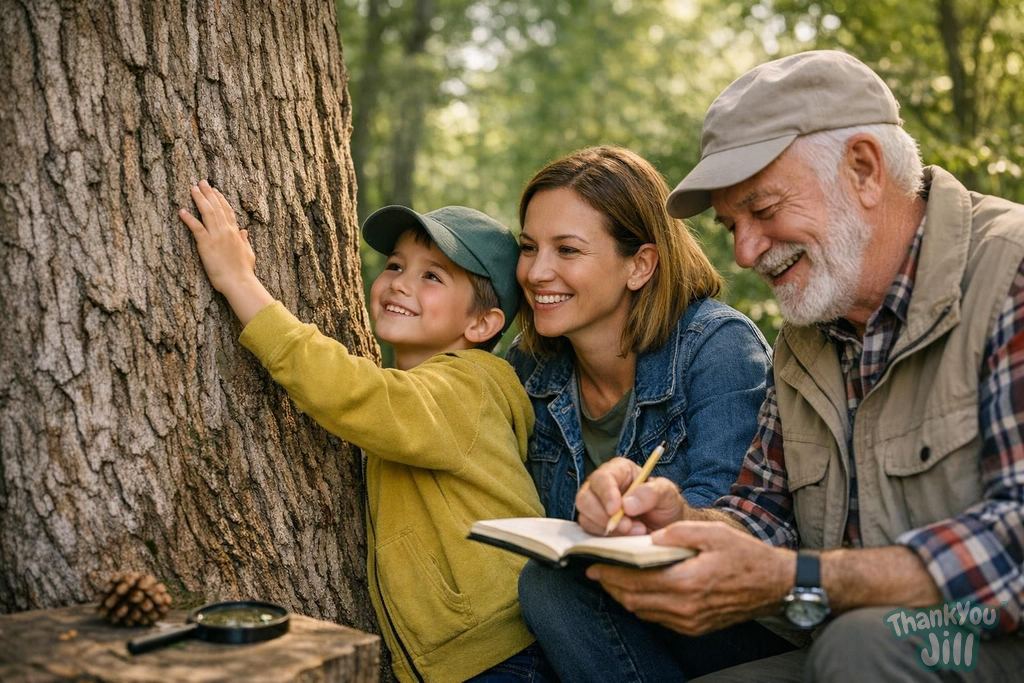
- With children — the class calendar: suggest to the teacher that the class keep a phenological calendar, monitoring the same 3-5 trees in the school garden throughout the year. It's a year-long project that teaches biology, mathematics (averages and graphs), climate science, and observation skills. By year's end, the children have produced real scientific data and have learned to know the trees in their schoolyard in a way they never had before.
The phenological calendar is perhaps the simplest and most lasting gift you can give yourself: the ability to read the seasons through trees. It's a skill that doesn't become obsolete, doesn't require software updates, and grows richer every year that passes. And if you pass it on to a child, you're teaching them to see the world in a way that will stay with them for life.
Frequently asked questions
What are the main phenological events of trees to monitor throughout the year?
The main phenological events include early flowering (hazel, wild cherry), leaf emergence (oak, beech), fruit ripening (July-August), and leaf fall (October-November). These events help track seasonal and climate changes.
How can I start a personal phenological calendar to monitor trees?
Choose 3-5 frequently visible trees, record at least three events for each (first leaf, first flower, 50% leaf fall), note the precise date, photograph the events, and share your data on citizen science platforms like Phenology Italy or iNaturalist.
Why is phenology an effective tool for studying climate change?
Phenology records reproducible seasonal biological events correlated with average temperature, such as flowering or leaf fall. The timing variations of these events clearly show how local climate is changing over time, without the need for sophisticated instruments.
How can I contribute to phenological citizen science and why is it important?
You can participate by observing and recording phenological events of trees near your home, entering your data in online databases. This supports large-scale scientific information gathering, essential for monitoring climate change and improving global environmental knowledge.
Latest News
Comments
No comments yet. Be the first!
Leave a comment