


 Italiano
 Français
 Deutsch
 Español
 Português
 Svenska
 Suomi
Suomi
In the Forest at Night
Who comes out, what they do, and how to discover the forest in the dark hours
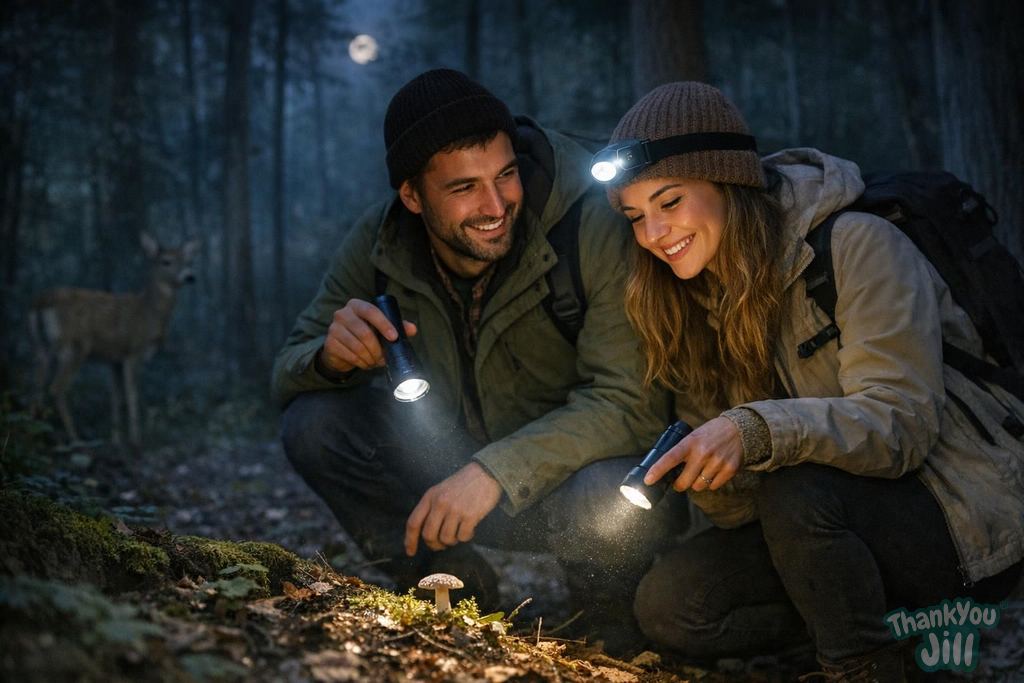
The forest by day is beautiful. But the forest at night is a different place entirely. Not just different—it's more alive, denser with movement, filled with sounds that don't exist during daylight. The majority of animal species in the Italian forest are nocturnal or crepuscular. During the day, you're only seeing a tenth of the story.
Who wakes up after sunset
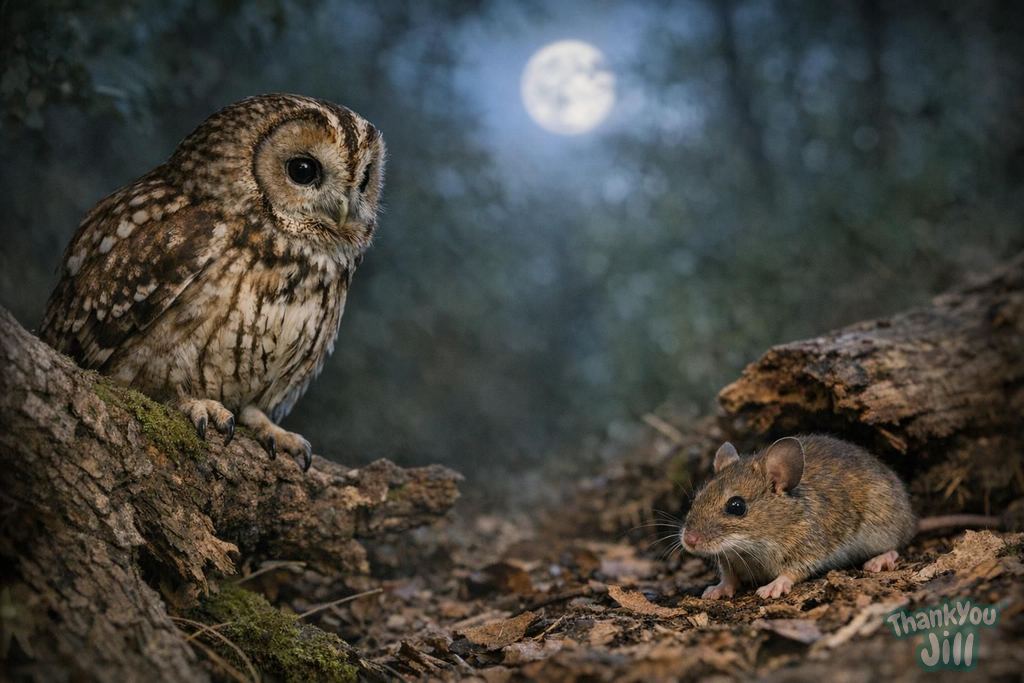
Sunset is the starting signal for most forest inhabitants. The badger emerges from its burrow 30-60 minutes after sunset, sniffs the air for a few minutes, then heads toward nearby fields searching for earthworms and insects. The wild boar leaves its daytime shelter (a bed of leaves in dense forest) and begins its nightly rounds, rooting through the soil with its snout in search of truffles, roots, earthworms, and carrion. The hedgehog starts its solitary patrol through low vegetation, eating slugs and insects. The fat dormouse and hazel dormouse (from April to September) wake up and begin moving through branches looking for fruit and insects. The fox follows habitual paths through its territory, hunting mice, rabbits, fruit, and any other available food. Bats emerge simultaneously at sunset (the timing is precise to the minute, regulated by light levels) and hunt until dawn. Tawny owls begin vocalizing and hunting. Salamanders (on rainy nights) move across damp ground. Toads and frogs of every species become active. It's the forest's shift change: day gives way to night with metronomic biological precision.
The sounds of night in the Italian forest
Learning to recognize the sounds of the nocturnal forest is one of the most accessible and richest paths in nature education. The tawny owl: a deep, modulated hoot—the most characteristic sound of the Italian nocturnal forest. The Eurasian scops owl (Otus scops): a monotonous, rhythmic tiu-tiu-tiu, like a little bell—one of the most quintessentially summer sounds of the Mediterranean forest. The barn owl (Tyto alba): a piercing shriek like a woman's scream—one of the most unsettling sounds of the nocturnal forest for the uninitiated. The badger: a sequence of guttural sounds wichook-wichook during mating nights. The wild boar: low grunts, snapping branches, rustling leaves. The bat: clicks and whistles of echolocation (audible with ultrasonic detectors). The European nightjar (Caprimulgus europaeus): a continuous vibrating trill, like machinery—the quintessential evening sound of dry Mediterranean forests in summer. The singing locust: the song of orthopterans that fills warm nights—a persistent background of vibrations and trills that varies with temperature.
How the nocturnal forest differs from the daytime forest
The forest at night isn't simply the daytime forest in darkness—it's an ecosystem with its own dynamics. Temperature drops (sometimes 8-10°C lower than the afternoon), dew forms on leaves, relative humidity increases. This favors the activity of amphibians and mollusks (which require moisture). The absence of light eliminates visual predators active during the day (diurnal raptors, lizards, sun-loving snakes) and creates windows of relative safety for prey. Night-blooming flowers (nicotiana, sweet woodruff, gardenia, certain orchids) release their fragrances at sunset to attract moth pollinators. The scent of the nocturnal forest differs from the daytime forest: ozone after rain, damp moss, conifer resin, the acrid scent of nocturnal animals, the aroma of fermenting fallen fruit.

What you see in the forest during the day is just the scenery. The main actors work at night. A single nocturnal outing in a forest you know by day completely changes your perception of that place. It's the same forest, but with the entire story you hadn't yet read.
How to safely explore the forest at night: a practical guide
- Essential gear: headlamp (hands-free) with red light mode (less disturbing to nocturnal animals and preserves human night vision), layered clothing (temperature drops at night even in summer), closed waterproof shoes, insect repellent, fully charged phone with emergency numbers saved, map of the area (including offline maps).
- Go at dusk, not midnight: the first 2 hours after sunset are the richest in activity—it's the shift change when daytime animals are still retreating and nocturnal ones are just beginning. Heading out at 10 p.m. or later significantly reduces your chances of observing the most interesting animals.
- Stick to trails you know by day: don't explore areas at night that you haven't visited during daylight. The risk of getting lost multiplies. A trail you regularly walk during the day is safe at night with a good headlamp. The novelty should be what you find there, not the path itself.
- Stop and listen: walk for 5 minutes, then stand silently for 5 minutes and listen. The sounds of the nocturnal forest are best appreciated while stationary. While moving, the noise of your footsteps drowns everything out. In silence, you hear the tawny owl, the scops owl, the badger, the hedgehog rustling through leaves.
- Use red light for reptiles and amphibians: white torchlight disturbs reptiles and amphibians. Red light (available on many headlamps) disturbs them far less—you can get closer before they flee. This is the same technique used by herpetologists for nocturnal monitoring.
- With children—guided nocturnal adventure: a child's first nocturnal forest outing should be guided (by a naturalist guide or park staff) on a short, safe route. Many Italian national parks organize evening family outings in summer. After the first guided experience, children can replicate simpler observations (sounds, tracks, bats at dusk) independently near home.
The forest at night isn't a dangerous place—it's a different place that requires different tools to understand. Anyone curious enough to venture out on a July night into a forest they know and stand in silence for twenty minutes, listening, will hear a biological orchestra that no documentary can faithfully reproduce. It's there, every night, waiting for those who want to hear it.
Frequently Asked Questions
What's the best time for a nocturnal forest outing to observe animals?
The first two hours after sunset are the best time to observe nocturnal animals, as it's the shift change between diurnal and nocturnal species, with maximum activity and the best chances for sightings.
How should you use a flashlight during a nocturnal forest hike to avoid disturbing animals?
It's recommended to use a headlamp with red light, which disturbs nocturnal animals less and preserves human night vision, allowing you to get closer without frightening them, especially reptiles and amphibians.
What are the most characteristic sounds you can hear in the forest at night?
Among the most characteristic sounds are the modulated hoot of the tawny owl, the monotonous tiu-tiu-tiu of the scops owl, the piercing shriek of the barn owl, the grunts of the wild boar, and the echolocation clicks of bats.
Why is the nocturnal forest a different ecosystem from the daytime forest?
At night, temperature drops, humidity increases, and daytime visual predators disappear, creating favorable conditions for amphibians and mollusks. Additionally, night-blooming flowers release scents to attract specific pollinators, making the forest an environment with its own distinct dynamics.
Latest News




Comments
No comments yet. Be the first!
Leave a comment