


 Italiano
 Français
 Deutsch
 Español
 Português
 Svenska
 Suomi
Suomi
Trees in Japanese Culture
Sakura, momiji, bonsai and the profound Japanese respect for nature
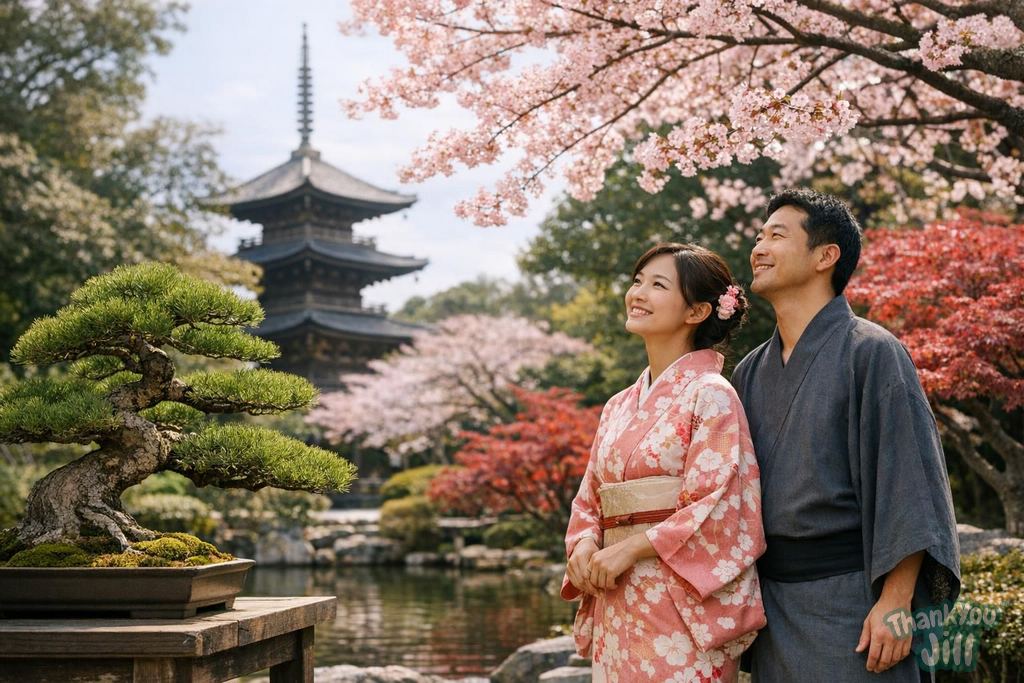
There are countries that look at trees. And then there's Japan, which listens to them. No other culture in the world has developed such a profound, articulate, and pervasive relationship with the world of trees — a relationship expressed in art, philosophy, religion, national festivals, architecture, and in people's daily lives.
Sakura: life as a cherry blossom
The sakura (cherry blossom, mainly Prunus serrulata and related varieties) is Japan's most beloved natural phenomenon and one of the most famous in the world. The bloom lasts 7-14 days, advancing from south to north as spring progresses — the blooming front (sakura zensen) is monitored by national media and anticipated with the same attention other countries reserve for weather forecasts. Hanami (literally: "viewing flowers") is the tradition of gathering beneath blooming cherry trees to celebrate spring with picnics, sake, and conversation. It's not a recent tradition: the Man'yōshū, Japan's oldest poetry collection (7th-8th century A.D.), dedicates hundreds of verses to sakura. The meaning of sakura in Japanese culture is tied to the concept of mono no aware — the bittersweet melancholy of transient beauty. Cherry blossoms are beautiful precisely because they last so briefly — their fleeting nature is part of their perfection. It's an aesthetic philosophy reflecting the Buddhist vision of the impermanence of all things.
Momiji: autumn red as art
Just as sakura is the spring ritual, momiji (the contemplation of colorful autumn leaves, mainly of Japanese maples, Acer palmatum) is the autumn ritual. Momijigari (literally "hunting for red leaves") are autumn outings to parks and temples to admire the colors of the leaves — a tradition dating back to the Heian period (794-1185) and which today draws millions of visitors to Japanese national parks each October-November. Tōfuku-ji Temple in Kyoto, Nikkō Park, Mount Kōya in autumn — these are places that attract crowds the way Yosemite does in spring. Japanese culture has refined seasonal contemplation of nature into something very close to a spiritual practice.
Bonsai: the cosmos in a shallow pot
The bonsai (from bon: tray/shallow pot, and sai: tree) is the art of cultivating miniature trees, kept small through root and branch pruning, using techniques that require years or decades of patient practice. Originating in China (where it's called penjing), bonsai was refined in Japan where it reached its highest expression. A bonsai is not merely a dwarf plant: it's a symbolic representation of a natural landscape — a mountain, a forest, a tree on a cliff — in miniature. The art of bonsai requires deep understanding of tree biology: how it grows, how it responds to pruning, how it adapts to its container. A successful bonsai is a synthesis of nature and human art — the Japanese answer to the question: how do you bring the forest home.
Shintoism and trees: Yashiro and Shimenawa
In Shinto religion, the largest and oldest trees are inhabited by spirits (kami) and are objects of veneration. Shinboku (sacred trees) within Shinto shrines are often monumental cedars (Cryptomeria japonica) or oaks (Quercus), identified by a braided straw rope (shimenawa) tied around the trunk as a sign of the kami's presence. Cutting these trees is an absolute taboo. The forests of Shinto shrines (chinju no mori) are often the last surviving areas of native forest in heavily urbanized landscapes — a religious protection that has proven to be an effective ecological safeguard for centuries.

Japan found in the fleeting bloom of the cherry tree the philosophy it needed: beauty is true because it doesn't last. Not despite its brevity, but because of it. It's a lesson that applies to flowers, to trees, and probably to everything else.
How to bring Japanese tree culture into your daily life
- Practice Hanami in Italy: in many Italian cities, Japanese ornamental cherry trees were planted in the 1970s-1990s in parks and avenues. Every March-April, organize a hanami with family or friends beneath the nearest cherry trees: bring a blanket, food, drinks, and spend a few hours simply watching the flowers. You don't need Japanese cherries: any blooming cherry tree works perfectly. What matters is the intention to stop and look.
- Try bonsai as meditation: bonsai requires patience, continuous observation, and respect for the plant's timing — precious qualities in an age of instant gratification. Start with a hardy species like the fig (Ficus retusa) for indoors or Scots pine for exposed terraces. Beginner courses exist in Italian cities and numerous introductory books are available. Don't expect quick results: bonsai is a decades-long practice.
- Visit the Crespi Bonsai Museum (Parabiago, Milan): the Crespi collection is one of the most important outside Japan, with specimens of extraordinary age (including a ficus bonsai declared Europe's oldest at approximately 1,000 years). The visit is an experience that changes how you think about the relationship between humans and trees.
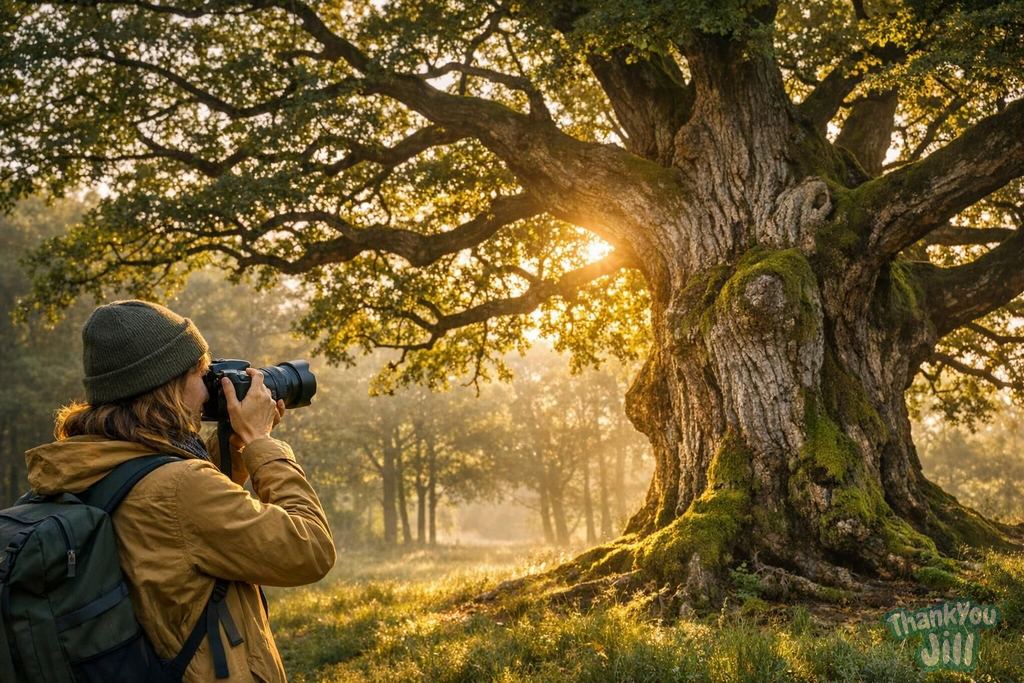
- Practice autumn momijigari: every October, choose a sunny day for a walk in a mixed forest in full autumn color. Bring only your eyes and perhaps a camera — no phone, no podcasts. Watch the colors, the shapes of fallen leaves, the filtered light. Momijigari doesn't require the perfection of Kyoto's momiji: it works in any beech and maple forest in the Italian Apennines in October.
- With children — leaf origami: collect maple, birch, ginkgo, and cherry leaves in autumn. Press the leaves between two sheets of absorbent paper for a week. Then use them as drawing paper: apply acrylic paint to the surface and stamp them onto white paper. Each leaf is a unique natural stamp. The result is a sheet of paper artistically filled with impressions of autumn leaves — nature printing, a technique used in Japan for centuries.
Japanese tree culture teaches us something modern Western culture has nearly forgotten: that nature is not a backdrop to human life, but the very fabric in which life unfolds. Stopping to watch a cherry tree in bloom for an hour is not wasting time: it's acknowledging that some things deserve full attention, without hurry, without a phone. It's a practice of humanity.
Frequently Asked Questions
What is the cultural significance of sakura in Japanese tradition?
Sakura represents the fleeting beauty of life, symbolizing the philosophy of mono no aware, the bittersweet melancholy linked to the transience of things, reflecting the Buddhist vision of impermanence.
How is momijigari practiced and what is its value in Japanese culture?
Momijigari consists of going out in autumn to admire the red leaves of maples, a spiritual tradition that values seasonal contemplation of nature and dates back to the Heian period.
What does the art of bonsai consist of and why is it considered a form of meditation?
Bonsai is the art of cultivating miniature trees through patient pruning, representing natural landscapes in miniature. It requires continuous observation and respect for the plant's timing, fostering meditation and patience.
What is the role of trees in Japanese Shinto religion?
In Shintoism, the oldest and largest trees are considered the dwelling place of kami spirits and are venerated as sacred, often marked by shimenawa. Cutting them is taboo, and sacred forests protect native forest even in urbanized areas.

Latest News

Comments
No comments yet. Be the first!
Leave a comment