


 Italiano
 Français
 Deutsch
 Español
 Português
 Svenska
 Suomi
Suomi
Italy's Monumental Trees
Living guardians of a thousand years of history: the census and how to visit them
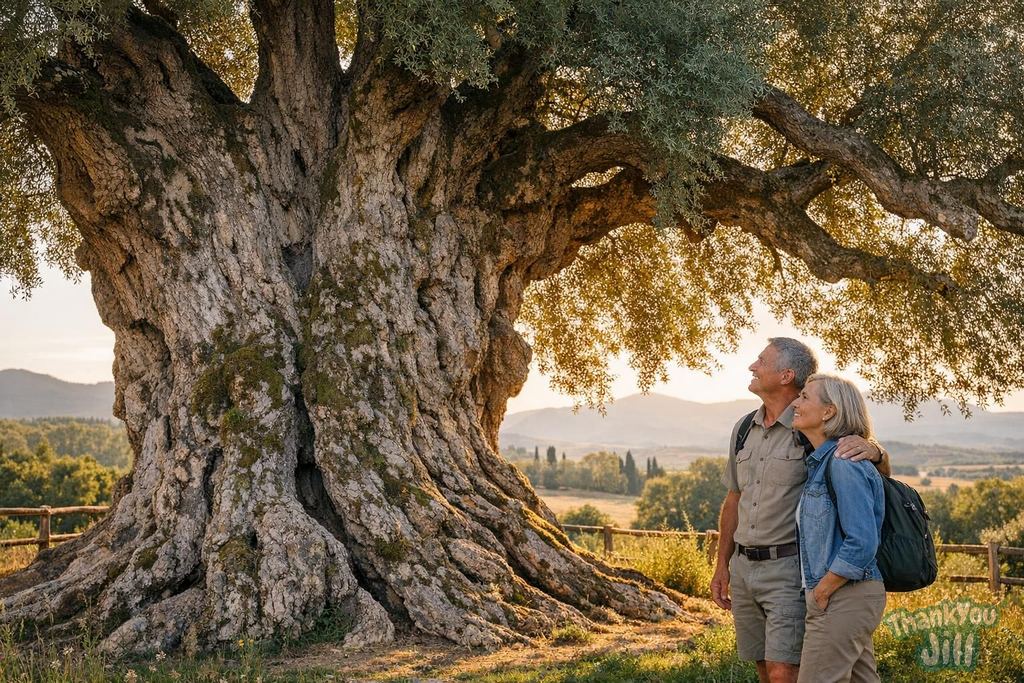
A palace built a thousand years ago gets restored, protected, studied, visited. A tree that has grown for a thousand years — more alive, more capable of astonishing us, richer in embodied history — is often felled without almost anyone knowing about it. Italy has begun to correct this imbalance with Law 10 of 2013, which established the National Register of Monumental Trees. But there's still a long way to go.
The National Register of Monumental Trees
The Law No. 10 of January 14, 2013 (Regulations for the development of urban green spaces) introduced the legal concept of a monumental tree in Italy and provided for its census and protection. The National Register of Monumental Trees, periodically updated by the Ministry of Agricultural Policies, now counts over 3,500 registered specimens throughout Italy. To be registered, a tree must meet at least one of these criteria: notable age or size (trunk circumference exceeding specific thresholds for the species); particular form due to natural phenomena or human intervention; exceptional ecological value (e.g., rarity of the species or habitat for protected species); documented historical, cultural, landscape, or religious interest. A tree registered in the register is a landscape asset under the Cultural Heritage Code: felling it without authorization is a criminal offense, not merely an administrative penalty.
Italy's greatest tree monuments: a tour
An ideal journey among Italy's most important monumental trees. Sicily: the Chestnut of the Hundred Horsemen on Mount Etna (Sant'Alfio, Catania) — the oldest and most famous, with an estimated age of 2,000–4,000 years and a historic circumference of over 50 meters. Today the original trunk has separated into multiple sections, but the organism is still alive. Sardinia: the Wild Olive of Luras (Sassari), with a carbon-14 estimated age of around 3,000–4,000 years — the oldest documented olive tree in Europe. Puglia: the thousand-year-old olives of Alliste and Racale (Lecce), in the Plain of Monumental Olives of Fasano-Ostuni-Carovigno — thousands of specimens with extraordinarily beautiful gnarled trunks, some 1,000–1,500 years old. Calabria: the Chestnut of Fondaco near Mammola (Reggio Calabria), with a circumference of over 10 meters. Tuscany: the Cypress of Saint Francis at La Verna (Arezzo), where tradition holds that Francis of Assisi planted the seed in 1213 — over 800 years ago. Piedmont: the Linden of Piedicavallo (Biella), over 600 years old with a canopy covering 600 m². Veneto: the Oak of San Martino di Colle (Treviso), approximately 400 years old, one of the largest oaks in northern Italy.
Monumental trees and Italian history
Many of Italy's monumental trees carry traces of historical events written in their fibers. The Mascagni cypress in Livorno, planted according to tradition by composer Pietro Mascagni, testifies to the nineteenth-century culture of bourgeois gardens. The Napoleon plane trees that still line some of the consular roads in northern Italy were planted by imperial order to provide shade for marching troops. The oaks of Victor Emmanuel II in the hunting forests of the royal reserves in Piedmont and Lazio were managed for centuries as privileged crown territory. Each tree is a living archive of the history of the territory where it grew.
Protecting monumental trees: lights and shadows
Despite the 2013 law, the actual protection of Italy's monumental trees remains problematic. Many municipalities have not yet completed the census of their most important specimens. Illegal felling or felling in violation of protection measures occur frequently. The lack of resources for maintenance and care (safety pruning, phytosanitary treatments, stability monitoring) puts specimens of great value at risk. The conflict between public safety (a monumental tree that loses branches or shows signs of instability is often felled preemptively even though it could be treated) and conservation is one of the most difficult knots to untie in the management of urban monumental trees.

A thousand-year-old tree has witnessed everything that our history remembers as important. It has breathed the air of every century we have lived through. It is not a stone monument: it is a living monument that still grows. It deserves respect — and sometimes something more.
How to find, visit, and protect monumental trees near you
- Consult the National Register online: the Ministry of Agricultural Policies publishes the National Register of Monumental Trees in a searchable format on www.politicheagricole.it (section "Rural Development — Monumental Trees"). Enter your municipality or region name to find registered specimens. Each tree's record includes GPS coordinates, photographs, biometric data, and historical notes.
- Visit the Chestnut of the Hundred Horsemen (Sicily): it is reachable from Catania in about an hour by car, in the municipality of Sant'Alfio on the north slope of Mount Etna. Entrance to the area is free. It is one of the most moving natural sites in Italy — still far too little known relative to its exceptional value.
- Report an unregistered monumental tree: if you know of a large or very old tree in your area that is not in the register, you can report it to your municipality (Environmental or Green Spaces Department) or directly to your region (Forestry Department). The report initiates the evaluation procedure.
- How to estimate a tree's age: measure the trunk circumference at 1.30 m from the ground in centimeters. Divide by 2.5: you get an approximate estimate of age in years for broadleaf trees with average growth. For oaks use 2–2.2 (they grow more slowly); for poplars use 3–4 (they grow faster).
- With children — symbolic adoption: take children to visit the monumental tree closest to your municipality. Measure the circumference together, calculate the approximate age, photograph the tree in all four seasons. Write a short story together about the tree: what existed when it was born? What historical events has it witnessed? This project — which can last for years — creates a personal and concrete bond with your territory's tree heritage.
Italy's monumental trees are our plant ancestors. Like all ancestors, they deserve someone taking the trouble to know them, to tell their story, to ensure that our children and grandchildren can still meet them. It is not just botany: it is cultural memory in living form.
Frequently Asked Questions
What criteria must a tree meet to be included in the National Register of Monumental Trees?
A tree must have notable age or size, a particular form, exceptional ecological value, or documented historical, cultural, landscape, or religious interest to be registered in the National Register of Monumental Trees.
How can I find and visit the most important monumental trees?
You can consult the National Register online on the Ministry of Agricultural Policies website, where you'll find GPS coordinates, photographs, and data. For example, the Chestnut of the Hundred Horsemen in Sicily is free to visit and can be reached in about an hour from Catania.
What happens if a monumental tree is felled without authorization?
Felling a monumental tree without authorization is a criminal offense, not merely an administrative penalty, because these trees are considered landscape assets protected by the Cultural Heritage Code.
How can I estimate the age of a monumental tree approximately?
Measure the trunk circumference at 1.30 m from the ground in centimeters and divide it by a specific coefficient: 2.5 for broadleaf trees with average growth, 2–2.2 for oaks, 3–4 for poplars. The result is an approximation of age in years.


Latest News




Comments
No comments yet. Be the first!
Leave a comment