


 Italiano
 Français
 Deutsch
 Español
 Português
 Svenska
 Suomi
Suomi
Repair Instead of Discard
The Right to Repair Movement
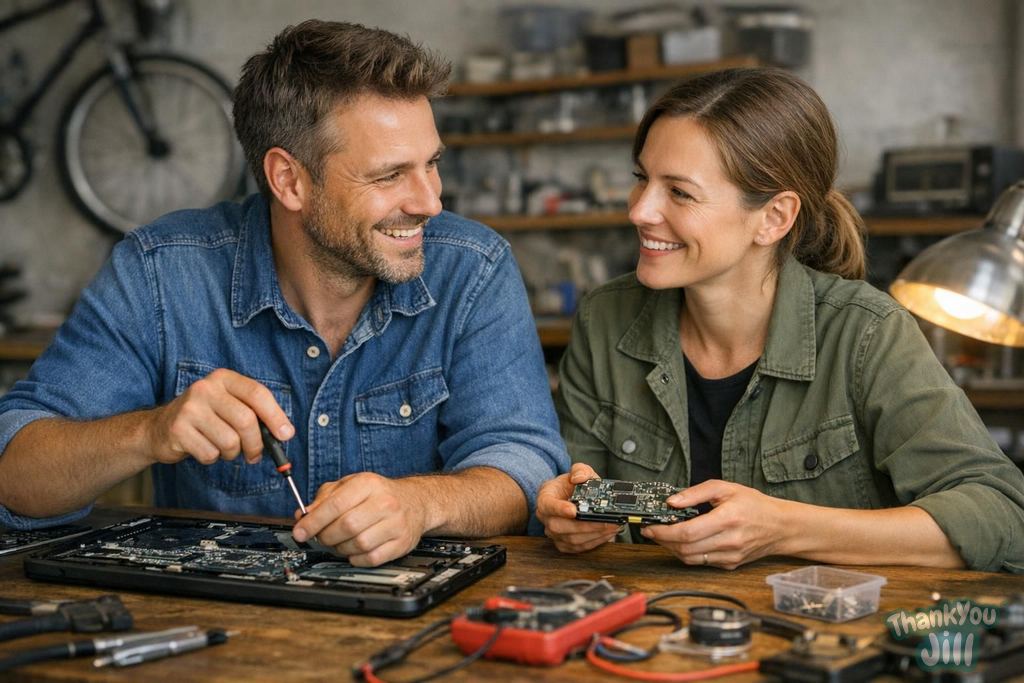
Planned obsolescence is the practice of designing products with deliberately limited lifespans to encourage repurchasing. It's documented across many categories: printers that "break" after a programmed number of prints, iPhones with non-replaceable batteries, washing machines designed to last 10 years instead of 20 like those from the 1970s. The cultural and legislative response is called Right to Repair: the right to fix your own products instead of being forced to discard them or pay manufacturers for expensive repairs.
The 2021 European Right to Repair Regulation
The European Union adopted ecodesign regulations in 2021 (EU 2019/2021, 2019/2024) that require appliance manufacturers (washing machines, dishwashers, refrigerators, TVs) to: make spare parts available for at least 7-10 years after market release, design products repairable with common tools, provide technical repair documentation, and deliver parts within 15 working days. In 2023, the European Parliament approved extending Right to Repair to smartphones and tablets, with measures taking effect progressively by 2025-2026. Apple, Samsung, and other manufacturers were forced to launch "self-repair" programs and make original spare parts available for the first time in their history.
The Repair Café: Community Repair Spaces
The Repair Café is an international movement founded in the Netherlands in 2009 by Martine Postma: free events where skilled volunteers (electricians, tailors, carpenters, IT specialists) help participants repair broken items. The movement now has over 2,500 active Repair Cafés in 40 countries, with over 200 in Italy. Here's how it works: you bring your broken item, volunteers work with you (not for you) to fix it while teaching you the technique—completely free. The goal isn't just fixing the object: it's passing on repair skills, rebuilding the relationship with objects that throwaway culture has eroded. To find the nearest Repair Café: repaircafe.org/map.
Resources for DIY Repairs
iFixit (ifixit.com): the most comprehensive site for DIY repair guides. It contains tens of thousands of step-by-step guides with photos for repairing smartphones, laptops, tablets, and appliances. Completely free. YouTube: virtually any technical problem has a tutorial video. Searching "how to repair [product name] [model] [specific issue]" almost always finds a solution. The rule of thumb for deciding whether to repair: it's worth it when the cost is less than 50% of an equivalent new product's price. Categories where it almost always makes sense: quality shoes (resoling costs €30-60, buying new equivalent ones €150-400), bicycles, clothing, musical instruments, quality furniture.
Five Useful Repair Skills to Learn
Basic clothing repair (sewing a button, mending a tear, hemming): 30 minutes of practice covers most common repairs. Smartphone battery replacement: with a specific kit from iFixit (€15-30) and the guide, it takes 20-45 minutes the first time. Basic bicycle maintenance (lubricating the chain, adjusting brakes, changing inner tubes): learn in an afternoon with YouTube. Small appliance repair (toasters, irons, hair dryers): often fixable with one unscrewed bolt and a replaced component. Shoe care (proper cleaning, polish use, lace replacement): extends life by years before needing a cobbler.

Every object you repair instead of discarding is a story that continues, a resource not extracted, a skill that accumulates. The Right to Repair movement isn't romanticism: it's rational resistance to a system designed to make you buy more often than you should. Repair. Then teach someone else how to do it.
How to Find a Repair Café or Specialist Artisan
Repair Café: repaircafe.org/map maps all Repair Cafés worldwide. In Italy, also search Facebook for "Repair Café + city name". Cobblers: Google Maps with "cobbler + city name". Their numbers are declining but still present in many Italian cities—they're among the most valuable figures in repair culture. Tailors: search "tailor + city name" or ask at your local market. How to organize a Repair Café in your neighborhood: the startup kit at repaircafe.org includes all necessary documentation. It mainly requires volunteers with specific skills, a space, and the desire to build community around repair culture.
The France Repairability Index: A Model to Import
Since 2021, France requires smartphones, computers, TVs, and washing machines to display a repairability index from 1 to 10, calculated on: spare parts availability, ease of disassembly, technical documentation presence, software support, and spare parts prices. This index has already changed consumer behavior: high-repairability products sell better. Italy and the EU are considering adopting a similar system. Fairphone builds smartphones with modular design for component replacement: it's the industrial model of the future for sustainable electronics.
Repair as a Political Act
Support Right to Repair concretely: sign petitions from Right to Repair Europe (righttorepair.eu), choose products with high repairability scores, prefer brands supporting repair (Fairphone, Framework Laptop for computers), contact your parliamentary representatives to support European legislation. Every time you repair instead of discard, you're voting with your money for a different economic system. Demand for repair creates supply of repair services: it's a market that can only grow if consumers actively support it.
Frequently Asked Questions
What obligations does the 2021 European Right to Repair regulation impose on appliance manufacturers?
The regulation requires manufacturers to provide spare parts for 7-10 years, design products repairable with common tools, provide technical documentation, and deliver parts within 15 working days, enabling independent or third-party repairs.
How does a Repair Café work and why is it useful for people wanting to repair their items?
A Repair Café is a free event where skilled volunteers help people repair their items by teaching the technique, not doing the work for them. It spreads repair skills and reduces waste while strengthening local community.
When is it economically worthwhile to repair a product instead of buying a new one?
Repair is worthwhile when the cost is less than 50% of an equivalent new product's price. It's particularly advantageous for quality shoes, bicycles, clothing, musical instruments, and fine furniture, where repair significantly extends the object's lifespan.
What are the most useful repair skills to learn for handling small household repairs?
Useful skills include basic clothing repairs (sewing buttons, mending), smartphone battery replacement with specific kits, bicycle maintenance (lubrication, brakes, inner tubes), small appliance repair, and shoe care—all practical skills learned quickly that extend object lifespans.


Latest News




Comments
No comments yet. Be the first!
Leave a comment