


 Italiano
 Français
 Deutsch
 Español
 Português
 Svenska
 Suomi
Suomi
Air-Purifying Houseplants: What Actually Works
Which plants to choose and how to care for them
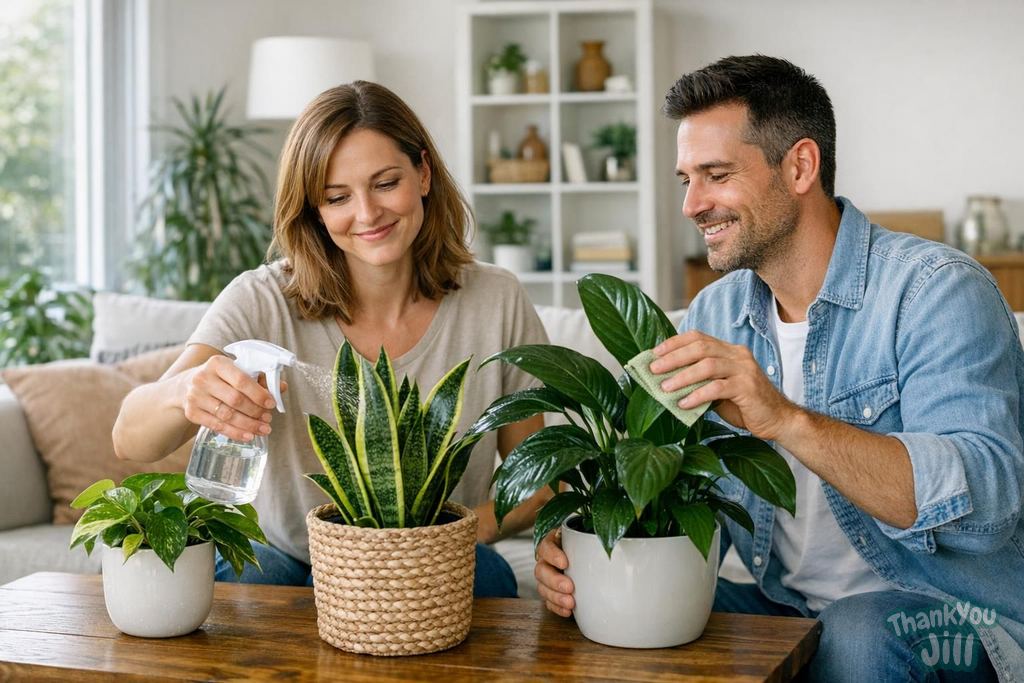
The myth of "air-purifying plants" stems from a 1989 NASA study (Wolverton et al.) that tested certain plants' ability to remove volatile organic compounds (VOCs: benzene, formaldehyde, trichloroethylene) in sealed chambers. The results looked promising: some plants reduced pollutant concentrations in test rooms. But a critical review published in 2019 in the Journal of Exposure Science and Environmental Epidemiology (Waring et al.) analyzed 196 previous studies and concluded that plants remove VOCs from air at rates tens of times too low to have a measurable effect on air quality in real environments with normal ventilation. You'd need one plant per 10 cm² of surface area (essentially covering every millimeter of walls and ceilings) to match the effect of opening a window for 10 minutes. This doesn't mean plants are useless—it means their primary value for air quality isn't chemical pollutant removal.
The real benefits of indoor plants: what science shows
Relative humidity: plants transpire water through their leaves. In very dry environments (especially winter with heating that drops humidity below 30%), a collection of plants can increase humidity by 5–10%, reducing dryness in nasal passages and skin. It won't replace a humidifier, but it helps. Oxygen production: plants produce oxygen through photosynthesis during the day (and consume a small amount of oxygen at night for cellular respiration). The oxygen increase from a few plants in a room is negligible compared to the amount normally in air (21%)—it produces no measurable physiological effects. Documented psychological benefits: studies by Roger Ulrich (Texas A&M University) and other researchers have shown that indoor plants reduce perceived stress, improve mood, and increase productivity. Seeing nature (even indoors) activates the parasympathetic nervous system, creates a sense of calm, and reduces stress markers (cortisol, heart rate). Biophilia—our evolutionary connection to nature—expresses itself through houseplants too.
The best plants for Italian indoor spaces
Hardiness and ease of care are the main criteria for houseplants. Sansevieria (snake plant): nearly indestructible. Survives with little light and minimal watering. Resistant to any neglect. Ideal if you "kill plants." Pothos (Epipremnum aureum): easy-growing vine. Survives with low light, propagates easily in water (stick a cutting in a glass: roots in 2–3 weeks). Bright green or variegated leaves. Ficus elastica (rubber plant): large plant with glossy leaves. Needs indirect light and moderate watering. Zamioculcas (ZZ plant): extreme drought resistance. Dark glossy green leaves. Perfect for low-light spaces. Monstera deliciosa: large plant with characteristic split leaves. Needs indirect light and moderate humidity. Very decorative. Spathiphyllum (peace lily): one of the few plants that flowers (white bloom) in low light. Visibly signals thirst (drooping leaves) before damage occurs. Pilea peperomioides (Chinese money plant): small, compact, produces side shoots you can separate and give away. Cacti and succulents: need lots of light but minimal care. Perfect for sunny windowsills.
Choosing the right plants for each room
Light is the most important factor. Room classification by light: south or southwest-facing windows with full sun: cacti, succulents, geraniums, potted citrus, ivy, basil (on windowsill). Bright indirect light (1–2 meters from window): most tropical plants (Monstera, Philodendron, Ficus, variegated Pothos). Moderate light (3–4 meters from window): Sansevieria, Zamioculcas, Aspidistra, green Pothos. Low light (hallways, bathrooms without windows): only Sansevieria and Zamioculcas truly survive. Don't expect miracles—plants grow very slowly in low light. Bathroom: if your bathroom has an indirect-light window, high humidity benefits ferns (Nephrolepis) and humidity-loving tropical plants. Bedroom: plants don't produce significant CO2 at night to be problematic. Green space where you sleep has documented positive effects on mood upon waking.

Plants don't really filter air the way NASA led us to hope. But they do something subtler and perhaps more important: they change how we feel in the spaces we inhabit. Research on biophilia is clear: visible nature reduces stress. A green corner in an office is worth more than many productivity gadgets. Tend it with care, if only for that reason.
How not to kill your plants: the most common causes of indoor plant death
90% of indoor plant deaths result from too much or too little water. How to know when to water: stick your finger into the soil up to the first knuckle. If it's dry, water. If it's still moist, wait. There's no fixed schedule—it depends on season, light, temperature, and pot size. Common mistakes: watering too often (roots rot in constantly wet soil—the #1 cause of death), pots without drainage holes (water pools, causing root rot), compacted soil that doesn't drain (replace every 1–2 years with fresh potting mix), insufficient light (leaves pale, plants lose vigor: move closer to a window or use grow lights), inadequate fertilizer (spring–summer: liquid fertilizer every 15–30 days to support growth).
Edible houseplants: herbs and microgreens
The most useful houseplants are edible ones. Perennial herbs (rosemary, thyme, oregano, chives): on a south-facing sunny windowsill. Require minimal care, produce year-round. Basil: summer herb, needs lots of sun. Dies in autumn—replace with parsley. Microgreens (radish, basil, pea, mustard sprouts): sow in shallow trays on fine potting mix. Ready in 7–14 days. Extremely high nutrient density (up to 40 times more vitamins than mature vegetables). Perfect on a kitchen windowsill. Legume sprouts (lentils, chickpeas, mung beans) in a jar: place seeds in a glass jar, rinse and drain daily with water, lean the jar to drain. Ready in 3–5 days. Cost: nearly free. Nutritional value: extremely high. Combining perennial herbs and microgreens transforms your kitchen windowsill into a small autonomous food production system.
Soil and pots: how to choose them
Potting soil: don't buy the cheapest option. Good universal potting mix with added perlite (15–20%) ensures optimal drainage. For succulents and cacti: succulent potting mix or universal mix + 40% coarse sand or perlite. For ferns: acidic potting soil (for acid-loving plants) or universal mix + peat. Pots: terracotta is porous and lets air reach roots—ideal for plants that suffer from waterlogging (succulents, rosemary). Plastic retains moisture—ideal for humidity-loving tropical plants. Pots must always have a drainage hole at the bottom: without it, water pools and roots rot. A saucer prevents drainage water from damaging furniture—empty it after each watering (don't leave roots sitting in stagnant water).
Frequently Asked Questions
How effective are air-purifying plants at actually improving indoor air quality?
Plants do remove volatile organic compounds from air, but at rates too low to have a significant effect in ventilated spaces. To match the impact of opening a window, you'd need unrealistically dense plant coverage, so their effect on chemical purification is limited.
How do I choose the right plants based on available light in my home?
For bright direct light, choose cacti and succulents; for bright indirect light, tropical plants like Monstera and Pothos; for moderate light, Sansevieria and Zamioculcas; for low light, only Sansevieria and Zamioculcas truly thrive. Light is the key factor for healthy growth.
What are the most common mistakes that kill indoor plants, and how do I avoid them?
90% of deaths come from incorrect watering: too much water causes root rot, too little stresses the plant. Avoid pots without drainage, use well-draining potting mix, and water only when soil is dry to the first knuckle.
What real benefits do houseplants provide beyond air purification?
Plants increase humidity in dry environments, improve mood, and reduce stress through the calming effect of visible nature. They produce oxygen but in negligible amounts; their main value is psychological and environmental, not chemical.

Latest News




Comments
No comments yet. Be the first!
Leave a comment