


 Italiano
 Français
 Deutsch
 Español
 Português
 Svenska
 Suomi
Suomi
Family Volunteering
Green Projects Together
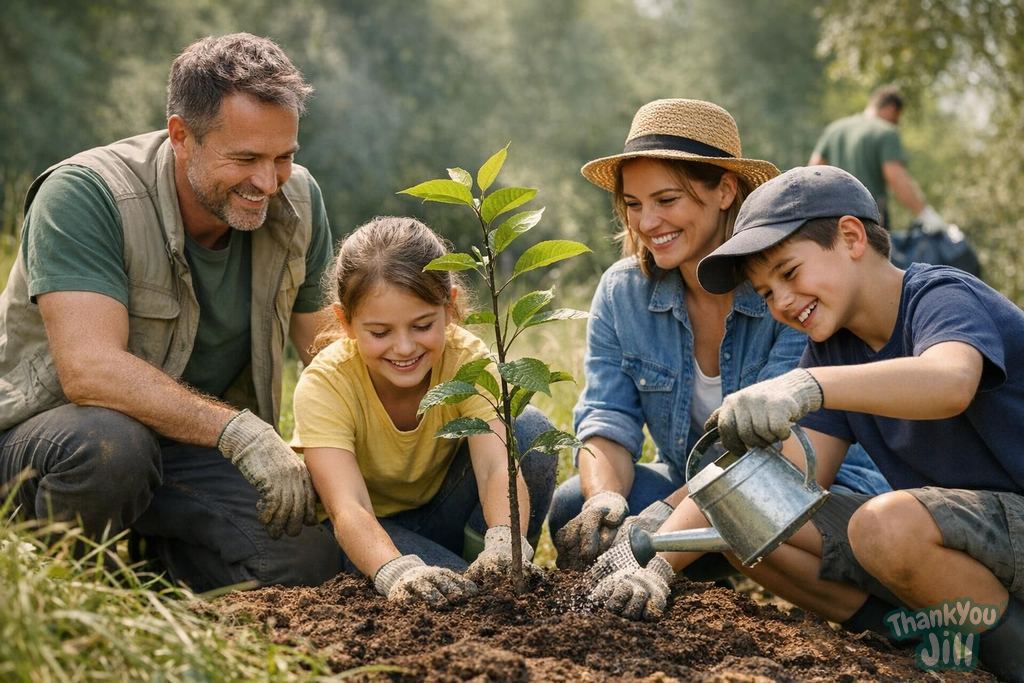
Volunteering produces documented benefits for those who do it, not just for those who receive it. For children who do environmental volunteering as a family, the effects are particularly significant: developing a sense of efficacy (the child sees that their action produces real change in the world), strengthening ecological identity (someone who does something for the environment identifies as someone who cares about the environment), community experiences (meeting other people with the same values, being part of something bigger than the family), opportunities for positive behavioral modeling from adults (parents who volunteer are the most effective model for their children), shared quality memories (Saturday morning at the park picking up trash becomes a family memory stronger than many vacations). Research by Okun et al. (2013) shows that regular volunteering reduces mortality by 22% in adults: and it starts in childhood.
Environmental Volunteering for Families: Available Opportunities
Legambiente: Italy's largest environmental association regularly organizes beach cleanups (Puliamo il Mondo, the world's largest environmental volunteering event, every September), trail and park cleanups, environmental education events. Local chapters organize activities specifically for families. legambiente.it. WWF Italy: WWF Oases (over 100 throughout Italy) organize volunteering days for habitat management and wildlife monitoring. Some oases have programs specifically for families with children. wwf.it/oasi. LIPU: local LIPU chapters organize bird censuses (IBA: Important Bird Areas), oasis monitoring, habitat cleanups. Suitable for families with children from 8-10 years old and up. lipu.it. CAI (Italian Alpine Club): local chapters organize trail and alpine facility maintenance work. Suitable for families with children old enough to hike in the mountains. cai.it. Local associations: every municipality has local environmental volunteering associations. Search "environmental volunteering + municipality name" to find initiatives closest to you. Local initiatives often offer the highest sense of immediate and visible impact.
Park and Beach Cleanup with Children: How to Organize It
A park or beach cleanup organized with other children from your neighborhood or school is one of the most immediate and impactful environmental volunteering projects. How to organize it independently: contact your municipality or the protected area manager to get permission and collection bags, ask if they can provide gloves and collection tongs (environmental associations often lend them for free), organize the event with a small group (3-5 families: enough to make a difference, small enough to be manageable), choose a specific and contained area (not "let's clean the entire beach" but "let's clean from the parking lot to the first cliff"), document with before and after photos: the visual comparison is powerful for children as a sense of efficacy, calculate the weight of collected trash: giving a concrete number ("we collected 23 kg of trash!") motivates and satisfies. Recycle the collected trash properly: separate plastic, glass, metals and take them to the recycling center or appropriate differentiated containers.
Citizen Science as Volunteering: Contributing to Science Together
Citizen science is a form of intellectual volunteering: contributing to collecting scientific data that researchers alone could never gather in sufficient quantities. How to do it as a family: iNaturalist: every nature outing becomes scientific data collection. Create a family project on iNaturalist: "Nature in the Rossi neighborhood" or "Birds of Park X". It becomes a friendly competition over who identifies the most species in a year. eBird (Cornell Lab): the global bird database. Every bird observation with location and number contributes to distribution maps used by researchers worldwide. Organized BioBlitz: intensive citizen science events (24-48 hours) where all species in an area are surveyed. Organized by parks, natural history museums, universities. They're festive events often led by experts who teach field identification. Amateur weather stations: apps like WeatherUnderground or Weather Signal allow you to share data from a home weather station (available for 50-100 euros) with the global network of meteorological researchers.

That Saturday morning when your daughter collected 8 kg of plastic from the riverbank with the local Legambiente group isn't a weekend sacrifice: it's one of the most formative memories of her childhood. Seeing that her action produces real change, meeting people who care about the same things, being part of something bigger than herself: this is environmental volunteering as a family. You don't need to be an environmentalist: you just need to show up.
Tree Planting Projects: Where to Participate
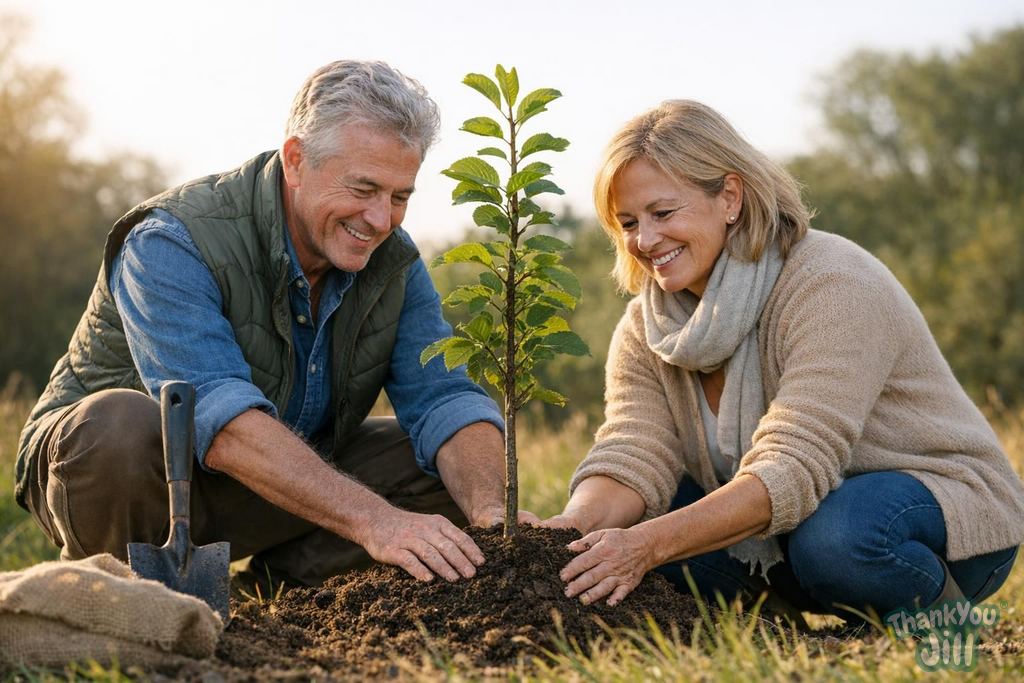
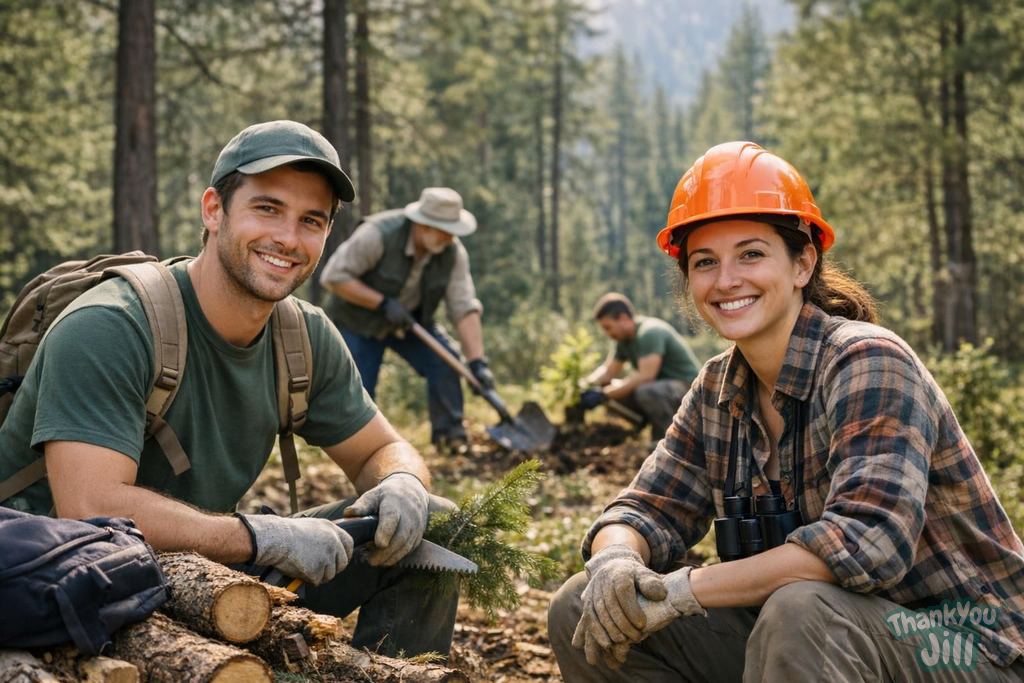
Planting a tree is one of the volunteering actions with the strongest symbolism for children: something living that will grow for decades, visible and measurable over time. How to participate in planting initiatives: Legambiente organizes planting days throughout Italy, especially in spring and fall (search "planting + legambiente + region name"). The Forestami program in Milan and similar initiatives in other cities allow citizens to participate in urban plantings. National and regional parks organize reforestation work with volunteer contributions. How to organize a planting independently: contact your municipality to find out if there are degraded areas or parks where you can plant native species trees, buy seedlings from a local nursery of native species (sessile oak, manna ash, field maple, hawthorn: much more suitable than laurel or ornamental cypress), organize the event with participation from people living in the area (children who plant a tree in their neighborhood park will feel it's "their tree" for years).
How to Make Volunteering a Family Habit
Occasional volunteering doesn't produce the formative benefits of regular volunteering. How to build a family volunteering routine: choose a realistic frequency (once a month is much better than three times a year), choose a specific organization (not "let's volunteer" in the abstract but "we're members of the local Legambiente and we go to the monthly event"), involve children in choosing the organization and activity: the sense of choice increases motivation, document and celebrate (a family volunteering diary with photos, dates, impact: 12 outings in a year create an extraordinary educational archive), link volunteering to the child's passions (loves birds? LIPU. Loves the sea? Beach cleanups. Loves plants? Tree plantings).
Environmental Volunteering Networks in Italy: Where to Find Opportunities
CSV Net (csvnet.it): the national portal of Volunteer Service Centers. It has a map of all environmental volunteering organizations for every Italian province with contacts and activity descriptions. Volontariato Ambiente (volontariatoambiente.it): specific portal for environmental volunteering with search by region and activity type. National Coordination of Civil Protection Volunteers (cfvpc.cfvpc.it): civil protection associations often include environmental monitoring activities, cleanups of at-risk areas, natural heritage management. Do it! (doitweb.it): national platform matching volunteers with organizations. Excellent for finding occasional opportunities in your geographic area.
Frequently Asked Questions
How do I organize a park or beach cleanup with children effectively?
To organize an effective cleanup, contact your municipality for permits and materials, form a small group of families, choose a specific area and document the event with photos and weight of collected trash to motivate children and show concrete impact.
What are the benefits of environmental volunteering for children in the family?
Environmental volunteering develops children's sense of efficacy, strengthens ecological identity, creates community experiences, offers positive behavioral models from adults, and generates shared quality memories, promoting lasting formative impact.
How do I participate in tree planting projects with my family?
You can participate in initiatives organized by environmental associations, parks or urban programs, or organize independently by contacting your municipality, choosing native species and involving the local community to create a lasting bond with the environment.
How do I turn environmental volunteering into a regular family habit?
Establish a realistic frequency, choose a specific organization, involve children in choosing activities, document experiences and link volunteering to children's passions to increase motivation and continuity.

Latest News
Comments
No comments yet. Be the first!
Leave a comment