


 Italiano
 Français
 Deutsch
 Español
 Português
 Svenska
 Suomi
Suomi
Artificial Intelligence for Climate
Real-world applications
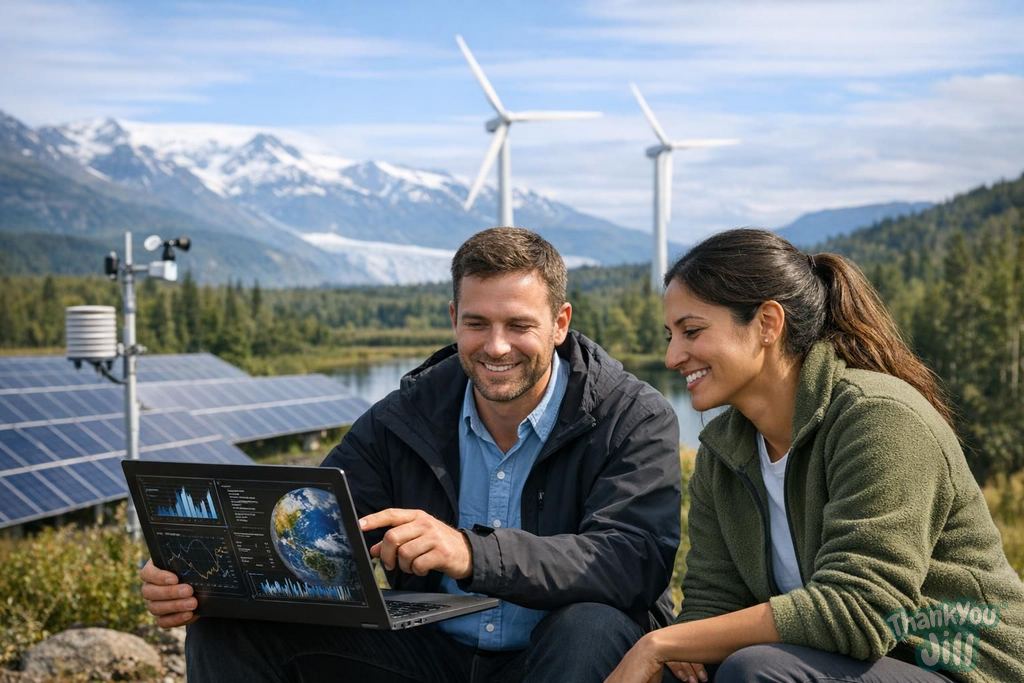
Artificial intelligence (AI) is presented both as a solution to climate change and as an accelerator of it (due to the enormous energy consumption of large language models). The reality is more nuanced: AI is a powerful tool with specific applications where it delivers superior results compared to traditional approaches, and energy consumption that must be monitored and minimized. Understanding where AI truly adds value in the energy transition allows for an informed assessment of this technology's promises and risks.
Weather forecasting and climate modeling: where AI already excels
Weather forecasting is one of the most mature and impactful applications of AI in the climate field. Google DeepMind's GraphCast model (2023) surpassed the ECMWF (European Centre for Medium-Range Weather Forecasts) reference numerical model for the first time in 10-day forecasts, using 99.99% less computational energy. The practical implication: more accurate renewable forecasts (solar and wind) enable better grid integration. NVIDIA's FourCastNet (2022): an AI model for high-resolution atmospheric forecasting 4,000 times faster than traditional models. Huawei's Pangu-Weather (2023): an AI model with 7-day forecasts superior to ECMWF for many variables. In climatology, AI models are used for statistical downscaling: transforming low-resolution forecasts from global climate models into high-resolution local forecasts, essential for planning adaptive infrastructure.
Energy grid optimization: AI as the conductor
Integrating large amounts of renewables into electrical grids is technically complex: sun and wind are variable, demand-supply balancing must happen in real time. AI is applied for: renewable production forecasts (solar and wind in the coming hours): improve grid balancing by reducing the need for expensive fossil fuel reserves, dispatch optimization (which energy source to activate at which time to minimize costs and emissions), flexible demand management (smart grid: automatically shift flexible energy loads like car charging, washing machines, heat pumps to hours of greater renewable availability), grid fault prediction and prevention (predictive maintenance of electrical infrastructure). DeepMind showed in 2019 that AI optimization of Google UK's wind management increased the economic value of wind energy by 20%.
Discovery of new materials: accelerating science with AI
One of the most promising fields of AI for sustainability is accelerating the discovery of new materials for cleantech applications. Traditionally, finding a promising new material requires years of experimental synthesis and testing. AI models can: screen millions of molecular candidates to identify those with desired properties, predict the properties of new materials before synthesis (reducing 90% of costly failed experiments). Specific applications: new battery electrolytes (better energy density, safety, cost), catalysts for CO2 reduction (converting CO2 into useful fuels), materials for next-generation photovoltaic cells (perovskites, tandem). In 2023, Google DeepMind released GNoME (Graph Networks for Materials Exploration): it identified 2.2 million new stable crystals, of which 380,000 are potentially useful for technological applications. Experimental validation of these materials will take years, but the discovery pipeline has been accelerated by orders of magnitude.
Environmental monitoring with AI: satellites and algorithms
AI applied to satellite image analysis enables unprecedented environmental monitoring in terms of scale and resolution. Global Forest Watch (WRI + Google): uses AI to detect deforestation from satellite imagery with a lag of weeks instead of months. It drastically reduces response times for authorities to violations. Planet Labs: daily satellite imagery of the entire Earth plus AI for automatic change detection (construction, deforestation, water pollution). Used by NGOs, investigative journalists, and environmental regulators. Global Fishing Watch: monitors illegal fishing activity through analysis of AIS (Automatic Identification System) signals from ships, identifying suspicious behavior with AI. ClimaCell (now Tomorrow.io): real-time and hyper-local air quality monitoring using distributed sensors plus AI. Practical application: air quality alerts for asthmatic individuals and children.

AI won't save the planet for us: it will give us better tools to do it ourselves. More accurate wind forecasts, satellite monitoring of deforestation, optimization of electrical grids: these are all amplifiers of our capacity to act, not substitutes for action. AI is only as powerful as the political will that guides it.
The energy consumption of AI: the dark side
AI has significant and rapidly growing energy consumption. Large language models (GPT-4, Gemini, Claude) require enormous amounts of energy for training and inference (each query). Estimates: training GPT-4 consumed approximately 50 GWh of electricity (equivalent to the annual consumption of 5,000 European homes). Each query to an AI model like ChatGPT consumes about 10 times more energy than a Google search. The data center sector (which includes servers for AI but also streaming, cloud, etc.) consumes about 2% of global electricity and could reach 4-8% by 2030. The IEA estimates that data centers could double their energy consumption by 2026. To assess the net impact of AI on climate, you must therefore compare: the energy consumed by AI itself (negative) versus the energy saved by AI optimizations in grids and buildings (positive). Current estimates suggest that benefits outweigh costs, but only if data centers are powered by renewable energy (a stated goal by Google, Microsoft, and Amazon but not yet fully achieved).
How AI is used in precision agriculture
AI-based precision agriculture is one of the applications with the greatest potential to reduce agriculture's environmental impact. Intelligent irrigation systems: soil moisture sensors plus AI weather forecasts reduce irrigation by 30-50% without reducing yields (a huge saving in high water-stress regions like Southern Italy and Spain). Early detection of plant diseases: drones plus AI analyze crop images identifying stress, diseases, and nutrient deficiencies before they're visible to the human eye, allowing targeted interventions instead of mass treatments. Fertilization optimization: soil analysis plus AI predictive models calculate the optimal amount of fertilizer for each field area, reducing overuse that causes groundwater pollution. Yield prediction: AI models integrate meteorological, satellite, and historical data to forecast yields weeks in advance, improving supply chain planning and reducing waste.
AI and climate change adaptation: emerging applications
Beyond mitigation (reducing emissions), AI is increasingly used for adaptation (living with the already-occurring effects of climate change). Early warning systems for extreme events: AI forecasts of floods, droughts, and fires enable more timely evacuations and more effective responses. Google's Flood Hub system (2023) forecasts floods 7 days in advance in over 80 countries. Resilient urban planning: AI models simulate the impact of urban heat, floods, and droughts on different city neighborhoods, enabling planning of adaptation infrastructure (urban green spaces, drainage systems, reflective materials). Water resource management: AI forecasts of lake and river levels, glaciers, and groundwater enable more resilient water resource management under increasing drought conditions.
Frequently Asked Questions
What are the advantages of using artificial intelligence in weather forecasting compared to traditional models?
AI improves weather forecast accuracy using less computational energy, as demonstrated by models like GraphCast and FourCastNet. This enables better integration of renewable energy into the electrical grid and faster, more accurate forecasts at the local level.
How does artificial intelligence optimize energy grid management with renewable sources?
AI forecasts solar and wind energy production, optimizes the dispatch of energy sources to reduce costs and emissions, manages flexible demand, and anticipates failures, increasing efficiency and the economic value of renewable energy.
How does artificial intelligence accelerate the discovery of new materials for sustainable technologies?
AI screens millions of molecules to identify materials with desired properties, drastically reducing costly and failed experiments. This accelerates the development of battery electrolytes, CO2 catalysts, and materials for advanced photovoltaic cells.
What is the energy impact of artificial intelligence and how does it balance with its climate benefits?
AI consumes a lot of energy, especially in large language models, but the benefits in energy savings and grid optimization outweigh the costs if data centers use renewable energy. Monitoring and minimizing consumption is essential for a positive net impact.


Latest News




Comments
No comments yet. Be the first!
Leave a comment