


 Italiano
 Français
 Deutsch
 Español
 Português
 Svenska
 Suomi
Suomi
Citizen Science
Apps for Monitoring the Environment
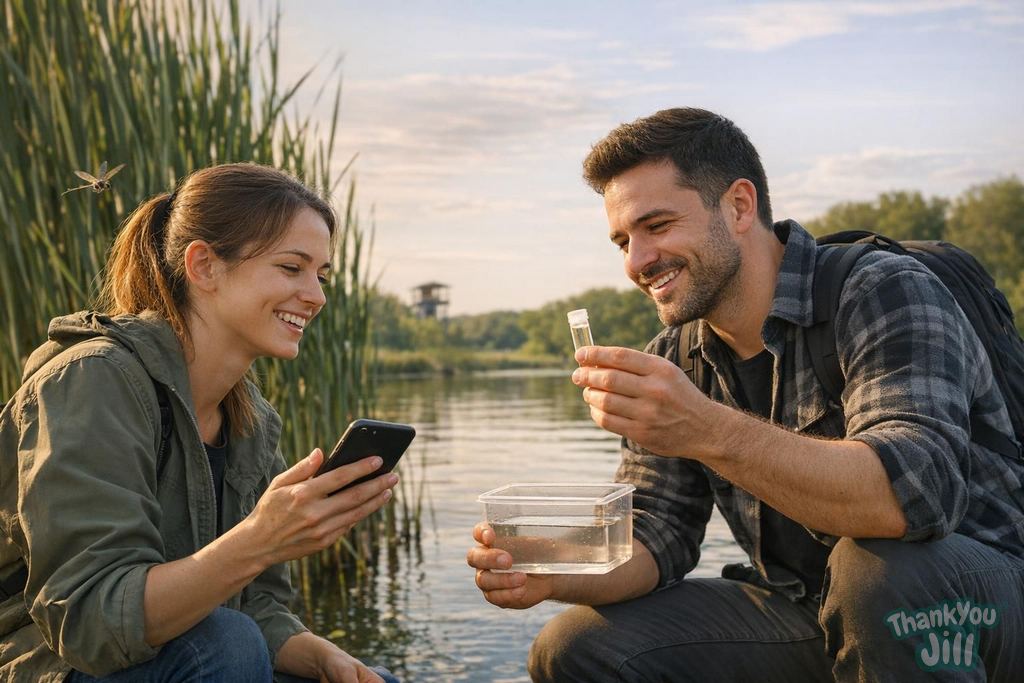
Citizen science (or participatory science, science by citizens) involves non-professionals in collecting scientific data, analyzing information, or both. It's not new: amateur naturalists of the 19th century who catalogued local species practiced citizen science before the term even existed. But the digital revolution—smartphones with GPS and cameras, ubiquitous connectivity, AI-powered identification apps—has transformed the scale and power of this practice. Today, billions of observations are collected annually by millions of citizens worldwide, contributing to scientific datasets of a value impossible to achieve through professional research alone.
The most important apps for biodiversity and nature
iNaturalist (inaturalist.org, iOS and Android): the leading citizen science platform for biodiversity. It lets you photograph any living organism (plant, animal, fungus, insect) and receive automatic AI identification, then verified by the community. Every observation is shared with GBIF (Global Biodiversity Information Facility) and used for scientific research. Over 100 million observations from 3 million users. Free. Available in Italian. BirdNET (Cornell Lab of Ornithology, iOS and Android): identifies birds from recordings made with your phone's microphone. AI that recognizes over 3,000 species. Free. Plant.net (INRAE and other institutions, iOS and Android): identifies plants from photographs of leaves, flowers, fruits, and bark. Used by over 25 million users. Free. Pl@ntNet Italia participates in the project. Merlin Bird ID (Cornell Lab, iOS and Android): visual bird identification through photography. Over 200 million downloads. Free. iNaturalist data has proven its scientific value: 70% of invasive species first detected in new areas were reported by iNaturalist users, not professional researchers.
Apps for air quality monitoring
Sensor.Community (formerly Luftdaten.info, luftdaten.info): a network of air quality sensors built by citizens (mainly PM2.5 and PM10) with data visualized on a public map. In Italy, the network has hundreds of sensors. The project includes instructions for building your own sensor (cost: €30–50). OpenAQ (openaq.org): global aggregator of air quality data from government and private sensors. Open API for developers. PurpleAir: a network of precision air quality sensors with data available on a public map. Sensors cost €200–300 but produce near-professional quality data visible to everyone. AQICN (waqi.info, iOS and Android): worldwide aggregator of air quality data, available as an app with notifications for local air quality. Free.
Apps for water monitoring
Caddisfly (akvo.org): an app for water quality monitoring developed by Akvo Foundation. Supports colorimetric tests for pH, chlorine, nitrates, and other parameters. Used in development and civic monitoring projects in various countries. CoastSnap: a citizen science project for monitoring coastlines through georeferenced photographs over time. Used by university researchers to monitor coastal erosion. Stream Tracker (USA): an app for reporting the status of local waterways (flow, visual quality, fauna). Not yet widespread in Italy but expanding internationally. Globe Observer (NASA, iOS and Android): NASA's app for monitoring clouds, water quality, temperatures, and land. Every observation contributes to NASA's scientific datasets. Free.
How to get started with citizen science: practical tips
Choose an area of genuine interest (birds, plants, air quality, insects): citizen science works best when driven by genuine curiosity, not obligation. Start with one app and use it for at least a month before adding others. iNaturalist is the ideal starting point for biodiversity: easy to use, supportive community, documented scientific impact. Participate in BioBlitz events (intensive citizen science events in a specific area over 24–48 hours): they're opportunities to learn from experts and contribute to high-quality datasets. In Italy: the CNR (National Research Council) coordinates some citizen science initiatives through the ECSA Italy project (European Citizen Science Association). Quality matters more than quantity: a few carefully documented observations (with sharp photos, precise location, behavioral notes) have more scientific value than many rough observations.

Not a biologist? No problem. iNaturalist teaches you to look at the natural world around you with fresh eyes. That strange fungus in the woods, the butterfly you've never seen before in your garden, the bird singing differently in spring: photograph it, upload it, and the global scientific community will tell you what it is. And your observation becomes real scientific data that someone will use in a paper. That's the power of citizen science.
The scientific value of citizen science: data on a global scale
Citizen science data has documented scientific impact. The Theobald et al. study (2015, Bioscience) analyzed over 380 citizen science projects and 1.3 billion observations collected by volunteers: the data was used in over 2,200 peer-reviewed scientific publications. GBIF (Global Biodiversity Information Facility) hosts over 2 billion species occurrence records, of which approximately 70% comes from citizen science (mainly eBird and iNaturalist). These observations are used to: monitor changes in species distribution in response to climate change, detect invasive species in new areas, identify new sites of conservation importance, measure biodiversity in urban ecosystems. The main limitation of citizen science: sampling bias (data is collected where there are more observers, not necessarily where science needs it most). Urban areas and easily accessible zones are over-represented. Advanced statistical methods partially correct this bias.
Citizen science and local environmental policies
Citizen science data can be used directly to influence local environmental policies. Examples: data from the Sensor.Community network on air quality has been used by Italian municipalities to document local pollution problems and justify interventions (limited traffic zones, bike paths). Reports of invasive species on iNaturalist have alerted local authorities in time for eradication efforts. Photographs of coastal erosion collected with CoastSnap have been used by coastal municipalities to document the problem and request funding for coastal protection. How to use citizen science data locally: download data from your area from iNaturalist or Sensor.Community, analyze it with QGIS (open-source GIS software), present the results to your municipality or local health authority as documentation of an environmental problem. This is citizen science in action: not just collecting data, but using it to make a difference.
Citizen science opportunities in Italy
Faunalia Project (faunalia.it): monitoring Italian wildlife through observation reports. ARPA environmental monitoring network (Regional Environmental Protection Agency): some regional ARPA offices have programs involving citizens in environmental monitoring. FeNO Project (Phenology of the Territory): monitoring phenological changes in plants in response to climate change. BioItaly (ISPRA): national biodiversity monitoring program with a citizen science component. LIPU Bird Atlas: the Italian League for Bird Protection coordinates a census of breeding and wintering birds in Italy with contributions from thousands of volunteers. Reports are entered on ornitho.it. Butterfly Monitoring Italy (MUSE - Museum of Sciences in Trento): monitoring of diurnal butterflies with standardized transects throughout Italy.
Frequently Asked Questions
What are the most effective apps for identifying animal and plant species through citizen science?
The most effective apps include iNaturalist for photo identification with AI and community verification, BirdNET for recognizing birds by song, Plant.net for plant identification from photographs, and Merlin Bird ID for visual bird identification. They're all free and used globally.
How can I contribute to air quality monitoring through citizen science?
You can participate by building a sensor with Sensor.Community or purchasing a precision one like PurpleAir. Additionally, apps like AQICN provide data and notifications on local air quality, allowing you to report and monitor environmental pollution.
How do data collected through citizen science influence local environmental policies?
Citizen science data, such as that from Sensor.Community or iNaturalist, is used to document environmental problems, alert authorities to invasive species or pollution, and support interventions like limited traffic zones or coastal protection, influencing local policy decisions.
How do I start practicing citizen science effectively and with scientific impact?
Choose an area of genuine interest and start with an app like iNaturalist, using it regularly for at least a month. Participate in BioBlitz events to learn from experts and ensure you document observations with sharp photos and precise data to guarantee scientific value.


Latest News
Comments
No comments yet. Be the first!
Leave a comment