


 Italiano
 Français
 Deutsch
 Español
 Português
 Svenska
 Suomi
Suomi
CRISPR and Genetic Editing
Opportunities and Risks
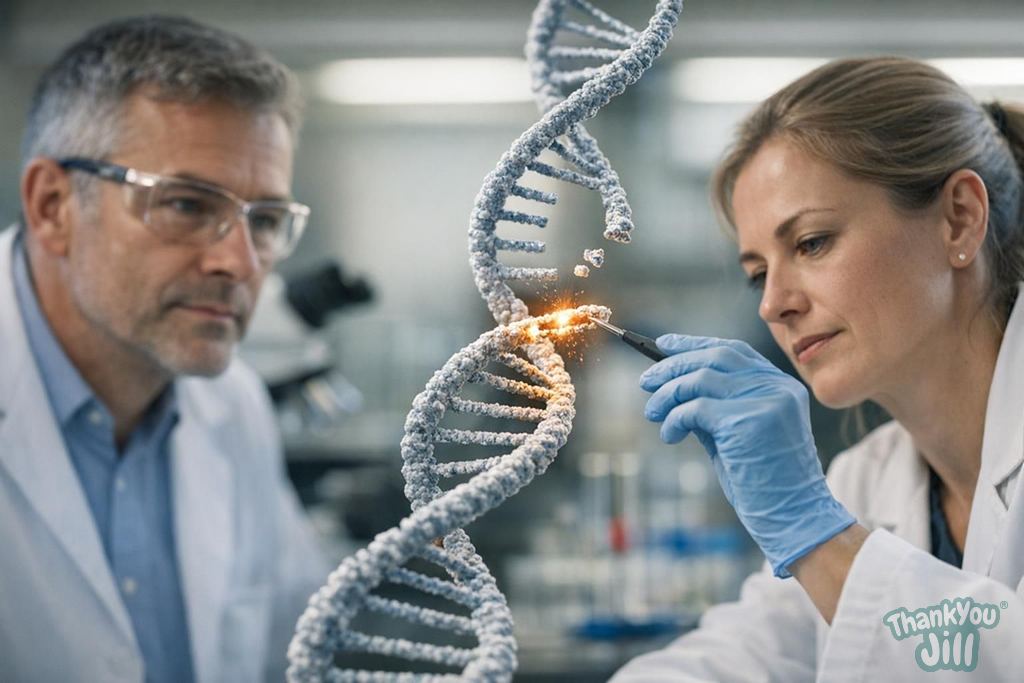
CRISPR-Cas9 (Clustered Regularly Interspaced Short Palindromic Repeats) is a genetic editing system derived from a natural defense mechanism bacteria use against viruses. Developed as a genetic editing tool by Jennifer Doudna and Emmanuelle Charpentier (Nobel Prize in Chemistry 2020), it allows you to "correct" specific DNA sequences of an organism with unprecedented precision: finding a sequence of 20 genetic letters in a genome of 3 billion, cutting it, and modifying it. CRISPR revolutionized genetics because it is simple (can be implemented in any well-equipped laboratory), fast (months instead of years compared to traditional GMOs), economical (costs reduced by 99% compared to previous technologies), and highly precise (few off-target mutations with modern systems).
Agricultural applications: varieties already developed
Disease resistance: Xanthomonas oryzae (bacterial rice disease) affects 50% of the harvest in some Asian regions. Rice plants with CRISPR-edited SWEET genes (which the bacterium uses to feed) are completely resistant to the disease without yield loss. Developed by the University of California. Drought resistance: corn varieties edited with CRISPR to increase water use efficiency (greater expression of aquaporins and abscisic acid cycle enzymes). Not yet on the market but in advanced trials. Allergen reduction: wheat with CRISPR that silences specific gliadins proteins responsible for non-celiac gluten sensitivity (celiac disease requires more complex modifications). Developed by French INRAE. Tomatoes with more lycopene and vitamin C: the J02 tomato (Japan, CRISPR-edited) modified to have higher levels of GABA (gamma-aminobutyric acid, associated with blood pressure reduction). Approved in Japan in 2021: the first CRISPR food approved worldwide. Banana sigatoka resistance: the most devastating disease of bananas globally. Development of resistant varieties with CRISPR (Wageningen University) without the need for fungicides. Late blight-resistant potato (Phytophthora infestans, the disease that caused the Great Irish Famine of 1845): Solanum bulbocastanum has natural resistance. Resistance genes transferred with CRISPR into common potato produce absolute resistance without transgenesis.
CRISPR vs traditional GMO: crucial differences
The technical distinction between CRISPR and traditional GMO is important for understanding regulation and public debate. Traditional GMO (transgenesis): inserts DNA sequences from another organism (often a bacterium, virus, or another species) into the host organism's genome. Produces "transgenic" organisms: their DNA contains sequences foreign to the species. CRISPR (cisgenesis or editing): modifies sequences already present in the organism's genome. Does not introduce DNA from other species. The modification produced is identical to a natural mutation that could have occurred spontaneously or through classical mutagenesis (radiation or chemical agents, used for decades in agriculture without particular restrictions). The key question is: is the final product of CRISPR distinguishable from a naturally mutated variety? In many cases, no: a CRISPR-edited plant with a single point modification is genetically identical to a plant that had developed the same mutation spontaneously. This is at the heart of the European regulatory debate.
New European regulation (NTG): what changes from 2023
The European regulatory framework on GMOs (Dir. 2001/18/CE) was interpreted by the EU Court of Justice in 2018 as applicable to plants obtained with CRISPR: CRISPR plants were therefore considered GMOs and subject to all the bureaucracy and restrictions of traditional GMOs (multi-year trials, EFSA assessment, case-by-case authorization). In July 2023, the European Commission proposed the Regulation on New Genomic Techniques (NTG), which distinguishes between: NTG 1 plants (equivalent to natural mutations or obtainable with classical mutagenesis): simplified treatment, no GMO evaluation, only notification. NTG 2 plants (more complex modifications): simplified EFSA process compared to traditional GMOs but with full evaluation. The NTG regulation was approved by the European Parliament in February 2024 and is currently in the process at the EU Council. It fundamentally changes the framework for European agriculture: it opens the door to dozens of CRISPR varieties already developed by European public research (especially Italian, with excellence at CRA-W, ENEA, CREA-ZA) that were blocked by GMO regulations.

CRISPR is not Frankenstein's little plant: it's a genetic scalpel that corrects a single letter in a book of 3 billion characters. The drought-resistant wheat variety obtained with CRISPR is genetically identical to a variety that had developed that same mutation spontaneously. The difference is time: years instead of decades of traditional breeding. The debate should be about this, not about the fantasies of the past.
Real risks of genetic editing in agriculture
The debate on CRISPR risks must be precise and evidence-based. Real and documented risks: off-target effects (unintended modifications at other points in the genome): modern systems (high-fidelity Cas9, base editors, prime editors) have greatly reduced these errors but do not eliminate them. Case-by-case evaluation is necessary for open-field applications. Speculative risks frequently cited but with low documented probability: gene drive (technology different from standard CRISPR that spreads a genetic modification through an entire population: applicable to insects, not cultivated plants), corporate monopoly (Corteva, Bayer/Monsanto, Syngenta invest in CRISPR: but the technology is free from patents for academic research, and many universities and public research centers (CREA, ENEA in Italy) develop open source CRISPR varieties), loss of biodiversity (same dynamics as conventional breeding with intense selection: to be managed with policies for conservation of traditional varieties, not opposed to CRISPR). The consensus of the scientific community is that the risks of CRISPR varieties are comparable to or lower than those of varieties obtained with classical mutagenesis (already in use without restrictions).
The role of Italian public research
Italy has a tradition of excellence in plant genetics with important research centers working on CRISPR applications. CREA (Council for Research in Agriculture and Analysis of Agricultural Economics): development of CRISPR wheat varieties resistant to sigatoka, grapevine resistant to downy mildew, olive resistant to Xylella fastidiosa. ENEA (National Agency for New Technologies): research on CRISPR tomato and kiwi for nutritional and resistance characteristics. University of Padua, Bologna, Turin, Milan: basic and applied research on genetic editing in crops. Approval of the European NTG regulation unlocks the possibility for these centers to bring the developed varieties to open-field trial phases and subsequently to commercialization. Italian public research has produced CRISPR varieties potentially very valuable for Mediterranean agriculture that were previously blocked by GMO regulations.
Where CRISPR foods are already being bought worldwide
The commercialization of CRISPR foods is still very limited globally. Japan: Sanatech Seed sells the "Sicilian Rouge High GABA" tomato in Japan (high GABA content, associated with blood pressure reduction). Available online and in some chains. USA: some CRISPR varieties of corn and soy are in advanced trial phases (Corteva Agriscience, Pairwise). Not yet on the market as identifiable final products. Argentina: has approved several CRISPR corn and soy varieties. Producers are not required to label them as CRISPR (they are not considered GMOs under Argentine regulations). Australia: approved CRISPR plants in 2019 that do not introduce exogenous DNA: they do not require GMO evaluation. The global picture is very fragmented: different countries treat CRISPR very differently, creating uncertainty for agricultural companies operating in global markets.
Frequently Asked Questions
What is the main difference between CRISPR and traditional GMOs in agriculture?
CRISPR modifies sequences already present in the genome without introducing foreign DNA, while traditional GMOs insert genes from other species. CRISPR-edited plants are often indistinguishable from natural mutations, reducing time and costs compared to traditional GMOs.
How does European regulation for plants obtained with CRISPR change from 2023?
From 2023, European regulations distinguish between NTG 1 plants, similar to natural mutations with a simplified process, and NTG 2 plants, with more complex modifications and EFSA evaluation. This facilitates market access for many CRISPR varieties compared to previous GMO regulations.
What are the real risks associated with using CRISPR in agriculture?
Documented risks include off-target effects, or unintended modifications in the genome, reduced with modern technologies. Other risks such as gene drive or loss of biodiversity are speculative or manageable with appropriate policies, resulting in comparable or lower risks than classical mutagenesis.
Where are foods obtained with CRISPR already available and what examples exist?
The first approved CRISPR food is the Japanese 'Sicilian Rouge High GABA' tomato. In Argentina and Australia, some CRISPR corn and soy varieties are approved and commercialized without GMO labeling. In the USA, they are in advanced trials but not yet on the market.


Latest News




Comments
No comments yet. Be the first!
Leave a comment