

 English
 Italiano
 Français
 Deutsch
 Español
 Português
 Svenska
 Suomi
Suomi
Aquaponics
Fish and plants together
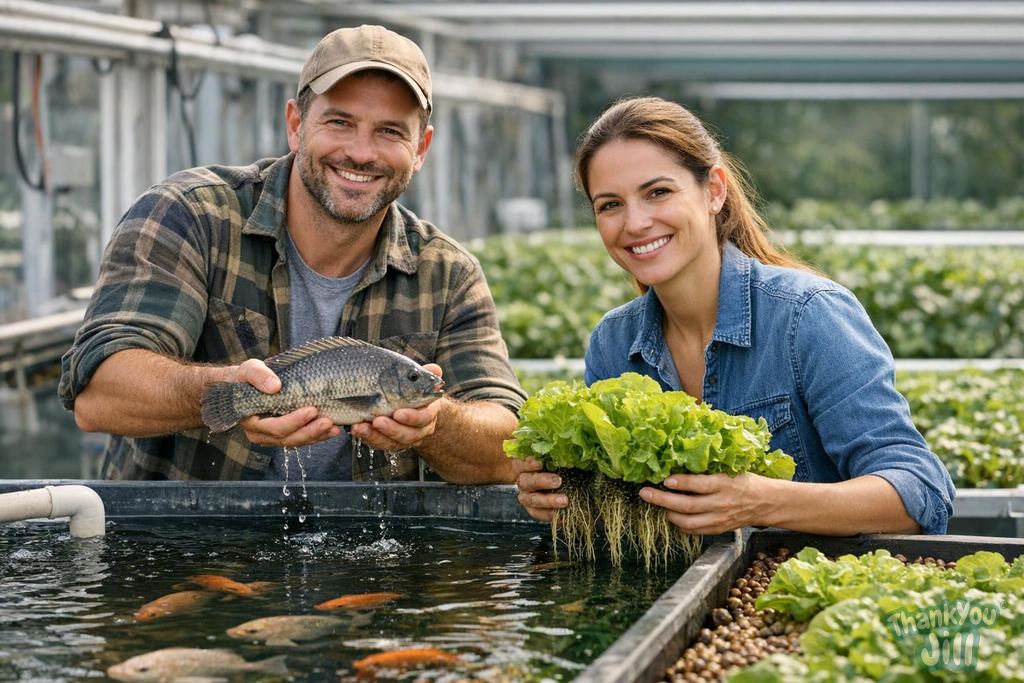
Aquaponics is an integrated food production system that combines aquaculture (fish farming in tanks) with hydroponics (water-based plant cultivation without soil) in a nearly closed cycle. The principle is borrowed from natural aquatic ecosystems: the metabolic waste of fish (ammonia in feces and urine) is transformed by nitrifying bacteria (Nitrosomonas, Nitrobacter) into nitrates that plants use as fertilizer. Plants, by absorbing nutrients, purify the water that returns to the fish tanks. The result is a system that simultaneously produces animal protein (fish) and vegetables, with water consumption 90% lower than traditional irrigation, zero chemical fertilizers, zero pesticides (the closed environment eliminates most pests), and very high productive density per unit of surface area.
How an aquaponic system works
The main components of an aquaponic system. Fish tank: breeding tank with aeration, mechanical filtration of solids, and temperature control. Commonly farmed species: tilapia (robust, fast-growing, tolerates variable conditions), grass carp, trout (requires cold, well-oxygenated water), perch (freshwater bass), shrimp. Mechanical filter: removes solids (feces) before they decompose in the water, preventing ammonia spikes. Biofilter: substrate colonized by nitrifying bacteria that convert ammonia into nitrates. It's the biological heart of the system: it takes 4-6 weeks to "mature" (colonize with the right bacteria) at startup. Growing beds: where plants grow. They can be: NFT (Nutrient Film Technique: channels with a thin layer of nutrient solution flowing), DWC (Deep Water Culture: roots are immersed directly in the solution), Grow beds (deep beds with inert substrate: gravel, expanded clay, where roots grow). Plants that grow best in aquaponics: lettuce and leafy greens (optimal for nitrogen-rich conditions), herbs (basil, parsley, mint, cilantro), tomatoes and peppers (require more advanced systems and greater nutrition), strawberries, zucchini.
The benefits of aquaponics: the complete picture
Exceptional water savings: 90-95% of water is recycled in the closed system. Only losses from plant evapotranspiration and maintenance operations require top-ups. Zero chemical fertilizers: the only fertilizer is fish food, transformed by bacteria into organic nutrients for plants. Dual production: animal and plant protein from the same system, the same space, with the same energy input. Urban production: aquaponic systems work in closed environments (greenhouses, warehouses, containers): they can be installed in cities, close to consumers. Naturally organic: no pesticides (impossible to use without killing the fish), no synthetic fertilizers (toxic to fish). Products from aquaponic systems are de facto organic (though not always certified because organic certifications aren't simplified for aquaponics). High yield: compared to field agriculture, aquaponic systems produce 4-6 times more plant biomass per square meter under the same growing conditions. Nearly complete closed cycle: waste from one component becomes nutrients for the other. When managed well, an aquaponic system is nearly zero-waste.
The limitations and challenges of aquaponics
Aquaponics has some significant limitations that explain its still-limited adoption. Management complexity: the system is biologically complex: balancing fish density, water flow, plant load, and pH balance requires continuous monitoring and technical expertise. A mistake (overfeeding fish, biofilter collapse) can cause fish death and system collapse within hours. Initial costs: building a functional aquaponic system requires significant investment (tanks, pumps, tubing, LED lighting for indoor systems, water heating): €500-5,000 for home systems, €50,000-500,000 for commercial systems. Energy consumption: aeration and circulation pumps, water heating (many species require 22-28°C), LED lights in indoor systems: a commercial system consumes 5-15 kWh/m² of production per day. Commercial profitability: management costs are still higher than market prices for products in many systems. Only with premium market positioning (local, organic, ultra-fresh product) or high-value markets (restaurants, specialty shops) is profitability achievable.

Aquaponics is perhaps the most fascinating food production system available: a closed ecosystem where fish and plants nourish each other, producing fresh food with 90% less water than traditional agriculture. A small balcony system (€150-200) produces herbs and small fish for the family. A commercial greenhouse produces tons of salad and hundreds of kilos of tilapia per year. The scale changes, the biological principles don't.
How to build a home aquaponic system
A mini aquaponic system for a balcony or apartment is achievable with easily available materials. Basic CHOP system (Constant Height One Pump): a fish tank (150-300 liters: large food-grade plastic container), a growing bed (plastic box filled with expanded clay), a small submersible pump (200-400 L/h). Procedure: install the pump at the bottom of the fish tank, connect it with a tube to the growing bed (positioned higher than the tank), set up the overflow from the bed to drain water back into the tank. Biofilter: the expanded clay in the growing bed itself functions as a biofilter. Biological startup: add commercial nitrifying bacteria or use the traditional "fishless cycling" method (add ammonia to the system and wait for bacteria to colonize the substrate: 4-6 weeks). Fish: carp, goldfish (more resilient for beginners). Plants: start with lettuce, herbs, spinach. Total cost for mini system: €150-300. Expected production: 1-2 kg of lettuce per month + non-food fish (goldfish, ornamental carp) for a 200-liter system.
Commercial aquaponics in Italy: existing operations
In Italy, the commercial aquaponics sector is small but growing. Some significant operations: Agricoltura Capodarco (Rome): aquaponic system in a social cooperative. Produces tilapia and salads for Roman restaurants. Agriaqua (Veneto): integrated fish-vegetable system in a greenhouse. Produces trout and salads for local retail chains. Aquaponics Florence (UNIFI research project): experimental system at university for research on optimal species and parameters. Legambiente Sicily: pilot aquaponics project in disadvantaged rural areas as an opportunity for circular economy and regeneration. Main reference associations and networks: the Italian Aquaponics Association (AIA) coordinates operators and promotes best practices. The European COST Action Aquaponics Hub network has produced technical guidelines for the sector.
Aquaponics and sustainability: a circular economy system
Aquaponics represents one of the best examples of circular economy applied to food production. In a well-managed system: fish waste (ammonia) is the raw material for plant production. Nothing is wasted. Water is recycled at 90-95%: minimal fresh water needed. The energy used for the pump and lighting is the main external input: if powered by photovoltaic, the system is nearly carbon neutral. Fish can be partially fed with organic waste (earthworms, black soldier fly larvae raised on the system's organic waste): further closing the cycle. Integration of aquaponics into broader urban systems (building rooftop farms, hybrid vertical farms, community centers) creates potential for industrial symbiosis: waste heat from a building warms fish tanks, organic waste from a cafeteria feeds larvae that feed fish. The complete vision of aquaponics as a node in an urban circular economy network is still experimental but technically concrete.
Frequently asked questions
What are the main advantages of aquaponics compared to traditional agriculture?
Aquaponics uses 90-95% less water, eliminates chemical fertilizers and pesticides, produces fish and plants simultaneously in the same space, and offers 4-6 times higher yield per square meter compared to conventional agriculture.
How does the biofilter work in an aquaponic system and why is it important?
The biofilter hosts nitrifying bacteria that transform ammonia produced by fish into nitrates usable by plants. It's essential for keeping water clean and safe, takes 4-6 weeks to mature, and ensures the biological balance of the system.
What are the main difficulties in managing an aquaponic system?
Management requires continuous balancing between fish density, water flow, plant load, and pH. Mistakes like overfeeding or biofilter malfunction can quickly cause fish death and system collapse.
When is it worth investing in a commercial aquaponic system?
It's worthwhile if you target premium markets with local, organic, ultra-fresh products, such as restaurants or specialty shops, since management costs and investment are high and profitability is achieved only with high-value positioning.

Latest News




Comments
No comments yet. Be the first!
Leave a comment