


 Italiano
 Français
 Deutsch
 Español
 Português
 Svenska
 Suomi
Suomi
Cerebral Palsy
Nutritional Strategies
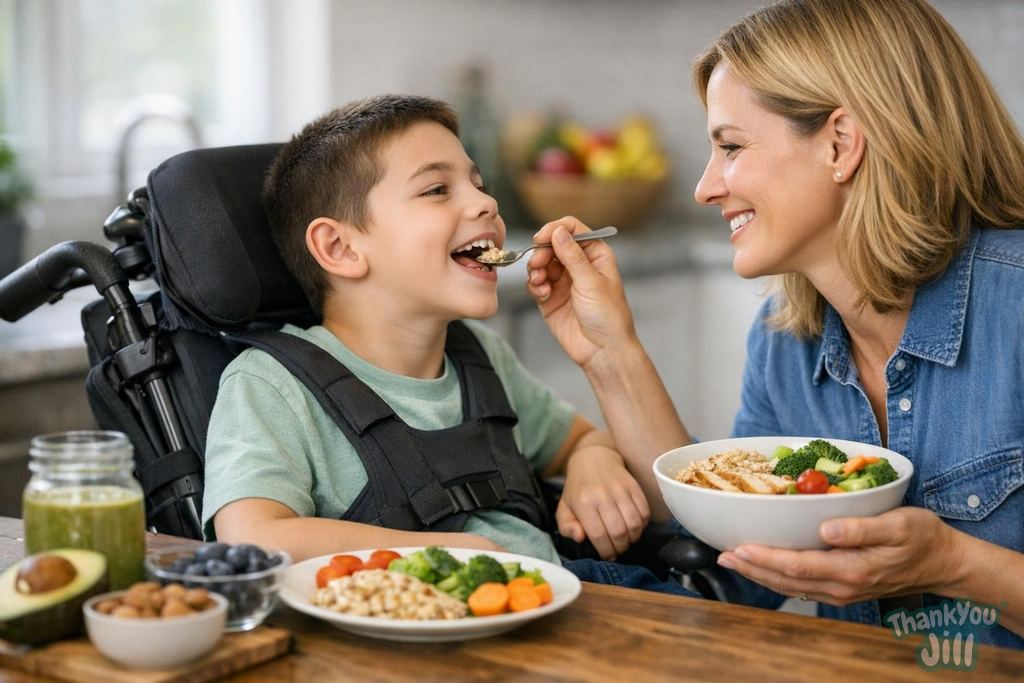
Cerebral palsy (CP) is a group of movement, posture, and motor function disorders caused by injuries or abnormalities in brain development during early life stages (perinatal period, infancy, or early childhood). It is the most common motor disability in children, with a prevalence of approximately 2-3 per 1,000 live births. CP presents with enormous variability: from very mild forms (slight weakness of a limb with near-normal functioning) to very severe forms (spastic tetraplegia with total dependence for all activities of daily living). Nutritional problems are among the most common and most impactful complications on quality of life in moderate-to-severe forms of CP.
Nutritional Assessment in Cerebral Palsy: The GMFCS
The GMFCS system (Gross Motor Function Classification System) classifies the gross motor function of people with CP into 5 levels, from level I (walks without limitations) to level V (severely limited mobility even with aids). The nutritional profile varies significantly across different GMFCS levels. GMFCS I-II (mild forms): caloric requirements are similar to normal or slightly reduced. Nutritional problems are less frequent. Chewing and swallowing difficulties are present in a minority. GMFCS III (moderate form): caloric requirements reduced by 10-20%. Frequent feeding difficulties (dysphagia, chewing problems in approximately 50%). Greater risk of malnutrition. GMFCS IV-V (severe forms): caloric requirements significantly reduced (50-75% of the norm for age and sex in the most severe forms) but with paradoxical risk of protein-calorie malnutrition due to feeding difficulties. Feeding difficulties very frequent (dysphagia in over 90%). High prevalence of GERD (gastroesophageal reflux). High prevalence of chronic constipation. Regular nutritional monitoring is recommended for all people with CP at GMFCS level III-IV-V.
GERD (Gastroesophageal Reflux) in Cerebral Palsy
GERD is present in 70-75% of people with cerebral palsy at GMFCS level IV-V. The causes are multiple: hypotonia of the diaphragm and lower esophageal sphincter muscles (which normally prevent reflux), obligatory posture (the semi-reclined position in a wheelchair promotes reflux), constipation (increased abdominal pressure from fecal accumulation promotes reflux), slow gastric emptying (gastroparesis). Untreated GERD in people with CP causes: esophagitis (inflammation of the esophagus: pain during meals, leading to food refusal), dental erosions (gastric acid in the mouth), aspiration pneumonia (silent reflux with micro-aspiration: very common and often unrecognized in severe CP), iron-deficiency anemia (from small bleeding losses from esophagitis). Nutritional strategies for GERD: small, frequent meals (instead of three large meals), caloric densification (increasing calories per ml or per gram of food using concentrated fats and proteins), thickening of liquid foods (reduces post-meal reflux), correct posture during and after meals (45° inclination for at least 30-60 minutes after the meal).
Chronic Constipation: Causes and Nutritional Management
Chronic constipation is present in 50-70% of people with severe cerebral palsy. Main causes: hypotonia of intestinal muscles (peristalsis is reduced), reduced physical activity (movement stimulates intestinal motility), reduced fluid intake (many people with CP drink little due to swallowing difficulties), reduced fiber intake (the often limited diet excludes fruits and vegetables), side effects of certain antiepileptic drugs (very common in CP: opioids, anticholinergics, calcium antagonists). Consequences of chronic constipation in CP: abdominal pain (the main cause of unexplained crying in those who cannot communicate verbally), reduced appetite (abdominal fullness reduces hunger perception), worsening of GERD, discomfort and reduced quality of life. Nutritional management of constipation: adequate hydration (the first intervention: 6-8 glasses of water per day, in gel form if there is dysphagia), adequate fiber (25-30 g/day: blended fruit, cooked and strained vegetables, sieved legumes, bran added to purees), probiotics (Bifidobacterium longum, Lactobacillus reuteri: some evidence of effectiveness for functional constipation), repositioning interventions during meals (correct posture promotes peristalsis), abdominal massage (documented effective technique: circular, clockwise, 5-10 minutes per day).

In severe cerebral palsy, a meal is never just about calories: it's a battle against reflux, dysphagia, constipation, and postural difficulty. The dietitian specialized in CP knows how to increase caloric density without increasing volume, how to thicken liquids, how to position correctly during meals. This is learned with the right professionals, not on your own.
Artificial Nutrition in Severe Cerebral Palsy: PEG and NJ
In many people with cerebral palsy at GMFCS level IV-V, oral feeding becomes insufficient or risky due to dysphagia complications. Tube feeding becomes a necessity. PEG (Percutaneous Endoscopic Gastrostomy): the most commonly used artificial nutrition system in people with CP with severe feeding difficulties. A small tube inserted directly into the stomach through the abdominal wall. PEG allows: complete and programmable protein-calorie nutrition, medication administration, sufficient hydration independent of swallowing. PEG does not prevent oral feeding: many people with CP continue to eat small amounts for sensory pleasure, supplementing with PEG the missing caloric portion. NJ (Nasojejunal Feeding Tube): used when GERD is very severe and PEG in the stomach causes aspiration. Nutrition is delivered directly into the jejunum (small intestine), completely bypassing the stomach. As nutritional support in CP: PEG is associated with improvement in nutritional status (increase in muscle mass, improvement in blood chemistry indices), improvement in quality of life (reduction in time spent on meals, reduction in caregiver stress), reduction in aspiration pneumonia in forms with silent aspiration.
Caloric Densification: How to Increase Calories Without Increasing Volume
For people with CP who eat small volumes at a time (due to chewing fatigue, GERD, early satiety), it is essential to maximize calories per spoonful. Caloric densification strategies: extra virgin olive oil: 9 kcal/g, no invasive flavor added in small quantities. 1 tablespoon added to puree: +120 kcal. Butter: 7.5 kcal/g. Added melted to purees or soups. Grated Parmesan: 370 kcal/100g, high protein density (35g/100g), appetizing flavor. 2 tablespoons in purees: +70 kcal + 14 g of protein. Cream cheese (Philadelphia, mascarpone): 250-400 kcal/100g. Creamy, easy to incorporate, delicate flavor. Whole milk instead of water: to thin purees. Adds calories and protein without significantly increasing volume. Enriched smoothies: whole milk + whole yogurt + fruit + almond cream (or peanut butter): 400-600 kcal in 250 ml. Oral nutritional supplements (ONS): Fresubin (Fresenius), Ensure (Abbott), Fortisip (Nutricia): complete formulas in 200-300 ml with 200-400 kcal each. Used when normal feeding is insufficient to meet requirements.
The Interdisciplinary Team for Nutrition in CP
Nutritional management of cerebral palsy requires a coordinated interdisciplinary team. The nutritionist-dietitian specialized in neurodisability: assesses nutritional status (anthropometry with CP-specific curves, bioimpedance, skinfold measurements), calculates individual caloric-protein and fluid requirements (taking into account GMFCS level and spasticity), defines feeding strategy (oral, mixed, PEG), monitors over time. The speech-language pathologist: assesses swallowing (videofluoroscopy, FEES), prescribes texture and consistency of liquids (IDDSI level), works on oral motor skills, manages dysphagia. The physiotherapist: defines optimal posture during meals, prescribes postural aids (adapted high chair, postural supports for wheelchair), monitors musculoskeletal complications. The child neuropsychiatrist or neurologist: manages neurological comorbidities (epilepsy, spasticity, GERD), monitors overall development, coordinates the team. The reference in Italy: Rehabilitation Centers for Cerebral Palsy (present in all regions) have dedicated multidisciplinary teams.
Frequently Asked Questions
How is caloric requirement adapted in different severities of cerebral palsy according to GMFCS?
Caloric requirement varies with GMFCS level: at levels I-II it is similar or slightly reduced, at level III it decreases by 10-20%, while at levels IV-V it can drop to 50-75% of the norm, yet with risk of malnutrition due to feeding difficulties.
What nutritional strategies are effective for managing gastroesophageal reflux (GERD) in cerebral palsy?
For GERD, small and frequent meals are recommended, caloric densification of foods, thickening of liquids, and maintaining a 45° inclined posture during and after meals for at least 30-60 minutes, thus reducing reflux and associated complications.
How can chronic constipation in cerebral palsy be managed through diet?
Management includes adequate hydration (6-8 glasses of water per day), increased fiber (25-30 g/day from blended fruit, cooked and strained vegetables, and sieved legumes), use of specific probiotics, and techniques such as abdominal massage and correct posture during meals to stimulate intestinal motility.
When is artificial nutrition with PEG or NJ indicated in cerebral palsy and what benefits does it provide?
Artificial nutrition is indicated in severe forms (GMFCS IV-V) with severe dysphagia or aspiration risk. PEG allows complete nutrition and reduces aspiration pneumonia, while NJ is used in case of severe GERD to bypass the stomach, improving nutritional status and quality of life.


Latest News




Comments
No comments yet. Be the first!
Leave a comment