


 Italiano
 Français
 Deutsch
 Español
 Português
 Svenska
 Suomi
Suomi
Diabetes and Disability
Managing Both Conditions Together
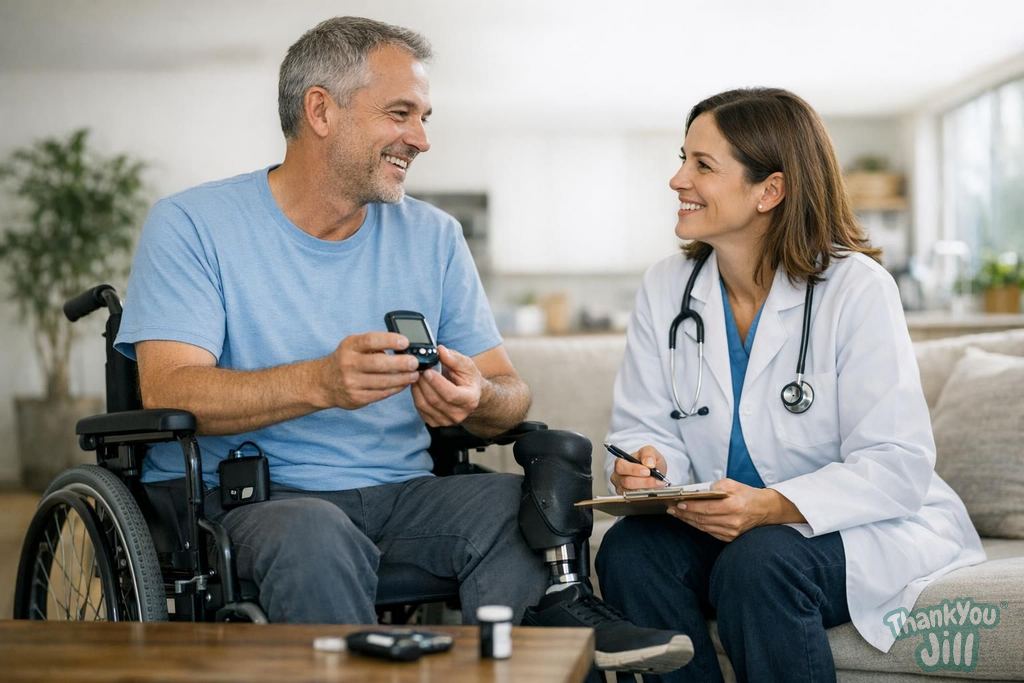
Diabetes mellitus (both type 1 and type 2) can coexist with any form of disability, creating management complexities that require tailored adaptations of standard care approaches. However, certain disabilities significantly increase the risk of developing diabetes: Down syndrome (3–5 times higher risk than the general population), Prader-Willi syndrome (severe obesity is nearly universal, with high rates of type 2 diabetes), Turner syndrome, and cystic fibrosis (CFRD: cystic fibrosis-related diabetes). Managing diabetes in people with disabilities is more complex because of: self-management difficulties (diabetes requires frequent blood glucose monitoring, carbohydrate counting, and insulin dose adjustments—skills that may be limited by cognitive or motor disabilities), dependence on caregivers for insulin injections or glucose monitoring, changes in insulin requirements due to reduced physical activity (common in motor disabilities) or selective eating patterns (common in cognitive disabilities).
Type 2 Diabetes and Motor Disability: A Risky Cycle
People with motor disabilities face increased risk of type 2 diabetes through several mechanisms: increased sedentary behavior (reduced muscle activity lowers insulin-mediated glucose uptake in muscle, increasing insulin resistance), altered body composition (disuse-related sarcopenia worsens the fat-to-muscle ratio, reducing insulin sensitivity), weight gain tendency (reduced caloric needs often not adequately compensated by diet), and use of diabetogenic medications (corticosteroids used in some neuromuscular conditions, certain antipsychotics, and antiepileptic drugs can raise blood glucose). Screening for diabetes in motor disabilities: HbA1c screening (average blood glucose over 2–3 months) is recommended every 1–2 years in people with motor disabilities who have risk factors for diabetes (overweight, family history, severe sedentary lifestyle). Preventive management: the same lifestyle interventions that reduce type 2 diabetes risk in the general population (appropriate diet, physical activity) apply to people with motor disabilities, adapted to their functional capacity.
Managing Diabetic Diet with Cognitive Disability
Managing a diabetic diet (controlling carbohydrates, spacing meals, monitoring post-meal blood glucose) requires cognitive skills that may be limited in people with intellectual disability. Adapted strategies for diabetic diet management with intellectual disability include: simplified meal plans with visual supports (divided plates showing visual proportions of carbohydrates, proteins, and vegetables without needing to count grams), fixed menus with minimal weekly changes (reducing decision complexity and allowing caregivers to prepare food in advance), "traffic light" food lists (green: eat freely, yellow: in moderation, red: rarely)—an educational tool understandable even with moderate cognitive limitations, caregiver involvement in portion control (essential: the diabetes of a person with cognitive disability is managed through their care system, not by the person alone), continuous glucose monitoring technology (CGM: Continuous Glucose Monitor)—avoiding repeated finger pricks (painful and often refused by people with sensory hypersensitivity or cognitive disability) while providing real-time readings accessible to caregivers and care staff.
Technology for Diabetes in Disability: CGM and Automated Systems
Modern diabetes technologies have dramatically improved quality of life for people with disabilities. Continuous Glucose Monitor (CGM): Freestyle Libre 3 (Abbott), Dexcom G7—sensors measuring blood glucose every 5–15 minutes without finger pricks, readable on smartphone or dedicated reader. Highly useful in disability because they: eliminate finger pricks (very difficult for people with tactile hypersensitivity or difficulty cooperating), allow caregivers to monitor glucose remotely (Dexcom Share enables viewing on multiple smartphones), send alerts for low or high blood glucose, even overnight. Automated Insulin Delivery (AID) systems or "artificial pancreas": combining CGM + insulin pump + algorithm that automatically adjusts insulin delivery based on real-time glucose. Systems like Medtronic MiniMed 780G, Tandem t:slim X2 with Control-IQ, Insulet Omnipod 5 dramatically reduce the management burden of type 1 diabetes. Particularly valuable in cognitive or motor disabilities that make self-managing mealtime insulin doses difficult. In Italy, AID systems are covered by the national health service for type 1 diabetes patients meeting specific criteria (HbA1c not at target with conventional therapy, frequent hypoglycemia).

The CGM (continuous glucose monitor) is the technology that has most transformed life for people with type 1 diabetes and disability. No more finger pricks every four hours, no more tears at testing time, glucose readings on the parent's or caregiver's phone in real time. It's not a luxury—it's a concrete answer to the complexity of managing both conditions. The national health service covers it. Ask your diabetes specialist.
Hypoglycemia and disability: recognition and management
Hypoglycemia (blood sugar below 70 mg/dL) is the most common acute complication of diabetes in people on insulin therapy. In individuals with cognitive or communication disabilities, recognizing hypoglycemia is more challenging: they may be unable to communicate symptoms, symptoms may present atypically (irritability, agitation, increased repetitive behaviors rather than classic tremors and sweating), and nocturnal hypoglycemia (common in type 1 diabetes) is nearly impossible to detect without CGM. Signs to watch for in non-verbal individuals: sudden pallor, sweating, tremors, unusual behavioral changes, unusual drowsiness, inconsolable crying (in children). How to manage hypoglycemia: 15 g of fast-acting carbohydrates (3 sugar cubes, half a glass of fruit juice or sugary drink, glucose gel: available at pharmacies as Glucosio Gel or equivalents) by mouth if the person is conscious and can swallow. If oral administration isn't possible: intramuscular or subcutaneous glucagon (Baqsimi: intranasal glucagon, approved in Italy: extremely easy to administer even by non-medical personnel) or call 911. The emergency plan for hypoglycemia must be written, agreed upon with the diabetes specialist, and communicated to all caregivers and staff caring for the person.
Physical activity and diabetes in motor disabilities
Physical activity is one of the cornerstones of type 2 diabetes management (improves insulin sensitivity, reduces post-meal blood sugar) and type 1 diabetes management (improves cardiovascular fitness, reduces insulin requirements). In motor disabilities, physical activity is often limited but almost always something is possible. Adaptations: upper body exercises (for those without lower limb function: rowing, light weights, swimming with flotation devices that support the body, handcycling), water-based exercises (buoyancy reduces load and allows movements impossible on land for many people with motor disabilities), Special Olympics (for people with intellectual disabilities: adapted sports, social inclusion, regular activity). Managing blood sugar during exercise in type 1 diabetes: aerobic exercise lowers blood sugar (increases muscle glucose consumption); intense anaerobic exercise can raise it (adrenaline response). The rules for managing insulin during exercise are complex: the diabetes specialist must define specific recommendations for each individual, considering the type and duration of planned activity. Never modify insulin treatment during physical activity without consulting your diabetes specialist.
The diabetes center and disability: how to navigate
Not all diabetes centers are equipped to manage the complexity of diabetes in disabilities. How to find the right center: secondary-level hospital diabetes centers (in major cities) have greater experience with complex cases, rehabilitation centers for specific disabilities (cerebral palsy, Down syndrome) often have consulting diabetes specialists accustomed to working with these populations, patient associations (Diabete Italia, FAND - National Diabetes Federation, CoorDown for Down syndrome) can suggest centers with specific experience. What to expect from the center: diabetes specialist visit with evaluation of the living context (who are the caregivers, what is the daily routine, how much autonomy does the person have in monitoring), treatment planning adapted to the person's abilities and context, structured caregiver training (how to monitor blood sugar, how to recognize hypoglycemia, how to administer glucagon), written emergency plan that is understandable for all staff.
Frequently asked questions
What are the main challenges in managing diabetes in people with cognitive disabilities?
The main challenges include limited self-management capacity, the need for support with blood sugar monitoring, and diet adaptation. Effective strategies include simplified meal plans, active caregiver involvement, and the use of technologies like continuous glucose monitoring (CGM).
How does continuous glucose monitoring (CGM) improve diabetes management in people with disabilities?
CGM eliminates the need for frequent finger pricks, provides real-time data readable by caregivers and staff, and sends alerts for low or high blood sugar. This makes blood sugar control easier, especially for people with cognitive or motor disabilities who struggle with traditional self-management.
When is diabetes screening recommended for people with motor disabilities?
HbA1c screening is recommended every 1-2 years in people with motor disabilities who have risk factors such as overweight, family history, or severe sedentary lifestyle, to detect type 2 diabetes early and intervene with appropriate preventive measures.
What physical activity adaptations are helpful for people with motor disabilities and diabetes?
Upper body exercises, water-based activities with flotation support, and adapted sports like those in the Special Olympics are recommended. These improve insulin sensitivity and physical fitness, but should be planned with your diabetes specialist to properly manage insulin therapy during exercise.


Latest News




Comments
No comments yet. Be the first!
Leave a comment