


 Italiano
 Français
 Deutsch
 Español
 Português
 Svenska
 Suomi
Suomi
Adaptive Sports
Benefits and Opportunities
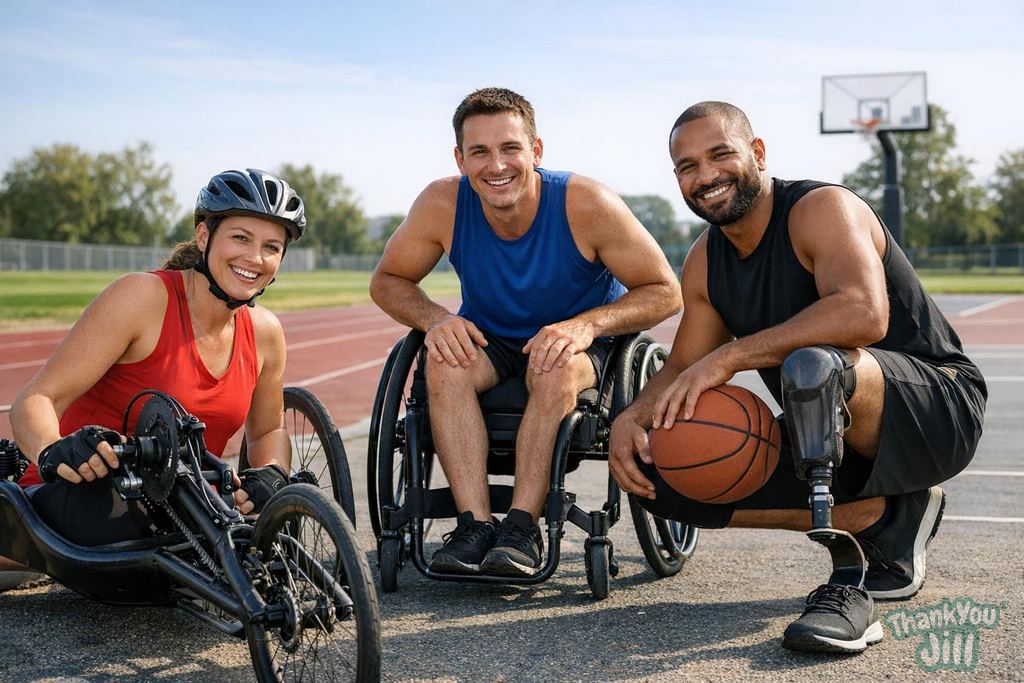
Adaptive sports (or Paralympic sports in their competitive form) encompass athletic activities modified or specifically designed to enable participation by people with physical, sensory, or cognitive disabilities. This isn't consolation-prize athletics: the Tokyo 2021 Paralympic Games featured over 4,400 athletes from 162 countries competing across 22 sports, with performances that rival many traditional Olympic standards. In Italy, the Italian Paralympic Committee (CIP) coordinates over 30 Paralympic sports federations with more than 100,000 registered athletes. The benefits of sports for people with disabilities are extensively documented by research: physical, psychological, and social.
Documented Benefits of Adaptive Sports
Physical benefits: improved cardiovascular and pulmonary function (even in tetraplegia: sports-based rehabilitation reduces cardiovascular risk by 20-30%), maintenance and growth of residual muscle mass (countering inactivity-related sarcopenia), reduced pressure ulcer risk (physical activity improves skin circulation), improved respiratory function in high spinal cord injuries (respiratory training and swimming are particularly beneficial), reduced type 2 diabetes risk (insulin resistance improves with regular exercise). Psychological benefits: reduced depressive and anxiety symptoms (meta-analysis by Martin, 2013, across 20 studies in people with physical disabilities), increased self-esteem and sense of competence (improved athletic performance builds self-confidence), development of a positive identity related to disability (the Paralympic athlete as a positive role model), reduced social withdrawal and isolation. Social benefits: development of meaningful relationships with fellow athletes sharing similar experiences, participation in competitions and events that foster belonging, reduced social stigma (shared sports bridge the gap between able-bodied and disabled individuals).
Main Adaptive Sports in Italy: Overview
Paralympic swimming: the most accessible sport for people with motor disabilities (water eliminates weight and enables movements impossible on land). Classifications NL1-S14. Pools with Paralympic swimming programs are available in all major Italian cities through local sections of the Italian Paralympic Swimming Federation (FINP). Wheelchair basketball: a well-developed team sport in Italy. Italian championship with divisions A, B, and C. High physical intensity, complex technique. Italian Wheelchair Basketball Federation (FISD). Handbike and adaptive cycling: competitive racing on roads and cycling paths. Italy's handbike team ranks among the world's strongest. Italian Cycling Federation (FCI) Paralympic section. Wheelchair tennis: like traditional tennis but with two bounces allowed. In Italy, the Paralympic section of the Italian Tennis Federation (FIT). Wheelchair fencing: a historic Paralympic sport in Italy. Italian wheelchair foilists and sabre fencers rank among the world's most decorated. Archery: one of the most inclusive sports (competes alongside able-bodied athletes in many competitions). Paralympic bocce and boccia: precision sports designed for severe disabilities (GMFCS IV-V). Highly inclusive. Paralympic track and field: track, jumps, and throws with classifications for various disabilities. Wheelchair rugby (murderball): an extremely physical contact sport for people with tetraplegia. Spectacular and highly engaging.
How to Get Started with Adaptive Sports in Italy
The path to starting adaptive sports is simpler than you might think. Contact your Regional Paralympic Committee (CRP): every Italian region has a CRP coordinating local Paralympic sports associations. It lists associations by sport and province. The CIP website (comitatoparalimpico.it) has a map of all regional CRPs. Try different sports: many Paralympic sports associations organize open days (free trial sessions) where you can experience various sports before choosing. Medical-sports classification: to compete officially, athletes must obtain a classification of their disability level from an accredited CIP medical classifier. It's a bureaucratic process but necessary for official competitions. Not required for recreational activities or getting started. CIP membership: to participate in official competitions, you need a CIP card (issued by Paralympic sports federations) through affiliated associations. Special Olympics: for people with intellectual disabilities, the Special Olympics Italy program offers a wide range of sports activities across all Italian regions, emphasizing participation and inclusion over competitive performance.

A tetraplegic young man playing wheelchair rugby is expressing the same competitiveness, the same adrenaline rush, the same athletic pride as anyone else on the rugby field. Adaptive sports aren't a consolation prize—they're real sports, practiced with every bit of residual ability, with the same passion. If you haven't discovered them yet: it's one of the best things you can do for quality of life with a disability.
Adaptive Sports and Rehabilitation: A Dissolving Boundary
The distinction between adaptive sports and rehabilitation through exercise is often artificial: the physical benefits of sports largely overlap with rehabilitation goals. Leading rehabilitation centers systematically integrate adaptive sports into their rehabilitation programs. Niguarda Hospital in Milan, Montecatone Rehabilitation Institute (Bologna), Carlo Besta Neurological Institute Foundation, and many other centers have integrated sports rehabilitation programs with clinical protocols. Some forms of "sports" rehabilitation: Neurological rehabilitation through canoeing (sit-kayak): excellent for trunk and shoulder rehabilitation in paraplegia. Therapeutic horseback riding (hippotherapy): horse movements stimulate the proprioceptive system, trunk, and improve balance in many neurological conditions. Used in CP, MS, and post-stroke recovery. Hydrogymnastics and therapeutic swimming: water is the most versatile rehabilitation medium. Therapeutic swimming has specific protocols for each disability type. Therapeutic climbing: increasingly used in neurological rehabilitation for improving coordination and upper limb strength.
Italian Paralympics: History and Results
Italy is historically one of the world's strongest Paralympic nations. Tokyo 2020 results: 14th place in the medal count with 14 golds, 29 silvers, 26 bronzes. Key Italian Paralympic athletes: Bebe Vio (wheelchair fencing): gold at Rio 2016 and Tokyo 2020, becoming one of Italy's symbols of sports and inclusion. Alex Zanardi (handbike and para-cycling): 4 Paralympic golds at Athens 2004 and London 2012, an iconic example of resilience and elite athletic performance. Martina Caironi (Paralympic track and field): gold at London 2012 and Rio 2016 in long jump and 100m. In Italy, the Paralympics have received growing media coverage: RAI Sport broadcasts the Paralympics with increasingly comprehensive coverage. The visibility of Paralympic athletes is a powerful tool for reducing disability stigma and increasing sports participation among people with disabilities.
Funding and Opportunities for Adaptive Sports
Paralympic sports funding in Italy comes from multiple sources. Sport and Health SpA (formerly CONI Services): provides grants to Paralympic sports federations affiliated with CIP. CIP receives annual state funding (approximately 40 million euros in 2023). Disability sports bonus: some regions (Lombardy, Veneto, Lazio) offer scholarships or sports vouchers for people with disabilities pursuing sports activities. Tax deductions: expenses for sports activities by children with disabilities are tax-deductible at 19% (Irpef) up to 210 euros annually (D.L. 63/2013). Private foundations and CSR: many companies (Generali, Intesa Sanpaolo, Eni) fund Paralympic sports programs as part of their Corporate Social Responsibility policy. How to obtain adapted equipment at low cost: many Paralympic sports associations lend or rent adapted equipment to new athletes (handbikes, basketball wheelchairs, ski seats). Some third-sector organizations collect used equipment for redistribution. The Equipment Bank (bancoausili.it) has sections for adapted sports equipment.
Frequently Asked Questions
What are the main physical benefits of adaptive sports for people with disabilities?
Adaptive sports improve cardiovascular and pulmonary function, increase residual muscle mass, reduce pressure ulcer risk and type 2 diabetes risk, and promote respiratory function, especially in high spinal cord injuries.
How can you start practicing adaptive sports and what are the steps to participate in official competitions?
To get started, contact your local Regional Paralympic Committee and attend free trial days. To compete officially, you need medical-sports classification and a CIP card, issued by Paralympic federations.
What is the difference between adaptive sports and sports rehabilitation?
Adaptive sports are inclusive and competitive activities, while sports rehabilitation integrates specific exercises for functional recovery. However, physical benefits overlap, and many centers combine adaptive sports and rehabilitation in their programs.
How do adaptive sports help reduce social stigma toward people with disabilities?
Adaptive sports foster meaningful relationships, create a sense of belonging, and showcase the athletic abilities of people with disabilities, reducing social distance and stigma through shared participation and visibility in competitions.
Latest News


Comments
No comments yet. Be the first!
Leave a comment