


 Italiano
 Français
 Deutsch
 Español
 Português
 Svenska
 Suomi
Suomi
Type 1 Diabetes
Daily Food Management
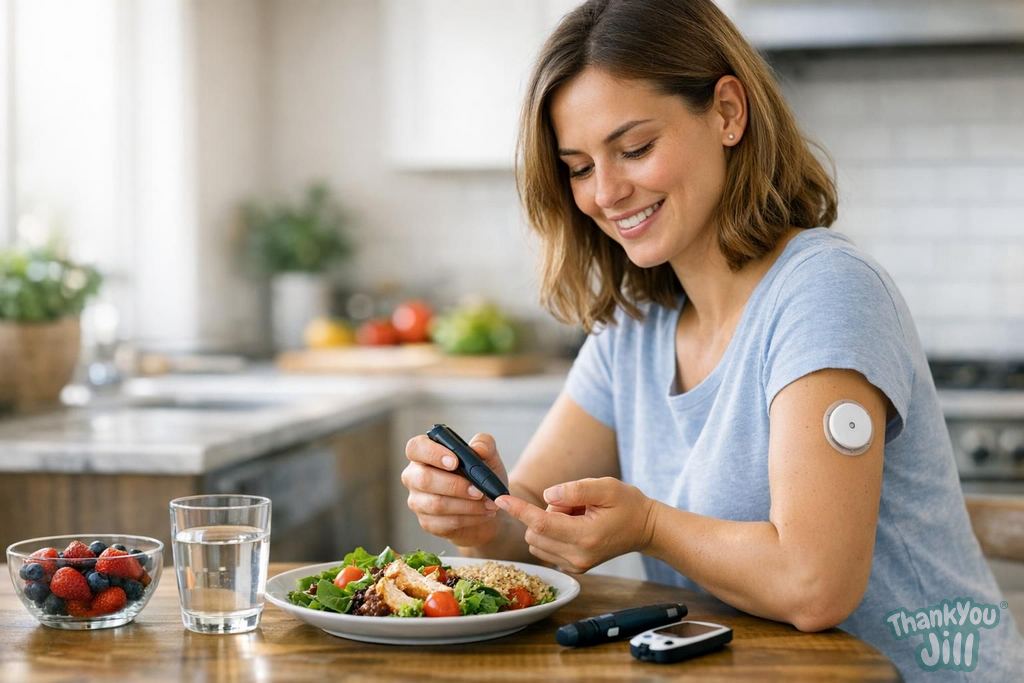
Type 1 diabetes mellitus (T1DM) is an autoimmune disease in which the immune system destroys the beta cells of the pancreas, eliminating the body's own insulin production. It accounts for 5–10% of all diabetes cases. Diagnosis typically occurs in childhood (peak between ages 10 and 14, though it can develop at any age). Managing T1DM requires lifelong exogenous insulin: without it, glucose can't enter cells and accumulates in the bloodstream (hyperglycemia) until diabetic ketoacidosis develops, which can be fatal. Diet in T1DM isn't a "diabetic diet" in the traditional restrictive sense: research over the past 20 years has shown that people with T1DM can eat almost anything as long as they properly balance insulin with carbohydrate intake (and to some extent with protein and fat).
Carbohydrate counting: the foundation
Carbohydrate counting is the fundamental dietary technique for people with T1DM on intensive insulin therapy. The principle: carbohydrates (glucose, fructose, sucrose, starch, lactose) are the primary drivers of post-meal blood sugar spikes. Knowing how many grams of carbs you'll eat lets you calculate the rapid-acting insulin dose needed before the meal. The Insulin-to-Carb Ratio (I:C ratio): each person with T1DM has their own personalized I:C ratio, calculated with their endocrinologist based on individual insulin sensitivity. Example: a 1:10 ratio means 1 unit of rapid-acting insulin for every 10 grams of carbs eaten. If you eat 60 g of carbs at lunch, you'd take 6 units of rapid-acting insulin. The Insulin Sensitivity Factor (ISF): indicates how much blood sugar drops with 1 unit of rapid-acting insulin. Used to correct high blood sugar. Counting carbs in practice: use a food scale to weigh raw foods, learn carb values per 100 g of common foods (dry pasta: 70 g carbs/100 g; bread: 55 g carbs/100 g; cooked rice: 28 g carbs/100 g; apple: 12 g carbs/100 g; carrots: 9 g carbs/100 g), use apps like FatSecret, Carb Manager, or MyFitnessPal to find carb values for unusual foods or packaged items.
How fat and protein affect blood sugar
The traditional idea that "only carbs raise blood sugar" is inaccurate. Protein: 50–60% of ingested protein is converted to glucose through gluconeogenesis in the liver, with a slow blood-sugar-raising effect (2–6 hours after eating). A meal high in protein and low in carbs can cause delayed blood sugar rise that surprises many people with T1DM. Fat: slows gastric emptying, delaying carbohydrate absorption. A fatty meal (pizza, pasta with meat sauce) can cause blood sugar to rise 4–6 hours later than expected. This is why "pizza blood sugar" is notoriously difficult to manage in T1DM. For high-fat or high-protein meals, many endocrinologists recommend the split bolus technique: part of the insulin before the meal, part 1–2 hours later, to cover both the immediate carb absorption and the delayed effect of fat and protein. Glycemic Index (GI): not the most useful parameter for T1DM (compared to total carb counting) but it does influence absorption speed. High-GI foods (sugar, white bread, white rice) cause faster blood sugar spikes; low-GI foods (legumes, whole-wheat pasta, vegetables) cause more gradual rises. For treating low blood sugar: prefer high-GI foods for rapid blood sugar recovery.
Technology in T1DM: CGM and insulin pumps
Technology for T1DM has revolutionized management over the past 10 years. Continuous Glucose Monitor (CGM): subcutaneous sensors that measure interstitial blood sugar every 5 minutes, 24/7. Currently approved in Italy and covered by the national health service for T1DM: Freestyle Libre 3 (Abbott), Dexcom G7, Medtronic Guardian. CGM advantages over traditional finger sticks: continuous monitoring without finger pricks, trend visualization (trend arrow: blood sugar rising, stable, or falling), alarms for low and high blood sugar, data sharing with family or your doctor via app. Automated Insulin Delivery (AID) systems: combine CGM + insulin pump + control algorithm. The algorithm automatically adjusts basal insulin in response to real-time blood sugar. Approved and covered by the national health service in Italy: Medtronic MiniMed 780G (with Guardian 4 sensor), Tandem t:slim X2 with Control-IQ, Insulet Omnipod 5. With AID systems, average HbA1c improves and Time in Range (TIR: percentage of time with blood sugar between 70–180 mg/dL) increases significantly compared to traditional multiple daily injections. The recommended TIR target for T1DM is above 70% (ADA 2024 guidelines).

Type 1 diabetes isn't a dietary prison: it's a complex balancing act that you learn over time, with your endocrinologist's support and the right tools. A CGM showing real-time trends changes life compared to four finger pricks a day. An AID system that automatically adjusts overnight insulin changes your nights. Technology doesn't replace understanding—but it makes understanding much simpler.
Physical activity and blood sugar in T1DM: management
Physical activity is highly recommended in T1DM for cardiovascular, metabolic, and psychological benefits. But it requires specific blood sugar management. Types of exercise and blood sugar effects: aerobic exercise (running, swimming, cycling): lowers blood sugar (increased muscle glucose uptake). Risk of low blood sugar during and 12–24 hours after exercise. Anaerobic/HIIT exercise (weights, sprints): can raise blood sugar in the short term (adrenaline response). Less immediate low blood sugar risk but possible delayed effect. Practical strategies: check blood sugar before, during, and after exercise (CGM is especially useful here), if blood sugar is below 100 mg/dL before exercise: consume 15–20 g of carbs, reduce your pre-meal insulin dose by 25–50% if exercising after eating, consider reducing overnight basal insulin by 20–30% after intense prolonged exercise (risk of delayed nighttime low blood sugar). Your endocrinologist should create a personalized exercise plan: each person with T1DM responds differently to exercise.
Social life with T1DM: restaurants, travel, alcohol
Social life with T1DM requires planning but not isolation. At restaurants: learn to estimate carbs visually (a typical pasta serving at an Italian restaurant: about 80–100 g of carbs). For unusual dishes: use your CGM to see how your blood sugar responds and adjust your insulin dose next time. Always carry glucose for low blood sugar (sugar cubes, fruit juice, glucose gel). Alcohol: alcohol inhibits liver gluconeogenesis and can cause delayed low blood sugar many hours after consumption, especially combined with insulin. Don't drink on an empty stomach. Choose lower-carb drinks (dry wine, light beer, spirits without sugary mixers). Check blood sugar before bed after drinking. Travel: always carry double your insulin and supplies (in two separate bags), store insulin at proper temperature (don't freeze it: cold in planes or car trunks can damage it), carry a letter from your doctor listing your medical devices (useful for airport security checks for CGM sensors and pumps). CGM systems are generally approved by civil aviation but always verify with your specific airline.
Nutrition and HbA1c: targets and strategies
Glycated hemoglobin (HbA1c) reflects average blood sugar over the past 2–3 months. It's the main indicator of blood sugar control. HbA1c target for T1DM (ADA 2024): below 7% (53 mmol/mol) for most adults. More strict (below 6.5%) for those who are pregnant. Less strict (below 8%) for frail elderly or those with frequent low blood sugar episodes. How diet affects HbA1c: reducing post-meal spikes (with low-GI food choices, calibrated carb portions, correct insulin timing) is the main strategy. "Low-carb" diet (less than 130 g carbs daily): can improve blood sugar control by reducing variability, but requires significant adjustment of insulin doses (much less mealtime insulin needed) and very close monitoring. Not suitable for everyone: discuss with your endocrinologist. Mediterranean diet: studies show HbA1c improvement and better lipid profiles in people with T1DM following a Mediterranean diet. The Mediterranean eating pattern (olive oil, fish, legumes, vegetables, nuts, whole grains) is compatible with T1DM and has positive effects on blood sugar control as well as cardiovascular health.
Frequently Asked Questions
How do you calculate the insulin-to-carb ratio in type 1 diabetes?
The insulin-to-carb ratio is personalized and indicates how many units of rapid-acting insulin you need for each gram of carbs eaten. It's calculated with your endocrinologist based on your individual insulin sensitivity—for example, 1 unit for every 10 grams of carbs.
What's the effect of fat and protein on blood sugar in type 1 diabetes?
Protein and fat affect blood sugar in a delayed way: protein can slowly raise it 2–6 hours after eating, while fat slows carb absorption, causing blood sugar spikes delayed by 4–6 hours, complicating insulin management.
When should you use the split bolus technique for insulin?
Split bolus is recommended for meals high in fat or protein, like pizza or pasta with meat sauce. You give part of the insulin before the meal and part 1–2 hours later, to cover both the immediate carb absorption and the delayed effect of fat and protein.
How do you manage physical activity to avoid low blood sugar in type 1 diabetes?
It's important to check blood sugar before, during, and after exercise. If blood sugar is below 100 mg/dL, consume carbs. Reduce your pre-meal insulin dose by 25–50% if you exercise after eating, and consider reducing overnight basal insulin after intense exercise to prevent delayed nighttime low blood sugar.


Latest News




Comments
No comments yet. Be the first!
Leave a comment