


 Italiano
 Français
 Deutsch
 Español
 Português
 Svenska
 Suomi
Suomi
Thermal and Healing Waters
Recognized Properties and Benefits
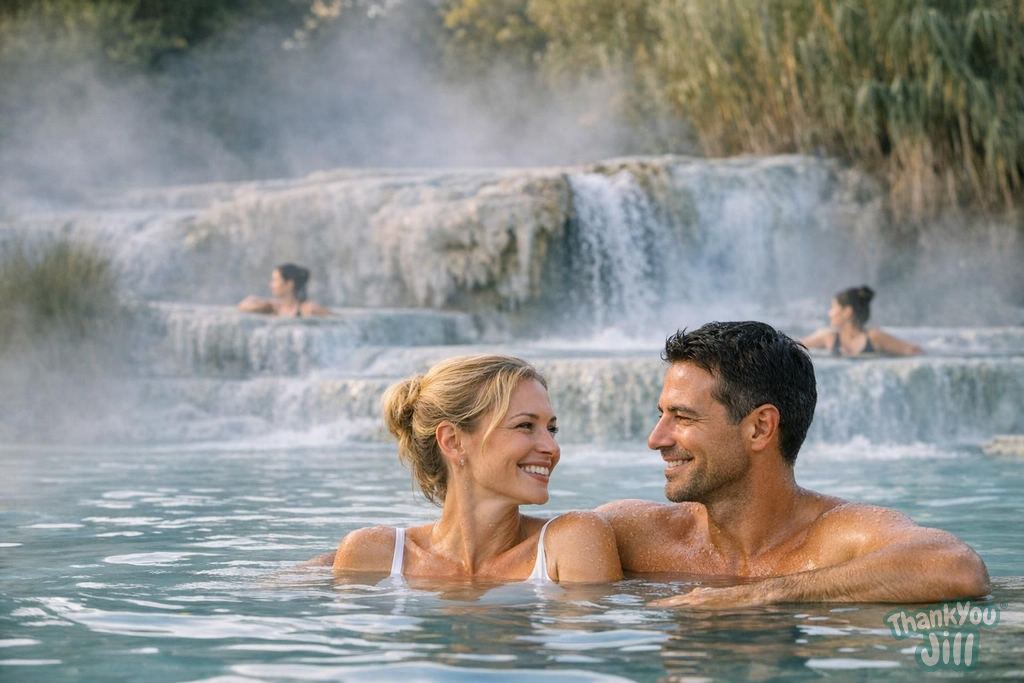
Thermal waters are not simple mineral waters. They are waters that spring forth at elevated temperatures, rich in specific minerals, with healing properties recognized by the Ministry of Health. This isn't folklore: it's medicine.
Italy has hundreds of thermal springs. Some have been famous for millennia. The Romans built spas because they knew those waters were beneficial. Today, science confirms what experience had already demonstrated.
What Makes a Thermal Water
A thermal water must spring forth at a temperature above 20°C and have a mineral composition that produces therapeutic effects. Being warm isn't enough: it must contain specific minerals in precise concentrations.
There are different types of thermal waters: sulfurous (containing sulfur), salsobromoiodic (containing salt, bromine, iodine), bicarbonate, carbonic, radioactive (containing radon), and arsenical-ferruginous. Each has different properties and treats different conditions.
Thermal waters aren't all meant for drinking. Some are used only for baths, mud treatments, and inhalations. Others can be consumed as a cure. It depends on the composition and medical indication.
Sulfurous Waters: For Respiratory Tract and Skin
Sulfurous waters contain sulfur and have that characteristic smell of "rotten eggs." It's not pleasant, but that sulfur is valuable for the respiratory tract.
They're used for inhalations, aerosols, and nasal insufflations. They're effective for chronic sinusitis, bronchitis, pharyngitis, and recurrent ear infections. Sulfur has mucolytic action (breaks down mucus) and antibacterial properties.
On the skin, sulfurous waters help with psoriasis, eczema, and dermatitis. Sulfur baths are traditional for these conditions. It's not a miracle cure, but a real, recognized benefit.
Salsobromoiodic Waters: For Joints and Circulation
These waters contain salt, bromine, and iodine in high concentrations. They're the classic "salty" waters found at seaside spas or certain inland springs.
They're used for baths, mud treatments, and therapeutic pools. They're effective for osteoarthritis, rheumatism, circulatory problems, and rehabilitation after injuries. The heat and minerals help reduce inflammation and improve mobility.
Bromine has a sedative effect on the nervous system. Baths in these waters relax you, reduce stress, and improve sleep. It's not suggestion: it's the effect of bromine absorbed through the skin.
Bicarbonate Waters: For Digestion and Liver
Bicarbonate thermal waters are meant to be drunk. They're the classic "healing waters" you find at thermal springs, with people filling bottles and glasses.
Bicarbonate neutralizes stomach acidity, aids digestion, and stimulates the liver and gallbladder. They're used for gastritis, reflux, slow digestion, and gallstones (under medical supervision).
Drink it in the morning on an empty stomach, often directly from the spring because the effect is better with fresh spring water. Thermal cures involve cycles of 10-15 days.
Radioactive Waters: For Joint Pain
Don't be frightened by the word "radioactive." These waters contain radon, a naturally occurring radioactive gas, in extremely low and absolutely safe concentrations. Exposure is minimal and temporary.
Radon has anti-inflammatory and analgesic effects. It's used for baths and thermal caves. It's effective for arthritic pain, fibromyalgia, and chronic pain. The effect lasts weeks or months after the treatment cycle.
In Italy, the thermal spas of Merano and Lurisia are famous for their radioactive waters. Thousands of people undergo treatment every year with documented results.
How to Take Thermal Cures
You don't go to a spa once and get healed. Thermal cures require cycles: 10-15 consecutive days with daily treatments. Only then does the therapeutic effect manifest and persist.
You need a medical prescription. Your general practitioner or specialist fills out a form with the diagnosis and type of treatment needed. With this form, the National Health Service covers part or all of the cost of the thermal cycle.
After the cycle, the beneficial effect lasts for months. To maintain the benefits, repeat the cycle every year or every two years. It's a maintenance therapy, not a one-time cure.
Drinking Thermal Waters at Home
Some thermal waters are bottled and sold in supermarkets. Ferrarelle, Fiuggi, Uliveto: these are waters that spring from thermal sources and have specific properties.
Drinking these waters at home doesn't replace thermal cures (which include temperature, environment, and duration), but it can help. For example, Fiuggi is traditionally used for kidney stones, Uliveto for digestion.
Check the label to see if it's a thermal spring water. Read the composition information. If it has high bicarbonate, it can aid digestion. If it's low-mineral, it can help your kidneys. It's not magic: it's chemistry.
When Spas Aren't Enough
Thermal waters help, but they don't cure serious diseases on their own. If you have a serious infection, you need antibiotics. If you have severe osteoarthritis, you need medication and physical therapy. Spas are a complementary aid, not the only solution.
Use them as part of a broader therapeutic approach. Combined with medication, physical therapy, proper nutrition, and physical activity. That's when benefits are maximum and lasting.

Thermal waters aren't a trend: they're medicine that springs from the earth. The right water, used the right way, truly heals.
Find the Right Spa for You
Each type of thermal water treats specific conditions. Don't go to the nearest or most famous spa: go to one that treats your problem. Chronic sinusitis? You need sulfurous water. Osteoarthritis? You need salsobromoiodic or radioactive water.
Ask your doctor which type of thermal water is indicated for your condition. They can prescribe the cycle and direct you to the right spa. Many health authorities have agreements with specific spas.
Check for Covered Services
The National Health Service covers one thermal cure cycle per year for certain conditions: respiratory tract, musculoskeletal system, skin, circulatory system, and gastrointestinal tract.
With your doctor's prescription and a small fee (around 50-55 euros), you're entitled to 12 days of treatment. It's an opportunity not to miss. Check with your local health authority.
Prepare for Your Thermal Cycle
A thermal cycle requires time: 10-15 consecutive days with daily treatments lasting 1-3 hours. Plan your vacation, request time off, and schedule in advance. You can't skip days: therapeutic effects require continuity.
Bring comfortable clothing, swimsuit, slippers, and a bathrobe. Also bring a book or something to do between treatments. Spas require waiting and patience.
Realistic Expectations
The first few days you might feel tired or a bit heavy. That's normal: your body is adjusting. Benefits appear around day 5-7 and continue to improve.
Don't expect immediate miracles. Spas work gradually, in depth. Maximum effect occurs 2-3 weeks after the cycle ends and persists for months. It's a slow-release therapy.
Drink Bottled Thermal Waters
If you can't visit a spa but want daily support, choose bottled thermal spring waters. Fiuggi for kidneys, Uliveto for digestion, Ferrarelle bicarbonate for stomach and intestines.
Drink 1-2 liters daily, preferably in the morning on an empty stomach to maximize the effect. It's not as powerful as on-site spa treatments, but it's better than nothing.
Contraindications
Thermal cures aren't for everyone. If you have acute infections, fever, active tumors, high-risk pregnancy, or serious heart problems, you can't take thermal cures. You need stable conditions.
Always ask your doctor before booking. Some conditions require special precautions. Don't do thermal cures on your own.
Maintain the Benefits
After your thermal cycle, continue caring for yourself. Regular physical activity, healthy eating, and stress management maintain the spa's benefits.
Consider repeating the cycle the following year. Many people do annual thermal cures as preventive maintenance. It's an investment in your long-term health.
Spas and Relaxation
Spas aren't just therapy: they're also relaxation. Stepping away from routine, immersing yourself in warm water, taking time for yourself: it has therapeutic value for your mind as well as your body.
Chronic stress worsens any illness. Spas force you to stop, slow down, and listen to your body. That alone is worth the trip.
Frequently Asked Questions
What's the difference between sulfurous thermal waters and salsobromoiodic waters in terms of therapeutic benefits?
Sulfurous waters are rich in sulfur and are indicated for respiratory and dermatological problems, while salsobromoiodic waters contain salt, bromine, and iodine and are useful for osteoarthritis, rheumatism, and circulatory disorders, also offering a relaxing effect on the nervous system.
How can you tell if a thermal water is suitable for drinking or only for baths and inhalations?
Whether a thermal water can be drunk depends on its mineral composition and medical indications. For example, bicarbonate waters are drunk for digestive problems, while others like sulfurous waters are used only for baths and inhalations because of their composition and therapeutic purpose.
When is it worth doing a thermal cure cycle and how long do the benefits last?
It's worth doing a 10-15 day consecutive thermal cure cycle with daily treatments to obtain lasting therapeutic effects. Maximum effect appears 2-3 weeks after the cycle ends and can last for months, with the possibility of repeating the cycle annually to maintain benefits.
What happens if you interrupt a thermal cure cycle before completion?
Interrupting a thermal cure cycle before completion significantly reduces therapeutic effectiveness, since benefits are only obtained with continuous and prolonged treatments. Continuity is essential to allow your body to adapt and for the healing effects of thermal waters to emerge.

Latest News




Comments
No comments yet. Be the first!
Leave a comment