
 English
 Italiano
 Français
 Deutsch
 Español
 Português
 Svenska
 Suomi
Suomi
How to Drink More Water Every Day Effortlessly
Simple strategies to build an automatic habit
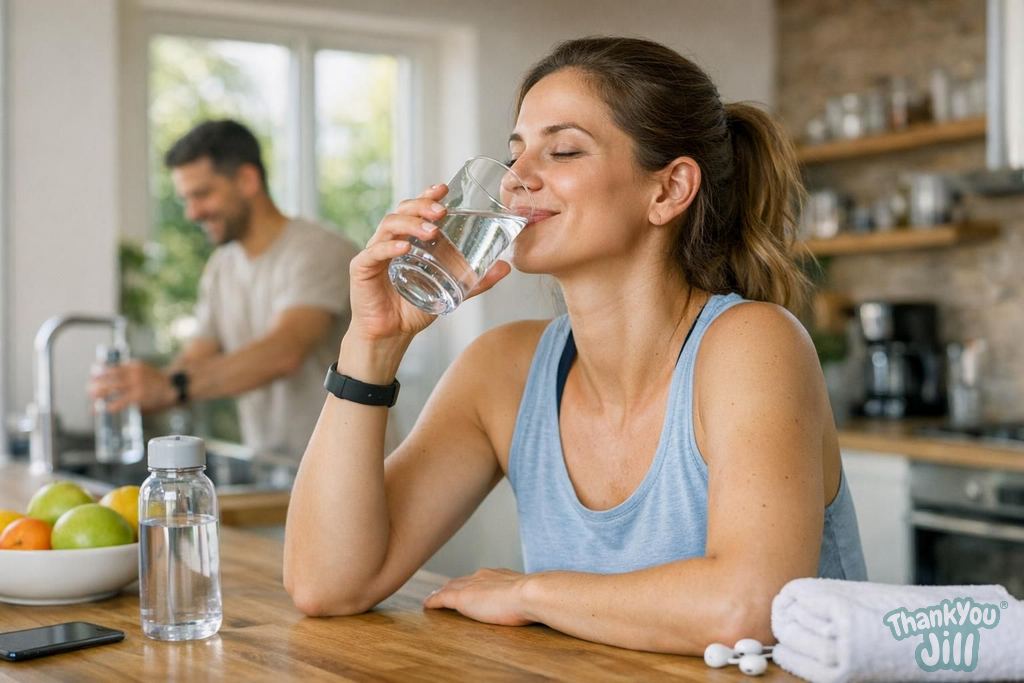
You know you should drink more. You've known it for years. Every morning you tell yourself "I'll drink 2 liters today." By evening, you've had half a liter. You forget, you're busy, you're not thirsty. And the next day, you repeat the same pattern.
The problem isn't knowledge. It's habit. Knowing what to do isn't enough. You need to make the behavior automatic, so easy it happens without thinking. And that takes strategy, not willpower.
Why willpower alone doesn't work
Willpower is a limited resource. You have it in the morning, then it depletes throughout the day. By evening you're tired and your willpower is gone. That's why you "decide" to drink in the morning but forget by evening.
Habits, on the other hand, work without willpower. They're automatisms your brain executes without conscious thought. Brushing your teeth, tying your shoes, driving—these are habits. You don't need willpower to do them.
Drinking water needs to become a habit. Not "remember to drink," but "I drink automatically when X happens." That way it happens even when you're tired, stressed, or distracted.
The trigger rule: link drinking to an event
A habit forms by associating a behavior with a trigger. The trigger is something that happens regularly and reminds you to take action.
Examples of triggers for drinking water: waking up (trigger) → drink a glass, before every meal (trigger) → drink a glass, after using the bathroom (trigger) → drink a glass, when your phone alarm goes off (trigger) → drink a glass.
Choose 3-4 triggers that happen every day. Link a glass of water to each one. Within a few weeks it becomes automatic: the trigger fires, you drink without thinking.
Make water visible and accessible
If water is hidden in a cabinet or the fridge, you have to make an effort to drink it. If it's on the table in front of you, you drink it without thinking. The rule is: out of sight, out of mind. What you don't see doesn't exist.
Strategy: buy 3-4 bottles or water bottles. One in the kitchen, one in the living room, one on your office desk, one in your bedroom. Wherever you are, you have water within reach.
Fill them the night before. In the morning they're there, ready. Easier = more likely you'll drink. Every small convenience increases the odds your habit will stick.
Use marked containers
Buy a 2-liter bottle with markings that show the hours. 8:00 AM = first quarter, 12:00 PM = halfway, 4:00 PM = three quarters, 8:00 PM = finished. You have a clear visual goal.
Every time you look at the bottle, you see if you're ahead or behind. Immediate visual feedback motivates you to drink. It's like a game: reach the next mark.
Alternatives: smartphone apps that track how much water you drink. Log each glass, watch your progress. Some apps send notifications as reminders. Use them if they work for you.
The full glass technique
Every time you finish a glass, refill it right away. Never leave the glass empty. That way it's always ready for the next sip.
Empty glass = temptation not to refill it = low probability of drinking. Full glass = temptation to take a sip = habit reinforced.
Small trick, big difference. Try it for a week and you'll see you drink much more without noticing.
Add flavor to make water more appealing
If water bores you, you'll drink less. Simple. Make it more enjoyable: add lemon slices, lime, cucumber, strawberries, mint leaves, ginger. Change it daily for variety.
You don't need sugar. The natural flavor of fruit makes water interesting without adding calories. And you drink more because it's more pleasant.
Some prefer sparkling water for the bubbles. If it helps you drink more, that's fine. Alternate between sparkling and still so you don't get bored.
Create a morning ritual
The first thing you do when you wake up: drink two glasses of water. Before coffee, before a shower, before anything else. Make it your non-negotiable ritual.
After a week, your body anticipates it. You wake up and you're thirsty. The ritual has solidified. You've drunk 400-500 ml before you even start your day. You're already a quarter of the way to your goal.
Prepare the night before: put two glasses or a full bottle on your nightstand. When you wake up, they're there. Zero effort, maximum chance of success.
Turn drinking into a social moment
Involve other people. Suggest to colleagues: "Should we take a water break every 2 hours?" Fun, social, effective. Drinking together becomes a moment of pause and connection.
With family: "Who drinks 2 liters today?" Have a competition. Kids love competitions. So do adults, if they're honest. A little healthy competition motivates everyone.
Online groups or apps: there are communities of people motivating each other to drink more. Sharing progress with others reinforces the habit.
Celebrate small wins
You drank 2 liters today? Give yourself a high five. It sounds silly, but your brain responds to positive reinforcement. Celebrating, even symbolically, solidifies the habit.
Keep a calendar. Every day you hit your goal, mark an X. After a week of consecutive X's, you'll see the chain and won't want to break it. It's the "don't break the chain" technique.
After a month of success, reward yourself. Not with food (it doesn't work as positive reinforcement), but with something you want: a book, a movie, a spa day. You've reached your goal, you deserve a reward.
What to do when you slip up
One day you forget, you drink only 1 liter instead of 2. It doesn't matter. You haven't failed. It's one day, not the end of your habit. Start again the next day without guilt.
A habit solidifies through consistent repetition, but it tolerates mistakes. The key is to get right back on track, not give up because "I've already messed up anyway."
Perfectionism kills habits. Better 80% consistent success than 100% for a week then nothing. Be kind to yourself. Progress, not perfection.

Remembering to drink is work. Building the habit of drinking is freedom. Your brain does the work, you get the benefits.
The 21-day plan
People say it takes 21 days to build a habit. It's not scientific (solid habits take 30-60 days), but 21 days is a good start.
Choose 3 triggers: wake-up, before lunch, before dinner. At each trigger: one glass of water (250 ml). That's 750 ml guaranteed. Add water between meals and you'll reach 1.5-2 liters.
For 21 days, don't skip once. Not even one day. Use reminders, sticky notes, apps, whatever it takes. But those three glasses have to happen. After 21 days, we evaluate.
Use combined strategies
Don't rely on just one technique. Use 3-4 strategies together: marked bottle visible + reminder app + morning ritual + flavored water. That way if one fails, the others hold up.
Everyone is different. Try different techniques the first week. Then keep what works for you and drop the rest.
Adapt to your days
If you work in an office: bottle on your desk, reminder every 90 minutes. If you're on the go: water bottle in your backpack, drink when you wait (bus, line, waiting room). If you're at home: bottle in every room.
The strategy should fit your life, not the other way around. If the strategy is inconvenient, you won't follow it. Find the easiest way for you.
Bring technology into it
Apps like "Water Reminder," "Hydro Coach," "MyWater" are free and work well. They send you notifications, track your progress, motivate you with badges and goals.
If you have a smartwatch: set reminders to drink. Subtle vibrations every hour. You drink, confirm on the app, done. No mental effort.
Make a pact with yourself
Write on a piece of paper: "For the next 21 days, I will drink 2 liters of water daily. No excuses. This is my commitment to my health." Sign it. Post it where you see it every day.
It sounds trivial, but a written and signed commitment has more psychological weight than a vague thought. The paper watches you every day, reminding you of your pact.
Find your why
Why do you want to drink more? "Because it's good for you" isn't enough. You need an emotional reason: more energy to play with your kids, better skin to feel good about yourself, fewer headaches to work better.
Write down your why. Reread it when motivation dips. A strong why keeps you in the game even when things get tough.
Share the journey
Tell someone you're building this habit. A friend, partner, colleague. Social accountability helps. You don't want to let down someone who knows your goal.
Even better: find a buddy. Do it together. You motivate each other, keep each other accountable, celebrate wins together.
After 21 days: evaluate and adjust
After 3 weeks, pause and reflect: is the habit becoming automatic? Are you drinking without thinking? Or is it still an effort?
If it's still hard work, adjust your strategies. Try different techniques. If it's starting to feel automatic, keep going for another 21 days. At 6 weeks the habit is much more solid.
The journey never really ends. But after 2-3 months, drinking becomes as natural as breathing. You don't think about it anymore. Your body asks for water, you give it water. Simple.
Frequently asked questions
How can I create an automatic habit to drink more water every day?
Linking drinking water to daily triggers like waking up, before meals, or after using the bathroom helps make the habit automatic. Using 3-4 regular triggers makes the behavior easier without needing willpower.
What strategies make it easier to remember to drink water throughout the day?
Keeping bottles or water bottles visible in multiple locations, using marked containers with hourly lines, and using reminder apps helps maintain motivation and facilitate regular water consumption.
How can I make water more appealing to drink more without adding calories?
Adding lemon slices, lime, cucumber, strawberries, mint, or ginger to plain water makes it tastier without added sugars, increasing the desire to drink without extra calories.
What should I do if I can't drink the planned amount of water one day?
Don't treat one day of lower consumption as a failure. The important thing is to get right back to the habit the next day without guilt, because consistency over time solidifies the habit.

Latest News



Comments
No comments yet. Be the first!
Leave a comment