


 Italiano
 Français
 Deutsch
 Español
 Português
 Svenska
 Suomi
Suomi
How Much Water Should You Drink Daily? Your Personalized Answer
Simple calculation based on weight and activity level

You're in the office, air conditioning blasting, and you're drinking very little. You get home exhausted with a headache. It's not the work—it's dehydration from air conditioning. Every environment impacts your water balance. And ignoring it costs you health and energy.
Air humidity, temperature, ventilation—everything affects how much water you lose without realizing it. Adjusting your hydration to your environment isn't a luxury: it's a necessity.
On an airplane: the flying desert
Cabin air has 10-20% humidity. A desert has 20-30%. On a plane, the air is drier than the Sahara. You lose fluids through breathing and skin without visibly sweating.
On a 3-hour flight you can lose 500-1000 ml of fluids. On a 10-hour intercontinental flight: 2-3 liters. You arrive at your destination exhausted—it's not just jet lag, it's dehydration.
Strategy: drink 250 ml every hour of flight. Skip alcohol and coffee (they dehydrate you further). Bring an empty bottle and fill it after security. Use saline nasal spray for dry mucous membranes.
The day before your flight: drink 2.5-3 liters to start super-hydrated. During the flight: small, continuous sips. After landing: rehydrate generously over the next 4-6 hours.
Office with air conditioning
Air conditioning removes moisture from the environment. Dry air causes water to evaporate from your skin and respiratory passages. You lose fluids without sweating.
Classic symptoms from an air-conditioned office: dry eyes, dry skin, afternoon headaches, fatigue. Many people think it's stress. No, it's environmental dehydration.
Strategy: keep a 1.5-liter bottle on your desk. Goal: finish it by end of day. Use a USB personal humidifier (€20-30) to add moisture around you. Take breaks every 2 hours to drink and move.
Winter heating
Home or office heating dries the air just like air conditioning. In winter you think you need less water because you're not hot. Wrong: dry air dehydrates you anyway.
Nasal and throat membranes dry out. You become more vulnerable to colds and flu. Your skin cracks. All because of air that's too dry.
Strategy: drink at least 2 liters daily even in winter. Use humidifiers at home and in the office (ideal: 40-60% humidity). Drink warm herbal teas that hydrate and warm you at the same time.
Mountains and altitude
Above 2000 meters, the air is drier and pressure is lower. You breathe faster to compensate for less oxygen. Each breath carries away more moisture than normal.
Mountain sickness (AMS) is partly caused by dehydration. Headaches, nausea, fatigue: symptoms that overlap with dehydration.
Strategy: drink 30-50% more than normal. If you drink 2 liters at sea level, drink 3 liters in the mountains. Start drinking more the day before you climb. Avoid alcohol at altitude (it makes everything worse).
Hot and humid climate
Paradoxically, high humidity makes it harder to cool down. Sweat doesn't evaporate well (the air is already saturated with water), so your body sweats more trying to cool itself. Result: you lose more fluids.
In the tropics or summer in humid areas (coastal regions, the Po Valley in summer): fluid loss is maximum. You sweat a lot and the sweat doesn't evaporate—it stays on your skin. You feel sticky and dehydrated.
Strategy: drink 3-4 liters daily. Add electrolytes (mineral water or a pinch of salt in water). Avoid the hottest hours (11 am-4 pm). Take frequent showers to lower your core body temperature.
Dry and hot climate
Deserts, arid zones, Mediterranean summer: humidity is low, sweat evaporates quickly. You don't feel sweaty, but you're losing fluids rapidly. It's invisible dehydration.
Many people underestimate the loss because they don't feel sweaty. But if you're in the sun in a dry climate, you can lose 1-2 liters per hour without noticing.
Strategy: drink preventively, don't wait for thirst. Cover your skin with light clothing (prevents direct evaporation from skin). Dampen a cloth and place it on the back of your neck. Stay in the shade during midday hours.
Saunas and steam baths
In a sauna (80-100°C) you lose fluids quickly. In 15 minutes you can lose 500 ml. In a steam bath (40-50°C, 100% humidity) you sweat heavily even though the temperature is lower.
Many people think they're "detoxifying" by sweating. Actually they're just losing water and salts, not "toxins." Your liver and kidneys eliminate toxins, not sweat.
Strategy: drink 500 ml before entering. Exit after 10-15 minutes, drink 250-500 ml, rest 10 minutes, then re-enter if you want. Total: no more than 30-40 minutes. Afterward, rehydrate with 1-1.5 liters over the next 2 hours.
Environments with physical work
Construction sites, factories, professional kitchens, warehouses: jobs where you move a lot, often in heat. Fluid loss is high.
Many workers drink too little to "not waste time going to the bathroom." But dehydration reduces concentration and productivity. More accidents, more mistakes, more fatigue.
Strategy: bring a 2-3 liter bottle to work. Goal: finish it. Drink every 30 minutes, not just during breaks. The company must guarantee access to water. If it doesn't, that's a safety violation.
Home: the environment you underestimate
You think you're safe at home. But if you have winter heating or summer air conditioning, the air is dry. If you cook, you lose fluids from the heat. If you clean, you sweat.
Many people at home drink very little because they're distracted by TV, remote work, chores. By evening they've had 500 ml. Chronic dehydration guaranteed.
Strategy: keep a bottle in every room where you spend time. In the living room, bedroom, kitchen. Always visible. Set reminders every 2 hours to drink.

Every environment steals water from you in different ways. Airplanes dry you out, heat makes you sweat, the office dehydrates you silently. Adapt or suffer.
Survival kit for every environment
Airplane: empty bottle to fill after security, saline nasal spray, hydrating face mask for long flights.
Office: 1.5L graduated bottle, USB humidifier, herbal tea bags for variety.
Mountains: 1L thermal water bottle, electrolyte supplements, thermos with warm herbal tea.
Beach: insulated bag with 2-3 liters of water, high-water-content fruit (watermelon), wide-brimmed hat.
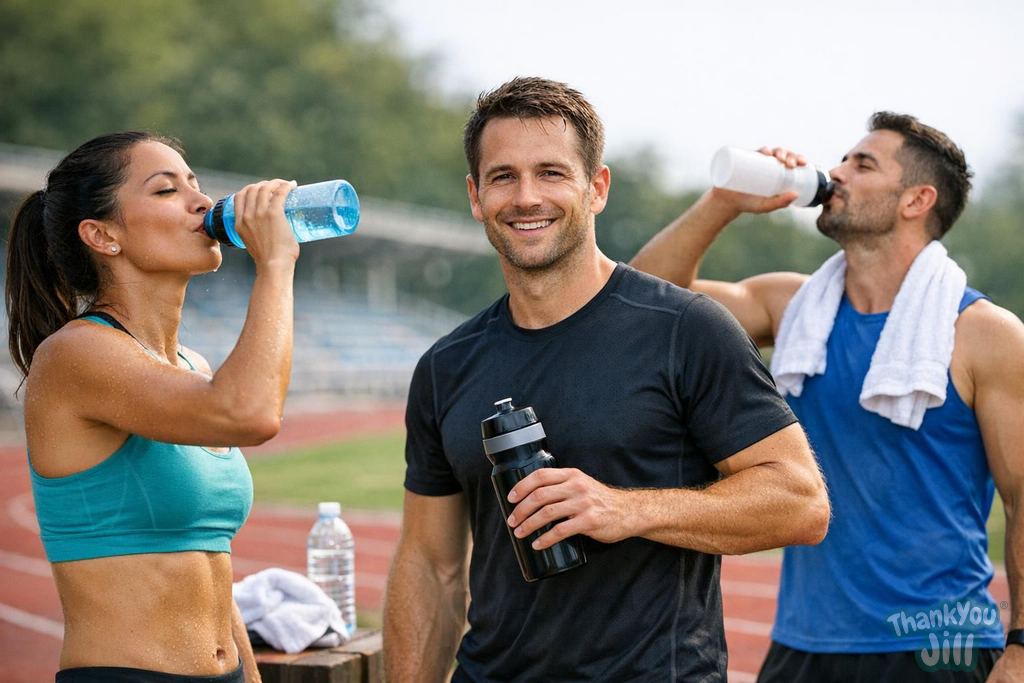
Gym/sports: 1L water bottle with sports drink, towel to dry sweat, change of dry clothes.
Monitor your environment
Buy a hygrometer (€15-20) that measures humidity and temperature. Keep it at home and in the office. Ideal humidity: 40-60%. If it's below 30%, you're in a very dry environment. Increase your water intake by 20-30%.
Adjust quantities in real time
Don't rigidly follow "2 liters daily." Adapt: day in air-conditioned office = 2.5 liters. Day in the mountains = 3 liters. Relaxed day at home = 1.8 liters. Day at the beach = 3.5 liters.
Use urine color as feedback. Pale yellow = perfect. Darker = drink more for that environment.
Protect your skin from within
Creams and lotions hydrate skin from the outside. Water hydrates it from the inside. In dry environments you need both. Drink generously + use moisturizing cream. Winning combo.
For frequent travelers
If you fly often for work: make a plan. Keep a reusable bottle always in your bag. Nasal spray in your toiletries case. Electrolyte supplements in single-dose packets (convenient for travel).
When you arrive at the hotel, before unpacking: go to the supermarket and buy 6 bottles of 1.5L water, keep them in your room. That way you always have a supply.
Winter: don't let your guard down
Many people drink less in winter. Classic mistake. Heating dries the air as much as air conditioning. Drink the same amounts, just in different forms (more warm herbal teas, less cold water).
Supporting technology
Smartphone apps that send notifications based on weather. If it's hot, it tells you to drink more. If you're at altitude, it reminds you every hour. Some apps connect with your phone's GPS and altimeter.
Smartwatch with hydration reminders. Vibrates every hour. You confirm you've drunk. It tracks and gives you statistics. Useful for those who forget.
Share with colleagues and friends
In the office: propose a "hydration challenge." Whoever drinks 2 liters every day for a week wins (even just the satisfaction). Positive social pressure motivates everyone.
In your family: everyone with their own personal bottle. At dinner, compare: who finished their quota? Turn hydration into a family game.
Frequently asked questions
How do I adjust my water intake during a flight to avoid dehydration?
During a flight, the air is very dry and you lose a lot of fluids. It's recommended to drink about 250 ml every hour of flight, avoid alcohol and coffee, and rehydrate generously over the 4-6 hours following landing.
What strategies should I use to maintain good hydration in air-conditioned or heated environments?
In air-conditioned or heated environments, dry air increases fluid loss. It's helpful to drink at least 2 liters daily, use personal humidifiers, keep a water bottle always within reach, and take regular breaks to hydrate.
How much does altitude affect water intake, and how do I prevent dehydration in the mountains?
Above 2000 meters, dry air and low pressure increase fluid loss. You should drink 30-50% more than normal, starting the day before you climb, and avoid alcohol to prevent dehydration and mountain sickness.
How can I tell if I'm dehydrated in hot and humid climates, and what precautions should I take?
In hot and humid climates, sweat doesn't evaporate well, causing high fluid loss even if you don't feel thirsty. It's important to drink 3-4 liters daily, add electrolytes, avoid the hottest hours, and take frequent showers to lower your core body temperature.
Latest News




Comments
No comments yet. Be the first!
Leave a comment