


 Italiano
 Français
 Deutsch
 Español
 Português
 Svenska
 Suomi
Suomi
Water and Headaches
The Underestimated Connection
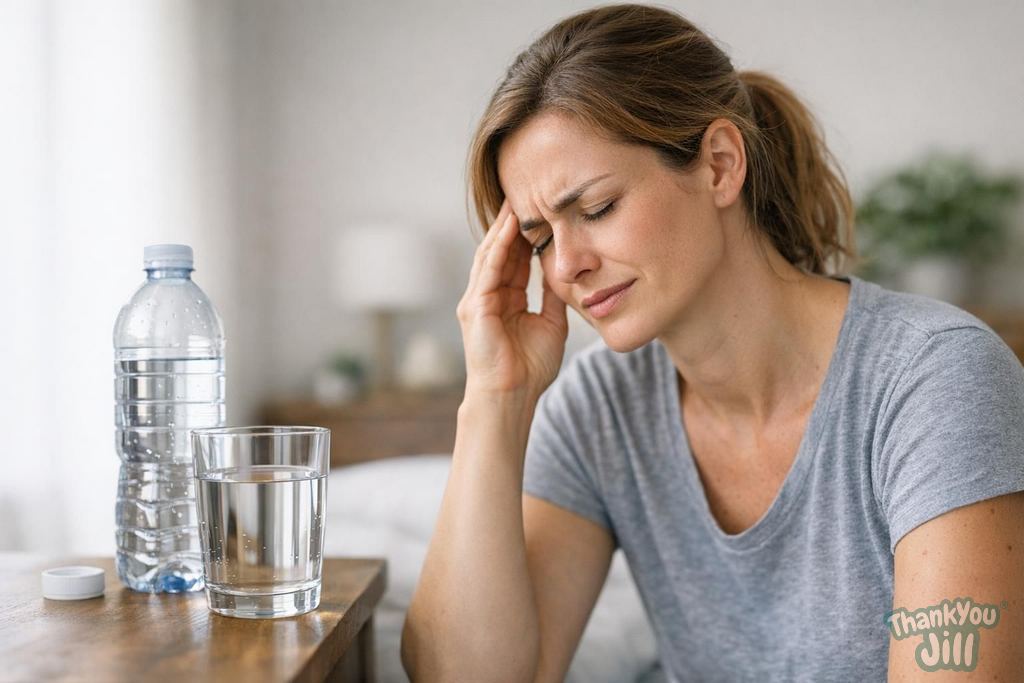
Reach for a painkiller. It's almost automatic when a headache hits. But how many times was that pill really necessary? How many times would the headache have disappeared with a glass of water and twenty minutes of patience? Dehydration is one of the most frequent causes of headaches, yet it's systematically underestimated. Most people don't even think about it.
How Dehydration Causes Headaches
The mechanism is straightforward. Your brain is surrounded by cerebrospinal fluid, a kind of liquid cushion that protects and nourishes it. When your body loses fluids, this cushion shrinks too. Your brain contracts slightly and begins to pull on the meninges—the membranes that wrap around it.
The meninges are rich in pain receptors. When they're stretched, even slightly, they send pain signals. The result is dehydration headache: typically a throbbing sensation, often on both sides of the head, that worsens with sudden head movements and improves when lying down.
You don't need to be severely dehydrated. Even just a 1–2% loss of fluids relative to body weight can trigger a headache in sensitive people. For a 154-pound adult, that's less than a liter and a half of fluid loss.
Recognizing Dehydration Headaches
They have some telltale characteristics. They appear after a period of poor hydration: in the morning (after 8 hours without drinking), in the afternoon (after an intense morning of work without drinking enough), or after sports or physical activity. They improve or disappear within 30 minutes of rehydrating. Often they're accompanied by dark urine, dry mouth, and mild fatigue.
It's not always so straightforward: many headaches have mixed causes (stress + dehydration + posture). But dehydration is almost always one of the contributing factors, and often the easiest one to fix.
Alcohol and Headaches: The Mechanism
The classic post-alcohol headache isn't just "being hungover." It's primarily dehydration. Alcohol is a potent diuretic: it blocks ADH (antidiuretic hormone), which normally tells your kidneys to retain water. With ADH blocked, your kidneys produce far more urine than usual. For every gram of alcohol, your body can lose up to 10 ml of excess fluid.
An evening with three glasses of wine can cause you to lose half a liter more fluid than normal. The next day's headache is your brain desperately asking for water.
Caffeine: Friend or Foe?
Caffeine has an ambivalent relationship with headaches. In small doses, it constricts blood vessels in the brain and can reduce headaches (which is why some aspirin products contain caffeine). But caffeine is also a mild diuretic: consumed in excess, it increases fluid loss and can contribute to dehydration.
The paradox: your morning coffee can temporarily relieve caffeine-withdrawal headaches, but if you don't drink enough water throughout the day, that same coffee contributes to the dehydration that will cause another headache in the afternoon.
The Water Test Before Pain Relief
A practical rule backed by medical evidence: before taking any painkiller for a headache, drink 500 ml of water and wait 20–30 minutes. If the headache lessens or disappears, it was dehydration. You've avoided a drug, solved the real cause, and saved money.
Headache experts agree: this simple diagnostic test is safe, useful, and often effective. It doesn't delay treatment of serious headaches, but it prevents unnecessary medication for minor ones.
Migraines and Hydration
Migraines are different from ordinary tension headaches. They're a complex neurological condition with multiple triggers. Dehydration is one of the documented triggers. It's not the only cause, and staying hydrated won't stop a migraine already underway, but maintaining good hydration reduces the frequency of episodes in many migraine sufferers.
How Much Water Do You Need to Prevent Headaches?
For people who frequently suffer from dehydration headaches: increase your intake to 2–2.5 liters per day, spread evenly throughout the day. Don't wait until you're thirsty. If you know you have a demanding day ahead, start drinking early in the morning. If you drink alcohol, have a glass of water with each drink during the evening and 500 ml before bed.

Before you open that bottle of painkillers, try 500 ml of water and twenty minutes of patience. Often that headache isn't stress—it's thirst you didn't know you had.
Apply the 500 ml Rule Before Taking Pain Relief
Every time you get a headache, before doing anything else, drink 500 ml of water (two large glasses) slowly and steadily. Sit down, relax, and wait 20–30 minutes. If the pain decreases or disappears: it was dehydration. Make a note of it. After a few weeks, you'll see how often this happens and naturally reduce your medication use.
Preventive Hydration on High-Risk Days
You already know which days are riskier: hot summer days, intensely busy workdays, afternoons packed with back-to-back meetings, evenings with alcohol. In these cases, don't wait for the headache to arrive. Get ahead of it: drink an extra 500 ml in the morning on hot or intense days, a glass of water every hour during demanding work, and a glass of water for each alcoholic drink during the evening.
Before Bed After Drinking Alcohol
If you've had drinks during the evening, drink 400–500 ml of water before bed. It won't eliminate the headache, but it will reduce it significantly. Your body uses sleep hours to restore its fluid balance if you give it the liquids it needs.
Keep a Headache Diary
For people with frequent headaches (more than two or three a week), a simple diary is invaluable. Note: the time of the headache, how much you drank in the hours before, whether your urine was clear or dark, and what activity you were doing. Within two weeks, you'll clearly see the patterns. Many people discover that 80% of their headaches directly correlate with days of poor hydration.
Chronic Headaches: When to See a Doctor
If increasing your hydration doesn't reduce how often you get headaches, or if the pain is very intense, sudden, accompanied by fever or neck stiffness, or if it changes from your usual pattern: don't self-manage. See your doctor. Headaches can have various causes, and some require specialist evaluation.
Frequently Asked Questions
How can I tell if my headache is caused by dehydration?
A dehydration headache appears after periods of poor fluid intake, improves within 30 minutes of rehydrating, is often throbbing and bilateral, and may be accompanied by dry mouth, dark urine, and mild fatigue.
What's the simple test to check if a headache is due to thirst?
Before taking a painkiller, drink 500 ml of water and wait 20–30 minutes. If the headache decreases or disappears, it was likely caused by dehydration, avoiding unnecessary medication.
How much does alcohol contribute to dehydration headaches?
Alcohol is a potent diuretic that can cause you to lose up to 10 ml of fluid for every gram consumed. Drinking alcohol without replenishing water can cause significant dehydration and the classic next-day headache.
How can I prevent dehydration headaches during demanding days or when drinking alcohol?
Spread your intake of 2–2.5 liters of water throughout the day, drink a glass of water with each alcoholic drink, consume an extra 500 ml in the morning on hot or intense days, and drink 400–500 ml of water before bed after drinking alcohol.
Latest News




Comments
No comments yet. Be the first!
Leave a comment