


 Italiano
 Français
 Deutsch
 Español
 Português
 Svenska
 Suomi
Suomi
Water for Newborns
Which to choose and why
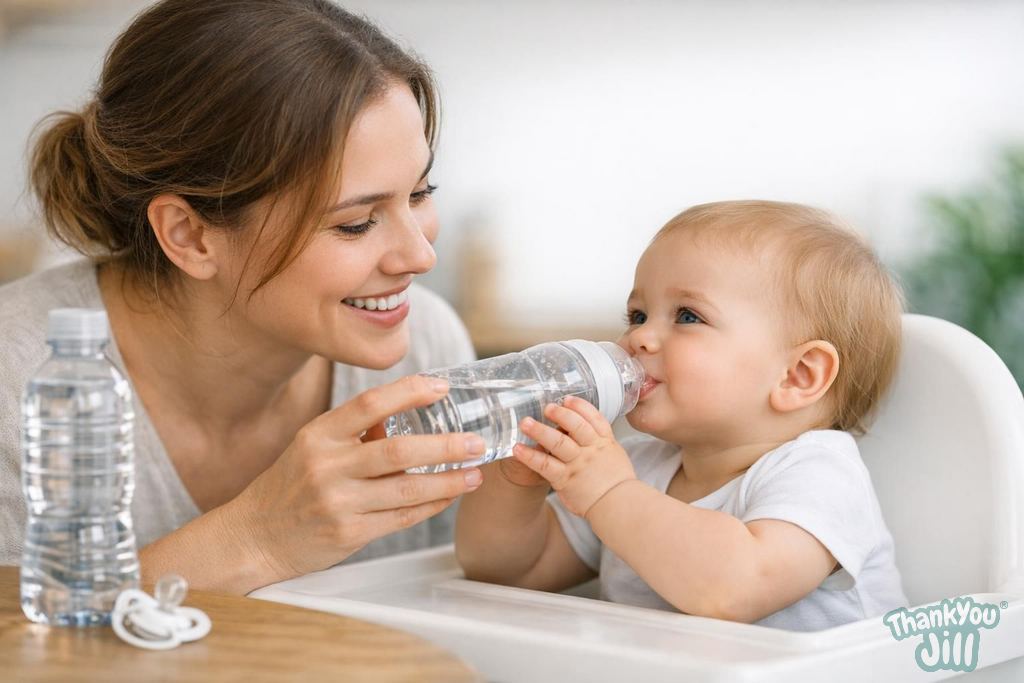
When a baby is born, every choice becomes important. Even water. A newborn's kidneys are still immature and cannot handle a high mineral load. That's why water that's fine for you isn't fine for your child.
This isn't fearmongering: it's physiology. The first months of life are critical. Choosing the right water to prepare formula or give your newborn to drink is a responsibility that shouldn't be taken lightly.
Why newborns need special water
A newborn's kidneys are like a filter still breaking in. They can't concentrate urine the way adult kidneys do. If water contains too many minerals, your baby's kidneys have to work too hard to eliminate them.
This overload can cause dehydration (because the baby loses more water trying to eliminate minerals), digestive problems, and in extreme cases, kidney damage. That's why minimally mineralized water is necessary.
Kidney maturation is only complete after the first year of life. Until then, the safety margin must be wide. Better water that's too light than water loaded with salts.
What to look for on the label
Water for newborns must be "minimally mineralized." This means a residue of less than 50 mg/l. It's clearly written on the label: "minimally mineralized water—suitable for preparing infant food."
Also check the sodium: it should be under 20 mg/l, preferably under 10 mg/l. Newborns don't need added sodium; they get it from breast milk or formula.
Check for nitrites and nitrates: they should be virtually zero. Nitrites are particularly dangerous for newborns because they can cause methemoglobinemia, a condition that reduces oxygen in the blood. Don't take chances with these values.
Recommended brands
In Italy, the waters that explicitly state they're suitable for newborns are few: Lauretana, Sant'Anna, Plose, Levissima. All have very low residue (under 30-50 mg/l) and controlled composition.
You don't need to buy expensive water. The brands mentioned are affordable and perfect. What matters is the residue and the values on the label, not the price or advertising.
Don't use medium-mineral or salt-rich waters for newborns. Even if the ads show smiling babies, always check the label. Marketing isn't science.
Tap water for newborns: yes or no?
It depends on where you live. Tap water in some parts of Italy is minimally mineralized and fine for newborns. In other areas, it's too loaded with salts. You need to know your water supply's values.
Call your local health authority or municipality and ask for the data. If the residue is under 50 mg/l, sodium under 20 mg/l, and nitrites/nitrates are negligible, you can use it. Otherwise, use bottled water.
Even if tap water looks good on paper, boil it for formula preparation at least in the first 3-4 months. This eliminates any bacteria that might be present in your home's pipes.
When to start giving water
Exclusively breastfed newborns don't need extra water until 6 months. Breast milk is already 88% water and covers all hydration needs.
Babies on formula may need small sips of water between meals, especially in summer. But always and only minimally mineralized water. Never regular water.
After 6 months, when weaning starts, you can offer water regularly. But always light water. Only after one year can you gradually switch to normal oligomineral waters.
How to prepare formula
Always use minimally mineralized water. Boil it and let it cool to 70°C (not more, not less). At 70°C you kill any bacteria present in the powdered formula, but you don't destroy nutrients.
Don't use the microwave to heat water or bottles. The heat isn't uniform and can create hot spots that burn your baby's mouth. Use a traditional bottle warmer or water bath.
Prepare the bottle fresh. Don't store prepared formula for hours. Bacteria grow quickly. If you must prepare it in advance, refrigerate it immediately and use it within 24 hours.
Is boiled tap water enough?
Boiling kills bacteria, but it doesn't remove minerals. If your tap water has high residue, boiling it doesn't make it suitable for newborns. In fact, as water evaporates, minerals become even more concentrated.
Boiling only works if the water is already light (under 50 mg/l residue) and you want to sterilize it. If the water is hard or medium-mineral, boiling doesn't solve it: you need to use bottled water.
After the first year
After 12 months, kidneys are more mature. You can gradually switch to oligomineral waters (50-500 mg/l). You no longer need minimally mineralized water, but still avoid medium-mineral types.
Until age 3, prefer light oligomineral waters (100-200 mg/l) with low sodium. From age 3 onward, they can drink the same water as adults, as long as it's good quality.

Your baby's kidneys are fragile. Water that's too loaded strains them. Always choose minimally mineralized in the first months.
Check your water right now
If you have a newborn or are about to have one, go to the supermarket today. Buy minimally mineralized water. Check that the label says "residue under 50 mg/l" and "suitable for infants."
Even if water costs 0.20-0.30 euros more per liter, this isn't where you should save. Your child's kidney health is priceless.
Keep a supply at home
Don't wait until you run out to buy more. Always keep at least 10-15 liters in stock. At night or on holidays you might not find open stores. And your newborn needs safe water at all times.
Store bottles in a cool, dark place, away from heat sources. Always check the expiration date. Bottled water doesn't really expire, but after the indicated date the plastic might release substances.
If you travel or are away from home
Always carry a bottle of suitable water with you. Don't trust the water you find in restaurants or bars: it's rarely minimally mineralized. Ask, but always check the label.
When traveling abroad, ask your pediatrician or search online for which local brands are suitable for newborns. The criteria are the same: under 50 mg/l residue, low sodium, zero nitrites.
Talk to your pediatrician
At the first checkup, ask your pediatrician which water they recommend in your area. Some pediatricians have specific preferences based on local water quality. Always follow their advice.
If your baby has colic, diarrhea, or seems dehydrated, check the water you're using right away. Sometimes the problem is right there. Water that's too mineralized can cause intestinal problems in newborns.
Dedicated kettle
If you boil water for formula, use a kettle dedicated only to that. Not the same one you use for tea or coffee. Limescale residue or other substances could contaminate your baby's water.
Clean the kettle regularly with vinegar to remove limescale. Rinse thoroughly before reusing. A clean kettle ensures safer water.
Sterilize bottles and nipples
The right water isn't enough if bottles and nipples are dirty. Sterilize everything at least once a day in the first 3 months. You can use a steam sterilizer, cold sterilization tablets, or simply boil everything for 10 minutes.
After 3 months, washing well with hot water and soap may be enough, but sterilization is always the safest choice, especially if the baby was born prematurely or has weak immunity.
Don't give sugary drinks
Some parents give chamomile, herbal teas, or diluted juices thinking they're doing well. In the first 6 months, only milk (breast or formula) is needed. After 6 months, if you want to give something beyond milk, let it be water only.
No sugar, no honey, no herbal teas. Minimally mineralized water is all that's needed. Everything else is unnecessary and potentially harmful to the baby teeth that are coming in.
When to worry
If your baby has dark urine, dry diapers for many hours, dry skin, dry lips, or cries without tears: these are signs of dehydration. Call your pediatrician immediately. It could be a serious problem.
Dehydration in newborns is dangerous. Don't wait. Don't try home remedies. See a doctor right away. The right water helps prevent it, but if there's a problem, medical care is needed.
Frequently Asked Questions
What characteristics must water for newborns have to be safe?
Water for newborns must be minimally mineralized with residue under 50 mg/l, sodium under 20 mg/l (preferably under 10 mg/l), and nitrites/nitrates virtually absent to avoid kidney overload and health risks.
When is it recommended to start giving water to breastfed newborns?
Exclusively breastfed newborns don't need extra water until 6 months, since breast milk completely covers hydration needs. After 6 months, with weaning, you can start offering minimally mineralized water.
Is tap water suitable for preparing formula for newborns?
It depends on local quality: if tap water has residue under 50 mg/l, sodium under 20 mg/l, and negligible nitrites/nitrates, it can be used after boiling. If it's too mineralized, it's better to use bottled water suitable for newborns.
Why is it important to boil water for preparing formula and how to do it correctly?
Boiling water at 70°C eliminates bacteria present in formula powder without destroying nutrients. Don't use a microwave to heat water or bottles, but use a bottle warmer or water bath. Prepare the bottle fresh and don't store it for long to prevent bacterial growth.


Latest News




Comments
No comments yet. Be the first!
Leave a comment