


 Italiano
 Français
 Deutsch
 Español
 Português
 Svenska
 Suomi
Suomi
Thyroid
Foods that help and foods that harm
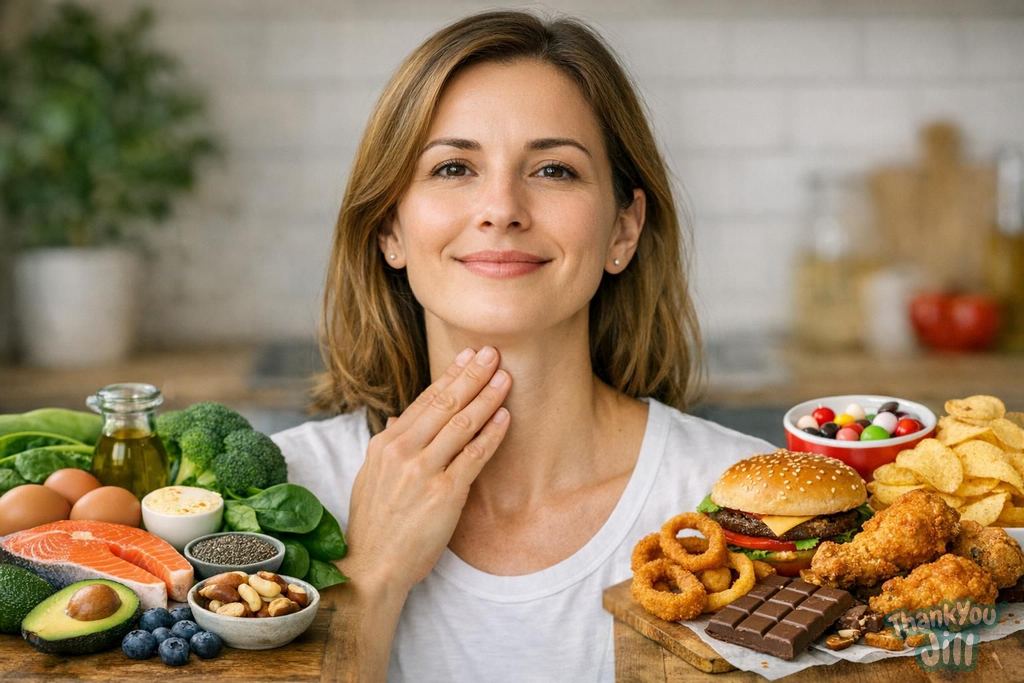
The thyroid is a small, butterfly-shaped gland at the base of your neck that produces thyroid hormones (T3 and T4) affecting every cell in your body: metabolism, heart rate, body temperature, mood, muscle strength, growth, and brain development. Thyroid diseases are among the most common: hypothyroidism (insufficient production) affects 5–8% of women and 2–3% of men. Hashimoto's thyroiditis (the most common autoimmune cause of hypothyroidism) is on the rise. Diet plays a significant role in both preventing and supporting treatment of thyroid disease.
Essential nutrients for the thyroid
Iodine: it's the main building block of thyroid hormones (T4 contains 4 iodine atoms, T3 contains 3). The daily requirement is 150 mcg for adults, 220 mcg during pregnancy. Deficiency causes hypothyroidism and goiter (thyroid enlargement). Main sources: seaweed (the richest source: kombu can contain over 2,600 mcg per gram—watch for excess), ocean fish and shellfish (50–150 mcg per 100g), cow's milk (50–100 mcg per 200ml), iodized salt (the most reliable in Italy, where historical iodine deficiency is significant).
Selenium: essential for converting T4 to T3 (the active form). The selenoprotein deiodinase transforms T4 to T3 using selenium as a cofactor. It also protects the thyroid from oxidative stress (the gland produces a lot of hydrogen peroxide during hormone synthesis). Selenium deficiency reduces T3 production and increases thyroid oxidative damage. Sources: Brazil nuts (two nuts cover your daily needs), tuna and salmon, meat and poultry, eggs.
Zinc: a cofactor in thyroid hormone synthesis and in the metabolism of pituitary TSH hormone. Deficiency causes hypothyroidism and reduced TSH response. Sources: red meat, pumpkin seeds, legumes, oysters.
Iron: thyroid peroxidase (a key enzyme in thyroid hormone synthesis) is an iron-containing protein. Iron-deficiency anemia reduces the activity of this enzyme and compromises thyroid hormone synthesis. In women with heavy menstrual bleeding, iron-deficiency anemia can be a hidden cause of subclinical hypothyroidism.
Goitrogens: foods that interfere with the thyroid
Goitrogens are compounds that interfere with thyroid function, mainly by inhibiting iodine uptake. They're found primarily in cruciferous vegetables: broccoli, cauliflower, cabbage, Brussels sprouts, arugula, radishes, and turnips. They contain glucosinolates that are converted to isothiocyanates and thiocyanates (active goitrogens) by myrosinase (an enzyme activated by cutting or chewing). Cooking inactivates myrosinase, significantly reducing the production of active goitrogens.
The critical question: are cruciferous vegetables dangerous for the thyroid? The answer is no, under normal conditions with adequate iodine. Cooked cruciferous vegetables are virtually free of significant goitrogenic effects. Raw, in small amounts, they're acceptable even with Hashimoto's. Only very high consumption of raw cruciferous vegetables (hundreds of grams daily) could interfere with the thyroid in people with preexisting iodine deficiency. Don't exclude cruciferous vegetables from your diet: they're too nutrient-dense (sulforaphane, vitamin C, folates). Cook them if you have Hashimoto's with uncontrolled hypothyroidism.
Soy and the thyroid
Soy isoflavones interfere with thyroid peroxidase in vitro. In clinical studies of patients taking levothyroxine (Synthroid), soy reduces drug absorption if consumed at the same time: wait at least 3–4 hours between soy and levothyroxine intake. For people with normal thyroid function and adequate iodine intake, moderate soy consumption doesn't cause hypothyroidism. For those with Hashimoto's: moderation is reasonable, but total elimination isn't necessary.
Diet for Hashimoto's thyroiditis
Hashimoto's is an autoimmune disease: apply anti-inflammatory diet principles. Eliminating gluten makes sense only if celiac disease is present (the co-occurrence of Hashimoto's and celiac disease is more frequent than by chance). A gluten-free diet without celiac disease lacks robust evidence for reducing anti-thyroid antibodies in euthyroid Hashimoto's. Selenium: selenium supplementation (200 mcg daily) significantly reduces anti-TPO (anti-thyroid peroxidase) antibodies in people with Hashimoto's—one of the most replicated findings in the literature. Vitamin D: often deficient in Hashimoto's, its supplementation has immunomodulatory effects.

The thyroid asks for little: iodine from iodized salt, selenium from two Brazil nuts, zinc from pumpkin seeds. It suffers from: extremely low-fat diets, iron deficiency, and excess raw cruciferous vegetables in those who already have problems. An annual nutritional check-up keeps it balanced for decades.
How to optimize levothyroxine intake with diet
If you take levothyroxine (Synthroid or equivalent): take it on an empty stomach, at least 30–60 minutes before breakfast. The following foods and supplements reduce its absorption and must be separated by 4 hours: calcium (milk, yogurt, supplements), iron (supplements, iron-rich meals), soy, coffee (even black coffee reduces absorption), very high fiber. Don't switch levothyroxine brands without consulting your doctor: small differences in bioavailability can alter your TSH.
Complete thyroid monitoring: which tests
TSH alone isn't enough. Complete monitoring includes: TSH (standard screening), FT4 (free thyroxine, measures circulating active hormone), FT3 (free triiodothyronine: often low even with normal TSH in those who convert T4 to T3 poorly), anti-TPO and anti-thyroglobulin antibodies (for Hashimoto's), serum selenium (if you suspect deficiency), vitamin D. Many hypothyroidism symptoms (fatigue, depression, weight gain) persist despite normal TSH if FT3 is low or if there's selenium or vitamin D deficiency.
Daily Brazil nuts: practical selenium
Two Brazil nuts daily cover your selenium requirement (about 100 mcg, versus the 55–70 mcg requirement for healthy adults, with an adequate safety margin). No more than three: selenium has a narrow therapeutic window, and chronic excess causes selenosis. This is the most practical, economical, and enjoyable way to ensure adequate selenium intake for your thyroid, without supplements. Store them in an airtight container in a cool place: the fats oxidize.
Frequently asked questions
What foods are recommended to support thyroid health?
For thyroid health, foods rich in iodine (seaweed, fish, iodized salt), selenium (Brazil nuts, tuna, salmon), zinc (red meat, pumpkin seeds), and iron (meat, legumes) are important. These nutrients promote thyroid hormone synthesis and conversion.
How does consuming raw cruciferous vegetables affect the thyroid in case of iodine deficiency?
Raw cruciferous vegetables contain goitrogens that can interfere with iodine absorption. In people with preexisting iodine deficiency, very high consumption of raw cruciferous vegetables can worsen thyroid function. Cooking reduces this effect by inactivating goitrogenic compounds.
How can I optimize levothyroxine intake to avoid food interference?
Levothyroxine should be taken on an empty stomach, at least 30–60 minutes before breakfast. Foods and supplements such as calcium, iron, soy, coffee, and high fiber must be separated from the medication by at least 4 hours to avoid reductions in drug absorption.
When is it worth supplementing selenium in the diet for someone with Hashimoto's thyroiditis?
Selenium supplementation (about 200 mcg daily) is useful in Hashimoto's thyroiditis to reduce anti-thyroid antibodies and protect the gland from oxidative stress. Two Brazil nuts daily are a practical way to achieve this intake without excess.

Latest News




Comments
No comments yet. Be the first!
Leave a comment