


 Italiano
 Français
 Deutsch
 Español
 Português
 Svenska
 Suomi
Suomi
Water for Newborns
When to Start Giving It
The question of water for newborns is surrounded by many myths: the grandmother insisting on giving water right from birth, hot summer days that cause worry, the belief that the baby is thirsty. International guidelines, however, are very clear and consistent, based on a precise understanding of infant physiology.
First 6 months: no additional water
For exclusively breastfed newborns, the WHO, the Italian Pediatric Society, and all major pediatric organizations recommend not offering additional water in the first 6 months, not even on hot days. Breast milk is 88% water. The first milk of each feeding (foremilk) is even richer in water (up to 90%): it's the baby's natural thirst quencher. By offering water, you reduce the number of feedings and milk production, adding volume without nutrients to the newborn's small stomach. On hot days, the solution is to offer the breast more frequently, not additional water.
For formula-fed babies: similar rules
Formula-fed babies in the first 6 months don't need additional water either: formula is prepared with water in already calculated proportions. Exception: on very hot days (temperature above 35-37°C) or if the baby has high fever or diarrhea with dehydration, small amounts of water (15-30 ml between feedings) can be offered on pediatrician's advice. It's not a routine rule: it's a safety measure in specific cases.
With weaning (after 6 months): water comes into play
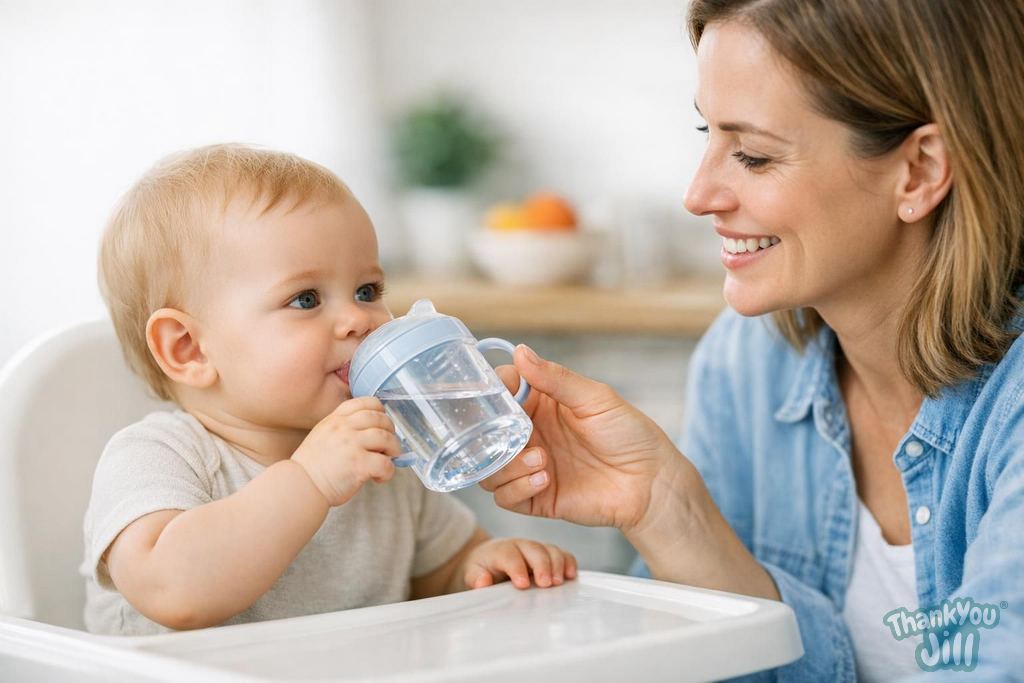
With the introduction of solid foods, offering water becomes natural and recommended. Solid foods contain less water than milk, and the baby starts to need additional fluids to aid digestion. How to offer water after 6 months: in a small open cup (recommended to avoid creating dependence on a bottle nipple), or in a sippy cup without a valve. Small sips during meals, not large amounts between meals. Milk remains the main liquid until 12 months.
What water to use for newborns
For formula preparation: low mineral content water (under 500 mg/l), low sodium (under 25 mg/l), low nitrates (under 10 mg/l). In Italy, many mineral waters meet these requirements: read the label. Tap water in many Italian cities is safe for newborns: check with your local municipality if there are specific warnings. Bottled water "suitable for newborns" (indicated on the label) is the safest choice when away from home.
Signs of dehydration in newborns
Signs of dehydration to recognize immediately: sunken anterior fontanelle (normally it's flat or slightly bulging), dry mucous membranes (dry mouth), crying without tears, unusual lethargy, few wet diapers (fewer than 6 in 24 hours for breastfed newborns). Main causes: prolonged vomiting and diarrhea, high fever, extreme heat with inadequate breastfeeding. If you notice these signs: contact your pediatrician immediately. Dehydration in newborns is a medical emergency that worsens rapidly.
Herbal teas and juices: what to avoid in the first year
Herbal teas (even those "for babies"), fruit juices (even 100%), fennel infusions, chamomile with sugar: all of this should be avoided in the first year. Not because they're all dangerous, but because they're not necessary and they accustom the baby to flavors other than water, creating preferences that lead to difficulty drinking plain water later. 100% fruit juice can be introduced in small amounts (30-60 ml per day) after 12 months as part of solid food diet, not as a routine beverage.

The breastfed newborn has everything they need in breast milk: including the liquid to quench their thirst on hot days. You don't help by adding water: you help by putting them to the breast more often. After 6 months, water enters the scene with solid foods: small sips at meals, no herbal teas or juices. Simple, natural, effective.
How to offer a glass of water after 6 months
Start with a small, sturdy plastic cup (not a sippy cup with a valve). Fill with a finger's worth of water. Offer during a meal, help the baby hold the cup. The baby will spill water: it's normal in the learning process. Accept it calmly. Most babies learn to drink from an open cup between 6 and 9 months: it's a motor skill that develops with practice and parental patience.
Summer heat with a newborn: how to manage it without extra water
In summer with a breastfed newborn: increase the frequency of feedings (the baby will ask for it themselves), keep the baby in cool environments during the hottest hours (21-24°C), light natural cotton clothing, avoid direct sun exposure during hot afternoon hours. Formula-fed newborn on very hot days: it's possible to offer 10-20 ml of additional water between feedings to compensate for sweat losses, always with your pediatrician's advice for babies under 4 months.
Fluoridated water and your baby's teeth
After the eruption of the first teeth (usually around 6-8 months), fluoride exposure becomes relevant for cavity prevention. In Italy, tap water generally has low levels of naturally occurring fluoride. Your pediatrician will assess whether to prescribe fluoride drops as a supplement based on the geographic area and fluoride content in local water. This isn't an urgent matter, but it's one of the things to ask your pediatrician about during first-year check-ups.
Frequently Asked Questions
When is it recommended to start giving water to breastfed newborns?
Breastfed newborns don't need additional water in the first 6 months, since breast milk already contains a sufficient amount of water. Water should be introduced with weaning, after 6 months, in small amounts during meals.
How to manage newborn hydration during very hot days?
In breastfed newborns, it's recommended to increase the frequency of feedings without adding water. For formula-fed newborns under 4 months, small amounts of water (10-20 ml) can be offered between feedings only on pediatrician's advice in case of extreme heat.
What type of water is best suited for preparing formula for newborns?
The ideal water for formula preparation should have low mineral content (under 500 mg/l), low sodium content (under 25 mg/l), and low nitrates (under 10 mg/l). Bottled water indicated as suitable for newborns is the safest choice away from home.
Why is it not recommended to offer herbal teas and fruit juices to newborns in the first year?
Herbal teas and juices, even natural or for babies, are not necessary and can accustom the newborn to flavors other than water, creating preferences that make it difficult to drink plain water later. Fruit juice can be introduced only after 12 months in small amounts.


Latest News




Comments
No comments yet. Be the first!
Leave a comment