


 Italiano
 Français
 Deutsch
 Español
 Português
 Svenska
 Suomi
Suomi
School Snacks
Alternatives to Packaged Products
The children's snack cake market is one of the most successful examples of marketing that transforms ultra-processed products into symbols of parental care. The packaging with cartoon characters, the nutritional claims on the front of the box ("with vitamins!", "palm oil-free!", "source of calcium!") often mask products with 20-30g of sugar per 100g and ingredient lists as long as a novel. Parents buy these snacks convinced they're making the right choice: they've been fooled by a very effective marketing system.
The best-selling snacks: what's really inside
Sponge cake with cream: 35-45% sugars, saturated fats often from palm oil (or similar substitutes), artificial flavors, preservatives. Real nutrients: minimal. Rice cereal cakes: healthy appearance, but often contain glucose-fructose syrup and have extremely high glycemic index (like pure glucose). "100% fruit" fruit juices: zero fiber, 10-12g of sugar per 100ml (like a soft drink), no vitamins left after pasteurization. "Whole grain" cookies for children: often whole grain flour is in small percentage, while refined flour is first on the ingredient list. The word "whole grain" on the front is pure marketing communication.
Rules for a healthy snack
An effective snack for a school-age child must: provide 150-200 kcal (enough to support afternoon activities without spoiling dinner appetite), include at least one quality nutrient (protein, fiber, healthy fats), be practical to carry and eat, be appealing to the child. It should not: cover all daily nutritional needs (that's not its role), be a main meal, be used as a reward or comfort.
Healthy alternatives that kids actually eat
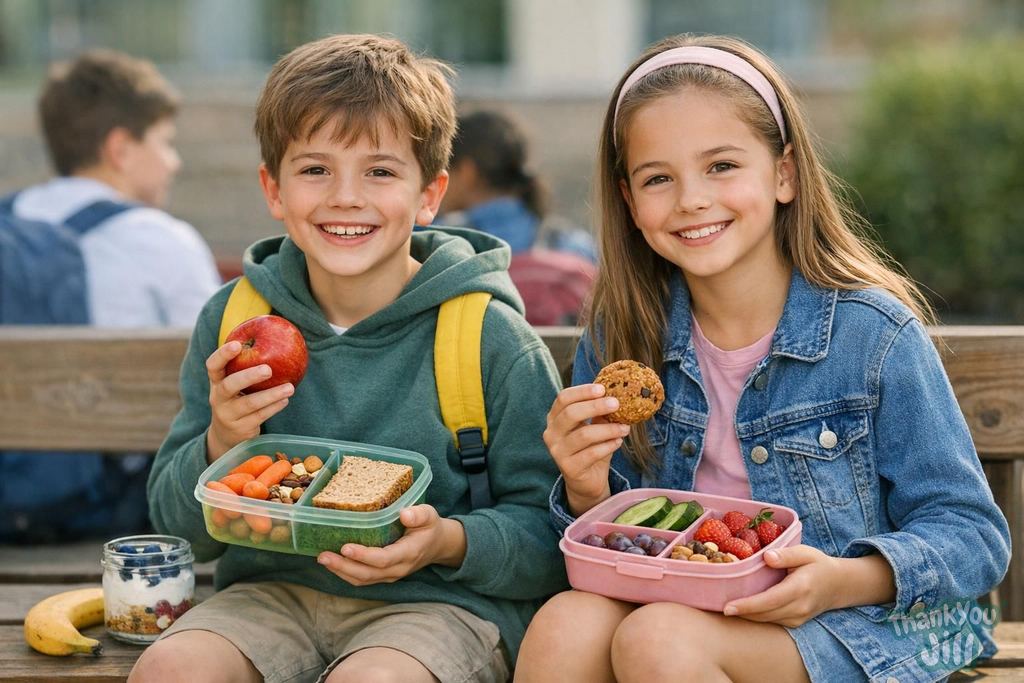
Fresh fruit: an apple, a pear, a banana, a mandarin (easy to peel even with small hands), a peach. Simple, economical, no packaging to throw away. Plain Greek yogurt with fresh fruit cut on top: in a container with a lid that the child brings to school. Whole grain rice or spelt crackers with a slice of cheese: practical, protein-rich, filling. Parmesan cubes + a few walnuts (for children over 5-6 years old, with whole nuts not pieces): excellent source of calcium, protein, healthy fats. Whole grain bread with avocado and a few drops of lemon: the child brings the sandwich already prepared. Homemade oat and banana muffins (without added sugar): prepare on the weekend and they last all week.
Managing the social pressure of snacks at school
The child who brings fruit to class while everyone else has packaged snacks might feel different. How to handle it: explain in a positive way (not "snacks are bad" but "in our meals we put things that give us real energy"), involve the child in choosing and preparing the snack (they're more motivated to eat it), choose appealing presentations (kiwi cut in half to eat with a spoon is much cooler than a whole apple), allow flexibility on social occasions (birthdays, field trips: the "special" snack is the exception that proves the rule).

A healthy snack doesn't have to be a sad snack. A slice of whole grain bread with avocado, a container of Greek yogurt with strawberries, a mandarin + rice crackers: appealing, nutritious, quick to prepare. The child who gets used to these snacks is the child who at 15 will choose the right snack on their own.
The weekly snack kit: prepare on Sunday
Sunday afternoon in 30 minutes: prepare 5 containers of Greek yogurt with cut fruit (one for each day). Cook 12 hard-boiled eggs (they keep for 5 days in their shells in the fridge). Prepare a tray of oat and banana muffins (basic recipe: oats + ripe mashed banana + egg: 20 minutes in the oven). Buy varied seasonal fruit for the week. With this kit, every morning you prepare the snack in 30 seconds instead of opening a packaged product.
How to read a snack label in 15 seconds
Look at the ingredient list: if sugar, glucose, syrup, or any form of sweetener is among the first three ingredients: the snack is essentially candy, regardless of what the front of the package says. Then check the nutritional value: above 20g of sugars per 100g is disguised candy. Below 5g of protein per 100g and below 2g of fiber per 100g: not filling and poorly nutritious. With these three checks, you eliminate 90% of commercial snacks in less than 30 seconds.
Homemade snacks: three basic recipes
Oat and banana muffins: mash 2 ripe bananas + 2 eggs + 200g fine oat flakes + optional raisins. Divide into muffin cups and bake 18 minutes at 180°C. Zero added sugar. Oat and dried fruit bars: oats + almond butter + a few tablespoons of honey + chopped raisins or dried apricots. Compact in a pan, refrigerate 2 hours, cut into bars. Energy balls: oats + peanut butter + cocoa + honey + chopped walnuts. Form balls, refrigerate. These three recipes cover the whole week and get children involved in preparation: a doubly winning strategy.
Frequently Asked Questions
How can you tell if a packaged snack is too sugary?
Check the ingredient list: if sugar, syrup, or sweeteners are among the first three ingredients, it's a sign of high sugar content. Additionally, values above 20g of sugar per 100g indicate a very sweet and unhealthy snack.
What are healthy and practical alternatives to packaged snacks for school snack time?
Effective ideas include fresh fruit that's easy to peel, Greek yogurt with fruit, whole grain crackers with cheese, parmesan cubes with walnuts, whole grain bread with avocado, and homemade oat and banana muffins without added sugars.
How many calories and nutrients should a healthy snack provide for a school-age child?
A healthy snack should provide between 150 and 200 kcal, include at least one quality nutrient such as protein, fiber, or healthy fats, be practical to eat and appealing, without replacing main meals or covering all daily nutritional needs.
How do you manage social pressure when a child brings a healthy snack to school while others have packaged snacks?
Explain the benefits of healthy snacks in a positive way, involve the child in choosing and preparing the snack, make the presentation appealing, and allow flexibility on special social occasions to prevent them from feeling excluded.
Latest News




Comments
No comments yet. Be the first!
Leave a comment