


 Italiano
 Français
 Deutsch
 Español
 Português
 Svenska
 Suomi
Suomi
Growing Aromatic Herbs at Home
Basil, Parsley, Rosemary
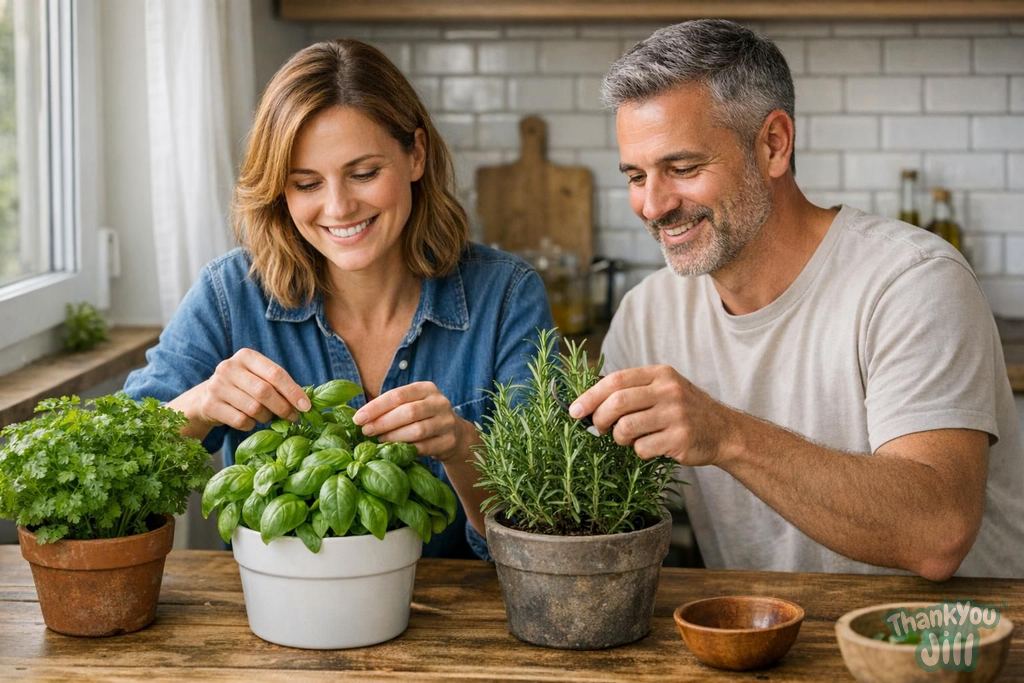
Aromatic herbs are the ideal entry point into home gardening: they require no space, no experience, cost just a few euros, and produce results in weeks. But they go beyond practicality: aromatic herbs have scientifically documented antioxidant, anti-inflammatory, and antimicrobial properties. And the simple act of growing a pot of basil on your windowsill creates a daily connection with growth, seasons, and care.
Basil: The Queen of Mediterranean Herbs
Basil (Ocimum basilicum) is the most beloved aromatic herb in Italy, an essential ingredient in Genoese pesto and margherita pizza. Growing in pots: basil loves full sun (at least 6 hours of direct light), temperatures above 15°C (it's tropical: dies below 10°C), well-draining soil, and moderate but consistent watering. Supermarket basil in pots is grown in nurseries with many seedlings crowded together competing for resources: it deteriorates quickly. The secret to long-lasting basil: repot into a larger container with quality soil, separating the seedlings or using only a few. Pinch it regularly: trim the tops before they flower (flowering changes the flavor). Always cut above a leaf node. Basil will produce abundant leaves throughout summer. Winter storage: make pesto and freeze it in ice cube trays (lasts 6 months), or dry the leaves (less aromatic than fresh but usable).
Parsley: Fresh All Year on Your Windowsill
Parsley (Petroselinum crispum) is biennial: the first year produces abundant leaves, the second year it flowers and produces seeds, then dies. It's much hardier than basil: survives temperatures of 0-2°C, tolerates partial shade, doesn't require frequent watering. How to grow it: sow directly in a wide pot (parsley's taproot needs depth: minimum 20 cm), germinates slowly (2-4 weeks: patience!), then grows vigorously. On an east or west-facing windowsill it produces abundantly. In winter, move it away from frost but it doesn't need heat (a cold loggia or entryway works fine). A mature parsley plant in a 3-liter pot provides fresh leaves for months. Properties: parsley is extremely rich in vitamin C (133 mg per 100g: more than citrus fruits), vitamin K, chlorophyll (antioxidant), apigenin (flavonoid with anti-inflammatory effects).
Rosemary: The Mediterranean Shrub for Your Home
Rosemary (Salvia rosmarinus, formerly Rosmarinus officinalis) is a perennial shrubby plant from the Mediterranean: it lives for decades, doesn't need much care, loves sun, and fears waterlogging. In pots: a 5-10 liter pot with well-draining soil (add 30% sand or perlite), positioned in maximum sun, minimal watering (rosemary is xerophytic: adapted to drought). Common mistake: watering too much. Rosemary indoors suffers from too much water far more than from dryness. In winter, a potted rosemary can stay on the balcony even with temperatures a few degrees below freezing (common varieties resist down to -5°C). If brought indoors for winter, place it near a sunny window and reduce watering to almost nothing. Rosemary properties: rosmarinic acid and carnosol are powerful antioxidants with anti-inflammatory and neuroprotective effects. Preliminary studies suggest that rosemary aroma (1,8-cineole inhaled) improves cognitive performance. Use it generously in cooking.
Perennial Herbs to Always Have in Pots
Beyond rosemary, perennial herbs require little work and provide year-round: thyme (Thymus vulgaris): extremely hardy, loves sun and drought, grows in any soil. Has antimicrobial effect (thymol). Excellent for meats, roasted vegetables, legumes. Sage (Salvia officinalis): perennial, bushy, loves sun. Carminative properties (reduces intestinal gas) and antimicrobial. Chives (Allium schoenoprasum): perennial, easy, cold-resistant. Cut and it regrows. Excellent on eggs, cheeses, salads. Lavender (Lavandula angustifolia): perennial, ornamental and aromatic. Has mild anxiolytic properties when inhaled. Lemon balm (Melissa officinalis): perennial, grows vigorously (almost invasive), excellent for calming herbal teas. Mint (Mentha): perennial and invasive: always grow it in a separate pot to prevent it from taking over all the space. Digestive, refreshing.
Cooking with Fresh Aromatic Herbs: How They Transform Dishes
Fresh aromatic herbs have essential oil concentrations 5-10 times higher than dried versions. Using them fresh means less salt in recipes (intense aromas reduce the perceived need for salt), more antioxidants (essential oils degrade with drying), more nuanced and complex flavors. General rule: delicate herbs (basil, parsley, chives, chervil) are always added raw or at the end of cooking. Robust herbs (rosemary, thyme, sage, oregano) withstand cooking and are used from the start.

A pot of basil, one of rosemary, one of parsley on your windowsill: they cost less than a single packet of dried herbs at the supermarket and last for months. They transform every dish, reduce salt, and perfume your home. The ritual of picking two basil leaves for Thursday night pasta is one of those small domestic pleasures whose true value we often forget.
How to Make Pesto and Freeze It for Winter
At the end of summer, when basil is about to flower (and stop being good as leaves), make pesto in large quantities. Basic recipe: 100g fresh basil leaves + 50g pine nuts (or walnuts: more economical) + 50g grated parmesan + 1 garlic clove + 100-120 ml extra virgin olive oil + salt. Blend everything quickly (not too much: the blender's heat oxidizes the basil). Pour into ice cube trays, freeze. Once frozen, transfer the cubes into zip-lock bags. They keep for up to 8 months. Each cube = one serving of fresh pesto, all year round. Don't add parmesan before freezing if you want longer storage: add it when using.
How to Multiply Herbs Without Buying New Ones
Aromatic herbs multiply easily through cuttings (vegetative propagation). Rosemary, thyme, sage, mint: cut a sprig 10-15 cm long, remove leaves from the lower 2/3, insert in water or moist soil up to 2/3 of its length. In 3-6 weeks roots appear. Repot. A mother rosemary plant can produce dozens of cuttings every year. With this technique, a single purchased plant becomes a small herb production without spending anything else. Basil doesn't cut easily: it propagates from seed (collect seeds from flowering plants at the end of summer) or buy new plants each spring.
Health Properties of Aromatic Herbs: A Scientific Summary
Basil: eugenol (antibacterial, anti-inflammatory), linalool (antioxidant), vitamin K. Rosemary: rosmarinic acid (powerful antioxidant), carnosol (antitumoral in vitro studies), 1,8-cineole (cognitive improvement). Parsley: apigenin (anti-inflammatory), vitamin C (133 mg/100g), vitamin K (1,640 mcg/100g: caution with anticoagulants). Thyme: thymol (antibacterial and antifungal: used in mouthwashes and cough preparations), carvacrol (antimicrobial). Sage: thujone (caution in large doses during pregnancy: only moderate culinary use), salvinoic acid (gastroprotective). Turmeric (not aromatic but spiced): curcumin (documented anti-inflammatory). All aromatic herbs contain bioactive phytochemicals that contribute to the health benefits of the Mediterranean diet.
Frequently Asked Questions
How do I grow basil at home to make it last longer?
For long-lasting basil, repot the seedlings into a larger container with quality soil, separating them. Make sure it receives at least 6 hours of direct light, temperatures above 15°C, and moderate watering. Pinch the tops regularly before flowering to encourage growth.
What are the main differences in growing parsley versus basil?
Parsley is more cold-hardy (survives 0-2°C) and tolerates partial shade, while basil needs more sun and temperatures above 15°C. Parsley has deep roots and germinates slowly, requiring a pot at least 20 cm deep and less frequent watering.
How do I store homemade basil pesto for winter?
Make pesto with fresh basil and freeze it in ice cube trays without parmesan for storage up to 8 months. Add the parmesan only when using to maintain freshness and aroma. The cubes are convenient for single servings throughout the year.
What watering mistakes should I avoid with potted rosemary?
Rosemary fears waterlogging more than dryness. Avoid watering too frequently and use well-draining soil with sand or perlite. In winter, reduce watering to almost nothing and position it near a sunny window if kept indoors.

Latest News




Comments
No comments yet. Be the first!
Leave a comment