


 Italiano
 Français
 Deutsch
 Español
 Português
 Svenska
 Suomi
Suomi
Urban Beekeeping
Saving Bees in the City Too
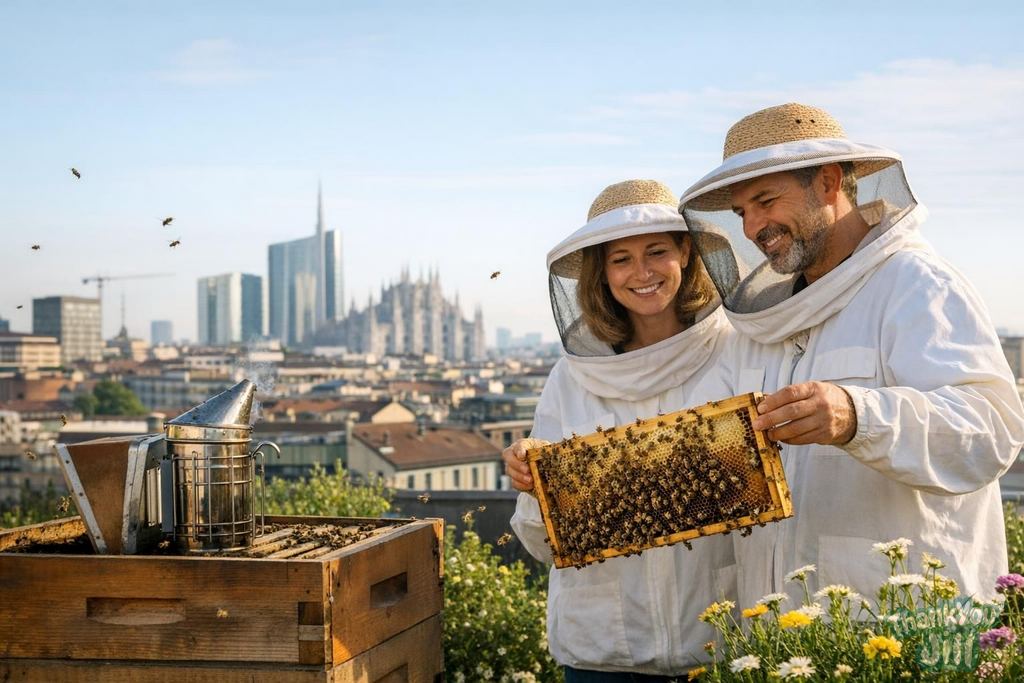
The collapse of wild bee and honeybee populations is one of the most alarming ecological phenomena of recent decades. In Europe, over 10% of the 2,000 species of pollinating insects face extinction. The main causes are: insecticidal pesticides (especially neonicotinoids), habitat loss (hedgerows, wildflower meadows, uncultivated areas eliminated by intensive agriculture), pathogens (Varroa destructor mite for honeybees, nosema, viruses), and climate change. Paradoxically, cities are becoming an important refuge for bees: the diversity of ornamental plants, rooftop vegetable gardens, parks with staggered flowering throughout the year, and the near-total absence of insecticides compared to intensive farmland make many European cities more favorable environments for bees than the monoculture countryside surrounding them.
Urban Beekeeping: Growth in Italian Cities
Milan, Rome, Bologna, Florence, Turin: in Italy's major cities, the number of urban beekeepers has grown significantly over the past decade. Hives on building rooftops, in condominium courtyards, on restaurant and hotel terraces (the honey produced is used in cooking), in municipal parks, in schools: urban beekeeping is no longer a rarity. Italian regulations permit beekeeping in urbanized areas, with specific municipal regulations that establish minimum distances from neighbors and safety conditions. The apiary registry (mandatory for all Italian beekeepers) records hives, allowing tracking and health management. To start urban beekeeping: contact your provincial Beekeepers' Association for the basic course (mandatory for apiary registry registration), then assess your available space and local regulations.
Wild Bees: The Other Half of the Problem
When we talk about bees in danger, we often think only of Apis mellifera (the honeybee managed by beekeepers). But Italy is home to over 1,000 species of wild bees (bumblebees, mason bees, carpenter bees, sweat bees, mining bees: just some of the families present) that are responsible for a significant share of local pollination. These bees don't produce commercially viable honey but are often more efficient pollinators than honeybees for many crops (bumblebees pollinate tomatoes using a "buzz pollination" technique that honeybees cannot perform). Supporting wild bees doesn't require a hive: just flowering plants, reduced pesticides, and "insect hotels" (artificial nesting structures).
How to Support Bees in the City Without a Hive
Plant nectar and pollen-producing plants: choose plants that flower at different times of year to ensure food for bees for as long as possible. Spring (March-April): crocus, dandelion (let it flower: it's one of the first nectar sources), hellebore, flowering rosemary, violets. Late spring-summer (May-July): lavender, clover, sage, globe thistle, phacelia (one of the most attractive plants for bees). Summer-autumn (August-October): agastache, echinacea, late phacelia, aster, goldenrod. Don't use pesticides: any insecticide, herbicide, or systemic fungicide can harm bees. Alternatives: potassium soap, neem oil, natural pyrethrin (but these last two still affect insects: use them only when absolutely necessary). Leave some "mess" in your garden: dead wood piles, bare soil patches, leaf litter are nesting habitats for wild bees. Insect hotels: structures with holes of various diameters (3-10 mm) in solid wood attract mason bees and other solitary bees that nest in cavities. Position them in sunny areas, 1-2 meters high.
Urban Honey: Characteristics and Uniqueness
Honey produced in cities often has superior characteristics to intensive farmland honey: greater floral diversity (the variety of ornamental plants in parks and private gardens far exceeds that of monoculture countryside), absence of agricultural pesticides (cities don't use systemic herbicides and insecticides on fields), complex and unique organoleptic profile (each city has its own melissopalynological "terroir": Milan honey will have linden, black locust, and plane tree pollen; Rome honey will have citrus, cedar, and eucalyptus). Italian urban beekeeping businesses produce premium honeys of great gastronomic interest, increasingly found in Michelin-starred restaurants and specialty food shops.

You don't need a hive on your roof to save bees: a pot of lavender on your balcony, an untreated corner of your garden, or an insect hotel made from a drilled log will do. The bees feeding on your clover will pollinate your tomato flowers. The cycle is small but real, and it depends on you.
How to Build an Insect Hotel in One Day
Materials: a hardwood log (oak, beech: at least 10 cm in diameter), or a wooden box filled with various materials. Tools: a drill with bits of 3, 5, 7, and 10 mm. Procedure: drill the log or solid wood panels with holes of different sizes, at least 10-15 cm deep (not through-holes: bees nest at the bottom of the hole). Smaller holes (3-5 mm): wall mason bees and other small solitary bees. Medium holes (6-8 mm): horned mason bees. Large holes (10-12 mm): carpenter bees. Position your hotel in a sunny location (facing east or southeast), 1-2 meters high, sheltered from direct rain. The first mason bees will start occupying the holes in spring. Avoid bamboo and reeds: often used in commercial hotels but too smooth and too cold for many Italian species. Solid wood is always better.
The Bee Guardian: How to Become a Godparent to an Urban Hive
Some Italian and European initiatives allow you to "adopt" a hive and receive the honey it produces in exchange for an annual contribution that supports the beekeeper. Italian examples: Alveare Che Dice Sì (alveare-chedinedice.it) has a beekeeping section, the BeeTalks project (Milan), and various urban beekeepers offer hive adoptions directly. The annual contribution (50-150 euros) covers hive management costs and gives you access to 2-5 kg of local honey per year. It's not just a honey purchase: it's direct support for sustainable urban beekeeping.
Nectar Plants: A Seasonal Guide for Italy
To ensure food for bees from start to finish of the season: March-April: crocus (Crocus sativus and ornamental species), dandelion (Taraxacum officinale: don't remove it, it's the first spring food), flowering rosemary, willow (Salix: important pollen for the season's start). May-June: black locust (Robinia pseudoacacia: producer of the famous acacia honey), white clover (Trifolium repens), lavender, flowering sage, raspberries and strawberries (both food and nectar sources). July-August: linden (Tilia cordata: one of the most prized honeys), globe thistle, phacelia (if allowed to flower), flowering chives. September-October: ivy (Hedera helix: crucial for late autumn bees), aster, goldenrod. Autumn ivy is often the last call for bees before winter: don't prune it in August.
Frequently Asked Questions
What are the main advantages of urban beekeeping compared to intensive farmland beekeeping?
Urban beekeeping benefits from greater diversity of ornamental plants and vegetable gardens, near-total absence of systemic pesticides, and staggered flowering throughout the year, creating a more favorable environment for bees than intensive monoculture countryside.
How can I support wild bees in the city without having a hive?
To support wild bees, simply plant nectar-producing flowers with staggered blooms, avoid harmful pesticides, leave areas of dead wood and bare soil for nesting, and install insect hotels with holes of various sizes in solid wood, positioned in sunny areas.
What characteristics make honey produced in an urban environment unique?
Urban honey has a complex organoleptic profile thanks to greater floral diversity and the absence of systemic agricultural pesticides, with a unique melissopalynological 'terroir' for each city, which gives the honey distinctive flavors and aromas compared to intensive farmland honey.
How do I build an insect hotel suitable for solitary bees in one day?
You need a hardwood log with holes 3-12 mm in diameter and 10-15 cm deep, not through-holes, drilled with a drill. Position it in a sunny location, 1-2 meters high, sheltered from rain. Avoid smooth materials like bamboo, preferring solid wood.


Latest News




Comments
No comments yet. Be the first!
Leave a comment