


 Italiano
 Français
 Deutsch
 Español
 Português
 Svenska
 Suomi
Suomi
Freezing Food the Right Way
A food-by-food guide
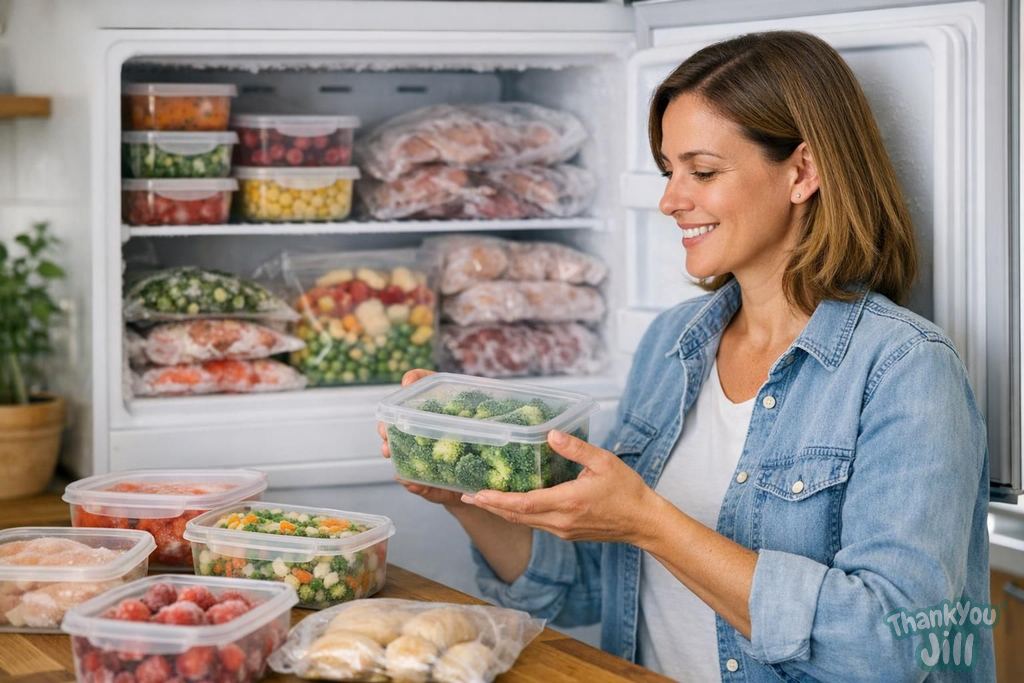
Your freezer transforms fresh ingredients into safe reserves that last for months, cuts waste, lets you capitalize on seasonal deals, and simplifies meal planning. But poor freezing produces disappointing results: freezer burn, texture loss, ice crystals that rupture cell walls. Understanding the rules for each food category transforms your freezer from a crude tool into a sophisticated kitchen instrument.
The physics of freezing: why how you freeze matters
When food freezes slowly (as in a standard home freezer versus industrial blast tunnels), large ice crystals form and rupture cell membranes. This causes the typical "drip loss" when thawing and changes texture. To minimize this: don't overload your freezer (it lowers the temperature and slows everything's freezing), freeze in small, flat portions (they freeze faster), ensure your freezer is at -18°C or below (the European standard), lower it to -24°C for a few hours before freezing large quantities. Freezer burn is surface dehydration from non-airtight packaging—it's not dangerous but makes food dry and flavorless. Prevention: airtight packaging and removing all air before sealing.
Meat and fish: rules for freezing without losing quality
Raw meat: freeze the day you buy it or the next day at the latest (never refreeze thawed meat). Portion before freezing so you only thaw what you need. Wrap tightly in plastic wrap, removing all air, then place in a zip-lock bag. Optimal storage times: beef and lamb (6–12 months), pork (4–6 months), poultry (6–9 months), ground meat (3–4 months). Raw fish: freeze within 24 hours of purchase for fresh fish (fish for raw consumption like sashimi must be frozen for at least 24 hours at -20°C or colder to eliminate parasites—an important food safety rule). Wrap fillets individually. Storage times: fatty fish like salmon and mackerel (2–3 months), lean white fish like cod and plaice (4–6 months). Cooked fish: freezes but loses more texture than raw. Fish sauce or seafood ragù frozen as a topping works better than whole cooked frozen fish. Cooked shellfish (shrimp, scampi): freeze well in zip-lock bags. Duration: 3–6 months.
Fruits and vegetables: blanching before freezing
Most vegetables contain enzymes that keep working even at sub-zero temperatures (more slowly, but they work), causing gradual loss of color, flavor, and texture. Blanching (brief boiling) deactivates these enzymes before freezing. How to blanch: immerse vegetables in boiling salted water for 1–3 minutes (depending on size and firmness), then immediately transfer to ice water to stop cooking. Dry thoroughly, freeze spread on a tray, then transfer to bags once individually frozen. Vegetables requiring blanching: broccoli, green beans, spinach, peas, carrots, Brussels sprouts. Vegetables that don't need blanching before freezing: peppers, onion, garlic (chopped—freeze raw), chili peppers, chopped fresh herbs. Fruit: freeze without blanching. Freeze pieces spread on a tray (freeze first individually, then collect in bags, to avoid one unusable frozen block). Optimal storage: blanched fruit and vegetables (10–12 months), raw fruit (6–8 months).
Bread, dairy, and eggs: the most underrated category
Bread: one of the freezer's best allies. Slice fresh bread before freezing (so you can pull out only the slices you need without thawing the whole loaf). Slices toast directly from the freezer in a toaster in 3–5 minutes. Sourdough bread freezes very well (the acid content preserves structure). Duration: 3–6 months. Milk: freezes well in containers with 2–3 cm of headspace (milk expands when frozen). Thaw slowly in the fridge. Duration: 3–6 months. Aged cheeses (Parmesan, Pecorino) grated: freeze beautifully. Use directly from the freezer on hot dishes (they thaw instantly). Semi-hard cheeses: tend to become crumbly after thawing but still work for cooking. Eggs: don't freeze in the shell (it cracks from ice expansion). Beat yolks with 1/8 teaspoon of salt or sugar to prevent yolk gelification. Freeze in ice cube trays. Duration: 12 months.
Cooked dishes: what freezes well and what doesn't
Freeze beautifully: meat sauces (ragù, Bolognese), cooked legumes (lentils, beans, chickpeas—perfect frozen in single portions), soups and stews (without pasta—add it when reheating), cooked vegetable tarts, meatballs in sauce, meat stews, steamed cooked rice (not risotto—plain white rice works better), whole frittatas or sliced. With limitations: pasta in sauce (pasta overcooks when thawed—freeze the sauce separately and make fresh pasta when needed), cooked potatoes in pieces (become watery—better as purée), fried foods (become soft and greasy—eat fresh). Don't freeze well: pastry cream and custard (separates), gelatin and aspic, mayonnaise, hard-boiled eggs, cucumbers and raw salads, high-water-content unprocessed foods (whole tomatoes, cucumbers).

Your freezer isn't a trash bin for leftovers—it's a temporary pantry for everything at its peak today. Freeze when food is at its best, not when it's about to expire. Label everything. Thaw slowly. And rediscover each time you open a bag labeled summer sauce August in December that you're eating preserved seasonality.
Your freezer labeling system
Every frozen item needs: specific contents name ("beef ragù" not "sauce"), freezing date, portions or weight. Materials: adhesive paper tape and permanent marker (adhesive labels peel off in the cold). Color-coding system (optional but effective): red labels for meat, blue for fish, green for vegetables, yellow for cooked dishes. The FIFO system (First In First Out) in your freezer: new packages go in the back, older ones in front. Every three months or so, inventory your freezer—anything exceeding the recommended optimal storage times should be used or discarded.
Proper thawing: three safety rules
Rule 1: always thaw in the refrigerator (slow but safe—prevents bacterial growth in the danger zone of 5–60°C). Time: 12–24 hours for medium pieces of meat or fish. Rule 2: if you're in a hurry, thaw under cold running water (with food in an airtight bag). Never hot water—it speeds bacterial growth on the outside while the center is still frozen. Rule 3: never refreeze raw thawed food (bacteria numbers increased during thawing—refreezing doesn't kill them, just "pauses" them until thawed again). Exception: if you cook the thawed food (reaching 70°C at the center), you can then refreeze the cooked dish.
When frozen beats fresh: the vegetable surprise
For some foods, industrially frozen is superior to supermarket "fresh." Industrially frozen peas are frozen within hours of harvest, when their sugar and vitamin C content peak. "Fresh" peas in the pod at the supermarket counter may be 5–7 days old with significant vitamin C and sweetness loss. The same goes for sweet corn, green beans, spinach, and broccoli. Nutritional studies confirm that industrially frozen vegetables often have vitamin C content comparable to or higher than "fresh" vegetables transported long distances. Quality frozen isn't a compromise—for some vegetables it's the nutritionally superior choice.
Frequently asked questions
What are the ideal temperatures for freezing different types of food and why do they matter?
The ideal temperature is -18°C or below to freeze quickly and preserve quality and nutrients. For large quantities, lowering to -24°C for a few hours beforehand helps prevent large ice crystals that damage texture. Correct temperatures reduce liquid loss and freezer burn.
How should you prepare vegetables before freezing to maintain flavor and color?
Most vegetables should be briefly blanched in boiling salted water to deactivate enzymes that degrade flavor and color. After blanching, cool in ice water, dry thoroughly, and freeze individually before packaging.
When should you freeze raw fish and what are the recommended storage times?
Raw fish should be frozen within 24 hours of purchase to maintain freshness and safety, especially for raw consumption (sashimi) which requires at least 24 hours at -20°C to eliminate parasites. Storage times vary: fatty fish 2–3 months, lean white fish 4–6 months.
What are the main rules for safely thawing frozen food?
Always thaw in the refrigerator slowly for 12–24 hours to prevent bacterial growth. In a pinch, use cold running water with food in an airtight bag. Never use hot water. Don't refreeze raw thawed food unless it's been cooked to 70°C.

Latest News




Comments
No comments yet. Be the first!
Leave a comment