


 Italiano
 Français
 Deutsch
 Español
 Português
 Svenska
 Suomi
Suomi
Water Softeners
Benefits and Drawbacks
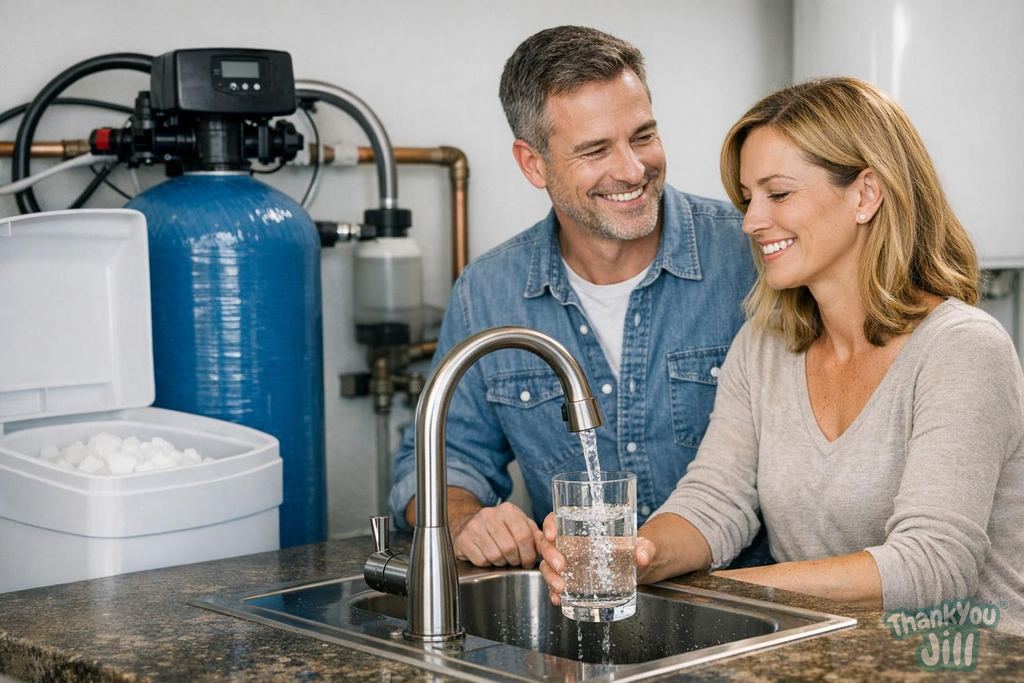
Every year you spend money on gym memberships, supplements, and doctor visits. But how much do you invest in the water you drink? Probably nothing, or too little, or too much on the wrong things. Water is the most important nutrient. Choosing it wisely is the simplest and most effective health decision you can make.
You don't need to spend a fortune. You need to spend intelligently. One euro invested in quality water returns more than ten euros spent on useless supplements. Let's see how to optimize your investment.
The Cost of Tap Water
In Italy, tap water costs an average of 0.001-0.003 euros per liter. Almost free. If the water in your area is good (check the analysis), it's the best possible investment. Zero euros, maximum return.
But "free" doesn't always mean "optimal." If the water tastes unpleasant or contains contaminants, you need to take action. Better to spend 200 euros once on a filter than 500 euros a year on bottled water.
The Cost of Bottled Water
Bottled water costs 0.15-1 euro per liter depending on the brand. If you drink 2 liters a day: 0.30-2 euros a day = 110-730 euros a year. For a family of 4: 440-2,920 euros a year.
It makes sense if: tap water isn't good, you have specific needs (low-mineral water for infants), you're traveling. It doesn't make sense if: tap water is excellent but you buy bottles out of habit or marketing.
The Cost of Filters
Filter pitcher: 25-40 euros initial + 5-8 euros per month for filters = 85-140 euros a year. Solves chlorine and light limescale issues. Ideal if you have good water but with an off taste.
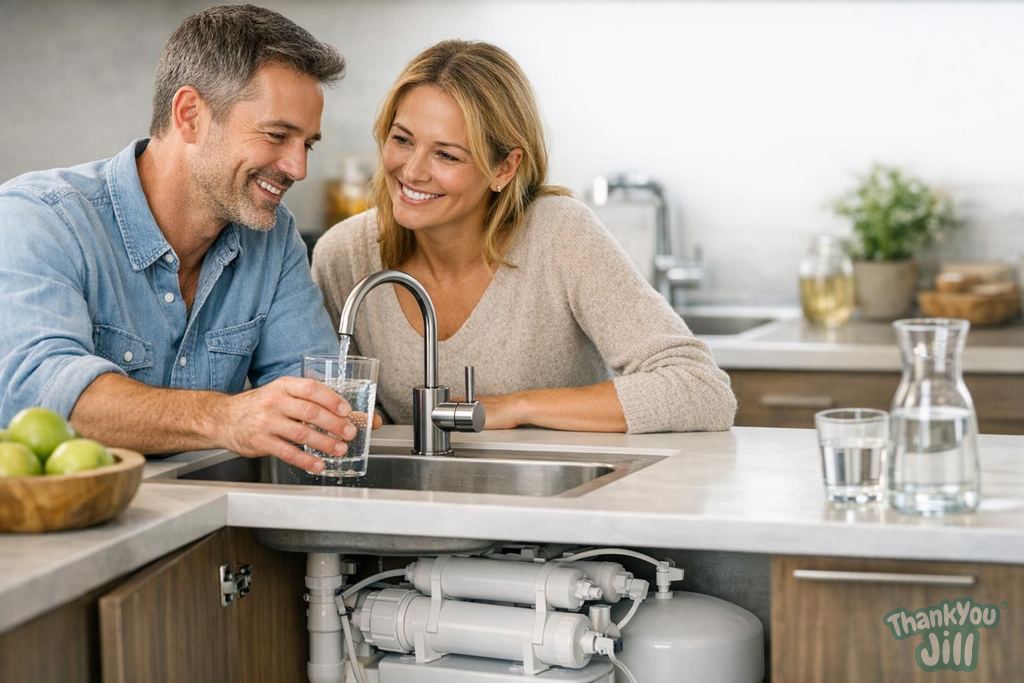
Under-sink filter: 200-400 euros installation + 40-80 euros a year for replacements = first year 240-480, subsequent years 40-80. Pays for itself in 2-3 years compared to bottled water.
Reverse osmosis: 400-1,000 euros installation + 80-150 euros a year for replacements = first year 480-1,150, subsequent years 80-150. Solves serious problems, lasts 10-15 years. Pays for itself if local water has significant issues.
Calculate Your Return on Investment
Example: family of 4 drinking bottled water (500 euros/year). Installs under-sink filter (300 euros + 60 euros/year for replacements). First year: 360 euros (saves 140). Second year: 60 euros (saves 440). Third year: 60 euros (saves 440). In 3 years: total savings 1,020 euros.
The more you invest in durable solutions, the more you save over time. Beyond the economic benefit, there's the environmental benefit (zero plastic) and convenience (no need to buy and transport bottles).
When Bottled Water Makes Sense
If you drink little bottled water (e.g., only outside home, 250 ml a day = 90 liters/year = 20-50 euros/year), it doesn't make sense to install expensive systems. Bottled water is the most practical option.
If you rent and move frequently, a fixed system doesn't make sense. A filter pitcher (portable) or bottled water is better.
If tap water is terrible (PFAS, high nitrates, metals) and you don't want to invest in reverse osmosis, bottled water is the only safe alternative.
Water Supplements: Are They Worth It?
Water enriched with vitamins, extra minerals, oxygen (!): costs 2-5 times more than regular mineral water. Promises extra benefits. Reality: the benefits are minimal or nonexistent.
Added oxygen evaporates as soon as you open the bottle. Added vitamins are in symbolic doses. Extra minerals you'll find in regular water or food. Not worth the expense.
Money-saving tip: buy regular water and take a multivitamin (10 euros for 3 months). It costs less and works better.
Water Bottles: An Investment That Pays Off
Quality stainless steel water bottle: 20-40 euros. Lasts 5-10 years. Completely eliminates bottled water. If you were drinking bottled water outside home (250 ml/day = 50 euros/year), the bottle pays for itself in 6-12 months.
Insulated water bottle: 30-50 euros. Keeps water cool in summer, warm in winter. Increases the likelihood you'll drink more. Worth the investment if it helps you stay better hydrated.
The Hidden Value: Time Saved
Buying bottled water = time at the supermarket + weight to carry + storage space + plastic waste management. Conservative estimate: 30 minutes a week = 26 hours a year.
Filtered tap water or reverse osmosis = zero extra time. Your time is worth money. 26 hours saved could be worth 260-1,000 euros (depending on your hourly rate).
The Smart Combined Strategy
At home: tap water + filter if necessary. Controlled cost, maximum convenience.
Outside home: water bottle filled at home. Zero additional cost.
Special situations (travel, infants): specific bottled water. Spending limited to real needs.
This strategy minimizes costs and maximizes quality. You don't have to choose one option forever. Adapt based on context.
The Most Expensive Mistake
Buying miracle machines (ionizers, alkalizers, magnetizers) for 1,000-3,000 euros. They don't do anything scientifically proven. It's throwing money away.
If you have 1,000 euros to invest in water, do this: 400 euros for serious reverse osmosis + 200 euros for quality water bottles for the whole family + 400 euros saved. Much better.
The 30-Day Test
Before investing in expensive systems, run a test. For 30 days, buy the bottled water you think you want (low-mineral, medium-mineral, etc.). Track how much you spend, if you like it, if you actually use it.
If after 30 days you're satisfied, calculate the annual cost (monthly spending × 12). Compare with the cost of a filtration system that produces similar water. Decide with real data, not impulse.

Investing in water isn't an expense: it's future savings. One euro today in quality water prevents ten euros tomorrow in medicine.
Do Your Personal Calculation
Take a sheet of paper. Write down what you currently spend: bottled water (€/month), any filters (€/month), water bottles purchased (€ one-time). Annual total.
Write down what you'd spend with an alternative: under-sink filter (€ initial + €/year), water bottles (€ one-time), reduced bottled water (€/year). Annual total.
Compare. If the alternative saves you over 100 euros/year, it's worth switching. If the difference is minimal, stick with the method you prefer for convenience.
Ask for Discounts and Offers
Filtration systems: there are often promotions (Black Friday, seasonal changes). Wait for the right time to buy. Savings: 20-30%.
Water bottles: buy family sets (4-5 bottles) instead of individual ones. Unit cost drops. Savings: 15-25%.
Bottled water: if you must buy it, get family sizes (6×1.5 L instead of 6×0.5 L). Cost per liter drops up to 40%.
Share the Costs
If you live in a building with common water issues (limescale, strong chlorine), propose a centralized filter. Cost split among all families. Results for everyone, minimal individual expense.
With friends/colleagues: order personalized water bottles together. Large orders = quantity discount. Save 20-30% each.
Maintenance: Don't Neglect It
Change filters according to instructions. An old filter costs more (doesn't work, health risks) than a new filter. Maintenance is part of the investment, not an extra.
Clean water bottles weekly. A poorly maintained bottle causes problems and you'll have to throw it away (new purchase). Well-maintained, it lasts years.
Gift Intelligently
Instead of useless gifts, give quality water bottles, water filters, purification systems. These are gifts that truly improve daily life. And they last years.
For newborns: instead of stuffed animals, give a 6-month supply of low-mineral water. Parents will really appreciate it.
Track Benefits Beyond Cost
Don't just consider money. Consider: improved health (fewer headaches, more energy), environment (less plastic), time saved (no bottle shopping), home space (no stacked bottles).
These "intangible" benefits often outweigh the financial savings. A quality choice improves life, not just your wallet.
Review Every Year
Once a year, take stock: does the solution I chose still work? Are there better alternatives? Have prices changed? New technologies available?
Don't get stuck on one choice. The market evolves, your needs change. Adapt to always optimize.
Frequently Asked Questions
When is it worth installing a water filtration system versus buying bottled water?
Installing a filtration system is worthwhile if tap water isn't optimal and you consume large quantities of water, since the initial cost pays for itself in 2-3 years compared to annual bottled water spending, with significant economic and environmental savings.
How do you know if tap water needs a filter or reverse osmosis system?
If water tastes unpleasant or contains contaminants like chlorine, light limescale, or heavy metals, an under-sink filter or filter pitcher may be sufficient. For more serious problems like PFAS or high nitrates, reverse osmosis is recommended to ensure safety.
How much does the time saved using filtered water versus bottled water matter?
Using filtered water eliminates the need to buy, carry, and store bottles, saving about 26 hours a year. This time can translate to an estimated economic value between 260 and 1,000 euros, improving convenience and quality of life.
Is it better to invest in quality water bottles or keep buying bottled water for water outside the home?
Investing in quality stainless steel or insulated water bottles is more cost-effective in the medium-long term, as they pay for themselves in 6-12 months by eliminating ongoing bottled water expenses, reducing environmental impact, and facilitating daily hydration.

Latest News




Comments
No comments yet. Be the first!
Leave a comment